
Extra large metal chicken coop
Extra large metal chicken coop – when your flock grows faster than you expected, space and safety become the first real test of your love for them.
I raise hens like family, and over the years I have learned that a solid, roomy metal run can turn daily chores from stress into quiet joy.
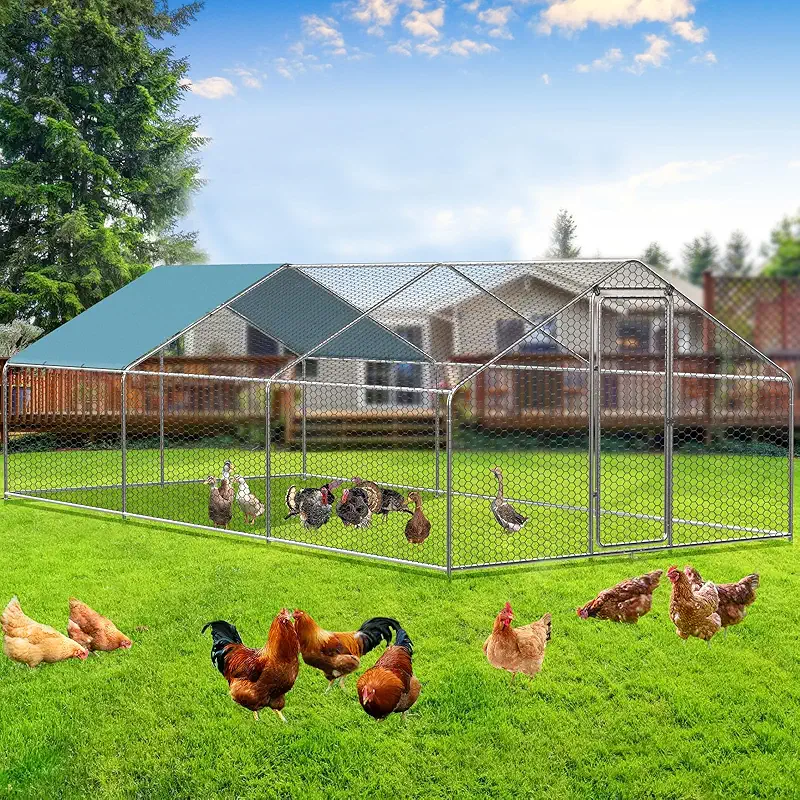
Most people are surprised how calm their hens become once they move into an extra large metal chicken coop with real space to breathe.
Why I moved my flock into an extra large metal chicken coop
I started with three little hens in a small wooden coop that I built with my own hands. It looked cute, like a tiny cottage, but after the first year it was clear that the birds were not as happy as they could be. The run was short, cleaning took too long, and the wood started to twist in the sun. When I added more birds, the space felt even tighter.
One evening I was closing them in and my oldest hen, Rosa, hesitated at the door. She stood there, looked at me, then looked at the crowded perch. It felt like she was saying, “We are doing our best, but we need more room.” That night I started reading about the benefits of an extra large metal chicken coop: more floor space, stronger frame, easy to wash down, and better protection against foxes and raccoons.
Since I switched to a big metal run, life has been quieter for all of us. The hens spread out, they dust bathe in peace, and I can walk inside to feed, clean and check on them without bending myself in half. I am not chasing them around a tiny pen anymore; I am sharing a space that feels calm and safe.
What an extra large metal chicken coop really gives your flock
When people hear “extra large metal chicken coop”, they often think only about how many birds will fit inside. To me, size is not only about numbers; it is about how a hen can live her little life hour by hour. A big metal run changes their day in small but deep ways.
Room to act like real chickens
Chickens are busy creatures. They scratch, peck, dust bathe, chase bugs, nap in the sun, and talk to each other all day long. In a cramped space they start picking on each other. Tails get pecked bare, timid birds hide in corners, and the air feels tense.
In my larger metal run, I see a different flock. There are “quiet corners” where shy hens can rest, sunny stretches for dust baths, and open paths where they can do their happy little sprints when I bring treats. The pecking order is still there, but it is gentler because nobody is trapped.
Cleaner, drier ground
My wooden run turned into mud after every storm. Wet bedding, slippery boards, and a constant smell that no farmer likes. With an extra large metal chicken coop I finally had enough ground area to manage mud properly. I can rotate where I throw fresh straw, add dry leaves, and keep feeders away from drinkers.
The frame lets me lay a simple roof or tarp over part of the run, so at least half is always dry. The birds quickly learn where to go when the sky opens. Dry ground means fewer foot problems and fewer flies, and that alone is worth a lot.
Real protection from predators
I respect predators. Foxes and raccoons are clever, and they have all night to test your coop. With wood, I was always worried about chewing and weak corners. A good metal run gives me peace of mind because:
- The frame is hard to bend, even when a big dog jumps on it.
- The wire can be chosen with closer spacing, which keeps heads safe from reaching paws.
- Anchors and ground stakes hold the frame down in strong wind.
Predator proofing is never “done,” but starting with a solid metal structure puts you several steps ahead.
Metal vs wood: what I learned the long, messy way
Over the years I have patched rotted boards, hammered bent nails, and dragged heavy wooden runs across the yard with my son pushing from the other side. Wood can be warm and pretty, but in my climate it was a constant battle with rain and sun. Metal is not perfect either, yet for a large run it has proved kinder to both me and the flock.
What I like about large metal coops
- Easy to hose down: I can wash the run quickly and let it dry in the sun.
- Less chewing: Rats and raccoons do not chew metal frames the way they do with soft wood.
- Modular: Many extra large metal chicken coop kits can be extended or reshaped as the flock grows.
- Light but strong: I can move panels with help, but they do not sag like old boards.
- Stays straight: No warping, twisting or cracking after long summers.
Where metal needs extra care
- Shade is vital: Metal gets hot in full sun, so I always add shade cloth or a roof.
- Rust spots: I watch for scratched areas and protect them with paint or sealant.
- Noise in rain: Metal roofs can be loud in storms; I soften it with a layer of wood or insulation above the birds’ sleeping area.
- Ground edges: I attach skirting wire around the base to stop digging predators.
Knowing both the strengths and the weak points of metal has helped me set up my extra large metal chicken coop in a way that feels safe and gentle for the birds, not harsh or industrial.
How to choose the right extra large metal chicken coop for your flock
When friends ask me what kind of coop they should get, I usually sit them down at my kitchen table and start with a simple question: “Tell me about your birds.” The best coop is not the biggest or the fanciest; it is the one that fits the birds you have and the life you want with them.
1. Count birds the honest way
Do not choose a size based only on today. If you already love chickens, more will come. A neighbor will offer you a rescue hen. A child will fall in love with a new color. It happens. When looking at an extra large metal chicken coop, I always imagine at least two or three more hens than I own now.
As a simple rule, for the run area I aim for at least:
- 10 square feet per standard hen when they also free-range some of the day.
- 15 square feet or more if they will spend most of their time inside the run.
More space rarely causes problems. Too little space almost always does.
2. Think about your routine
I am not a fan of bending, crawling, or trying to rake through tiny doors. An extra large metal chicken coop should make your day easier, not harder. Ask yourself:
- Can I walk inside the run without ducking my head?
- Can I carry a full bucket of feed in without hitting the frame?
- Is there room to stand while I change bedding or check a hen?
If the answer is no, look for a taller, wider design. Your back will thank you in five years.
3. Weather and wind in your yard
In my area we get hot summers, windy autumns and heavy winter rain. I quickly learned that a large metal run must be anchored well. I use ground stakes on every corner and extra ones along the long sides. I also choose frames with cross braces, so the structure does not sway in storms.
Shade is as important as strength. If your yard is open, plan from the start where you will add shade cloth, tarps or a solid roof section. Hens will use shade all day, not only at noon.
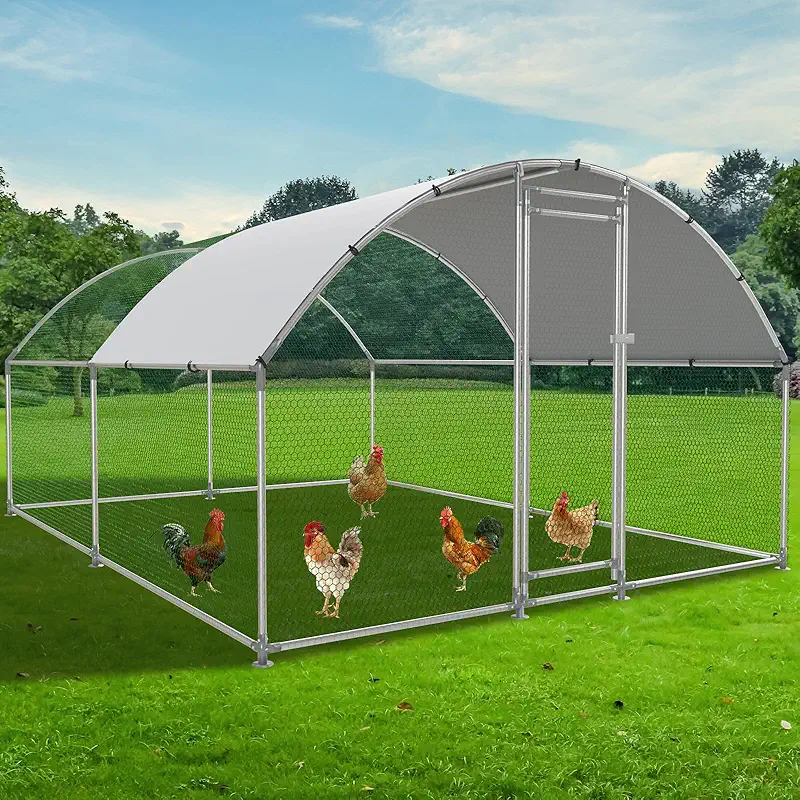
I like tall runs I can walk into. It turns a chore into a quiet visit with the flock instead of a quick rush.
Setting up an extra large metal chicken coop step by step
When my first big metal coop kit arrived, I remember feeling excited and a little nervous. The boxes were long, full of metal pieces and bags of bolts. I made coffee, called a friend, and we started calmly, one step at a time. If you have never built one, here is how I usually go about it.
1. Choose and prepare the spot
I like to place the coop where I can see it from the kitchen window. That way I notice strange behavior fast. I also choose ground that is slightly higher than the surroundings, so rainwater runs away instead of into the run.
- Mark the area with stakes and string.
- Remove big rocks, sharp sticks and any junk.
- Level the worst bumps, but do not worry about perfect flatness; chickens enjoy a bit of natural slope.
2. Build the frame slowly
With big metal coops, I always tighten bolts gently at first, then firm them up once the whole shape is clear. This keeps the frame square and true. I lay the pieces out on the ground, group them by length, and mark pairs with tape so I do not lose track.
3. Attach wire and secure the base
Wire is where many people rush, but it is the heart of your defense. I walk around the outside, pulling the mesh tight with one hand and fastening with clips or ties with the other. I pay special attention to the lower edge. Then I:
- Add a wire skirt around the outside, about 12–18 inches wide, pinned down with ground staples.
- Use extra ties at the corners, where predators test first.
- Check the door frame carefully, looking for any gap more than a finger wide.
4. Create comfort inside
An extra large metal chicken coop is just a shell until you give it a heart. Inside I add perches, dust bath areas, and low resting spots where older hens can relax.
My basic setup looks like this:
- A dry corner with deep sand or ash where they can dust bathe.
- Feeders and drinkers hanging slightly off the ground to keep them clean.
- A sheltered area with straw for resting in bad weather.
- Loose logs or low platforms for the curious ones to jump on.
Keeping an extra large metal chicken coop healthy and peaceful
A big coop is easier to live with if you have a simple routine. I am not a perfect farmer; some days I am tired and work runs late. So I built a rhythm that I can keep even on hard days. It keeps the hens calm and the space under control.
My simple weekly rhythm
- Every morning: Quick check that all birds are bright, eating and moving well. Look at water levels.
- Twice a week: Rake the busiest areas and add fresh dry material where droppings collect.
- Once a week: Hose down part of the metal frame and check for rust, loose ties or sharp edges.
- Once a month: Move feeders and perches slightly so droppings do not pile up in only one spot.
Reading your flock’s mood
Hens talk with their bodies. When a coop is too small or badly arranged, I see restless pacing, loud arguing and hens that hide under others. In my extra large metal chicken coop today, I mostly see:
- Small groups scratching together without chasing others off.
- Low, gentle clucks instead of sharp alarm calls.
- Birds that come toward me when I enter, curious instead of afraid.
If something feels wrong, I first look at space and layout. Often simply moving a feeder or adding a visual barrier, like a board or a bale of straw, can stop bullying.
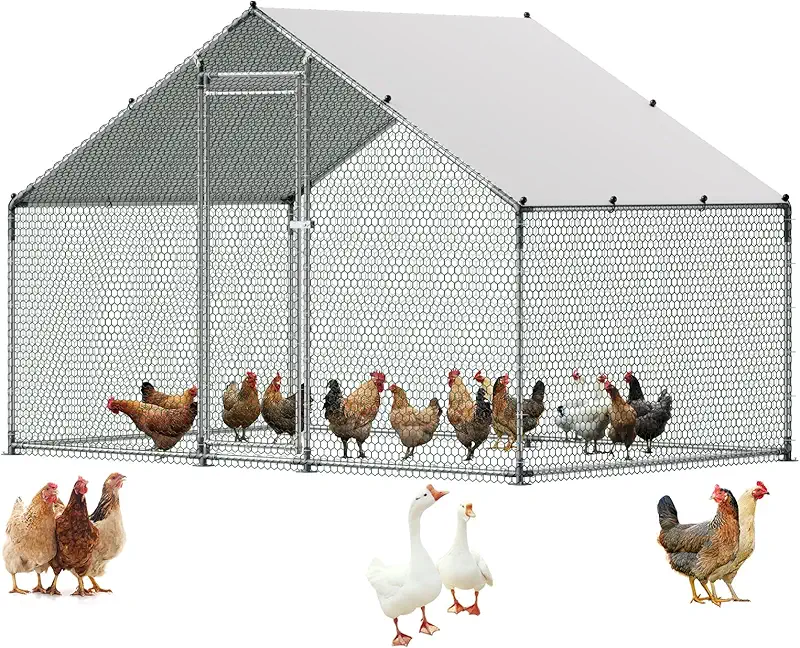
Calm birds are the best sign that the coop size, layout and daily routine are working well.
Different styles of extra large metal chicken coop
Not every big coop looks the same. Over time I have tried and visited several types. Each one has its place, depending on your yard and your habits.
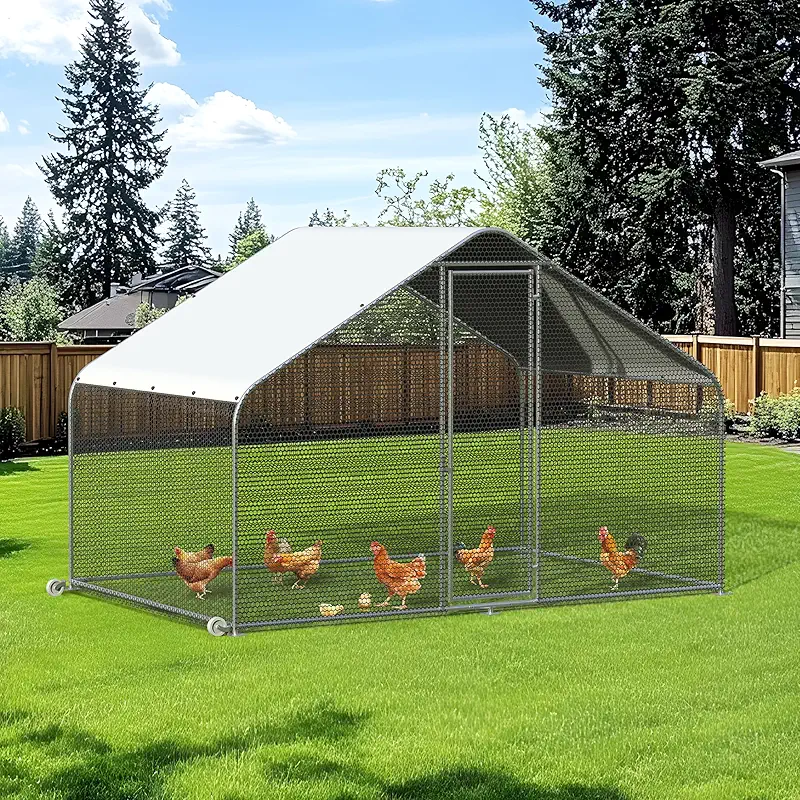
Walk-in tunnel runs are long and tall, perfect when you want a straight path and an easy way to reach every corner.

Rectangular frame coops work well in standard backyards and can often be attached to an existing wooden house.
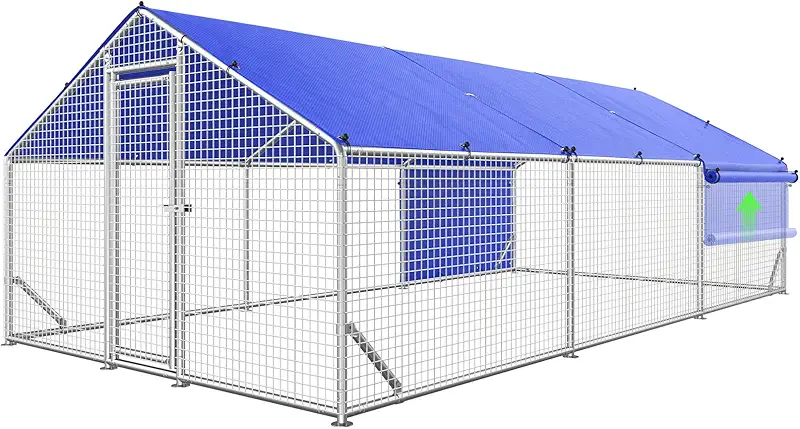
Extra high coops feel almost like a small barn. I love these for mixed flocks and for older keepers who want full headroom.
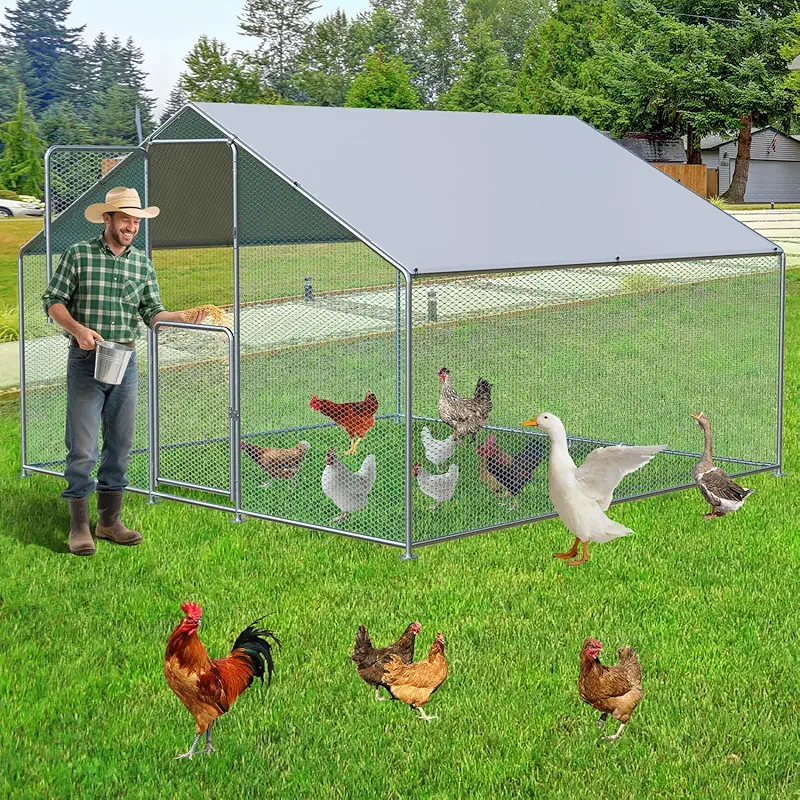
Segmented coops can be split with wire walls so you can separate young birds, broody hens or a gentle rooster when needed.
FAQ about choosing an extra large metal chicken coop
How many chickens can I keep in an extra large metal chicken coop?
It depends on the exact size of the coop and how much free-ranging they get. As a gentle guide, I like at least 10 square feet of run space per hen if they also roam in the yard, and 15 square feet or more if they stay inside most of the day. For example, if your extra large metal chicken coop offers around 200 square feet of run, I would feel comfortable with 12–15 standard hens that also free-range, or about 10–12 if they live mainly in the run.
Is a metal chicken coop too hot in summer?
Metal can get hot, but it does not have to feel like an oven. The key is shade and airflow. I always place my extra large metal chicken coop where there is at least partial natural shade or I add shade cloth over the top. I also cover only part of the roof with solid material, leaving the rest open for breeze. Inside, I keep water in the shadiest corner and avoid overcrowding. With these steps, my hens handle summer calmly, even on bright days.
Will a metal coop rust quickly?
Good metal coops are usually galvanized, which protects against rust. Over time, scratches or cuts in the coating can show small rust spots, especially in wet climates. I walk around the coop once a month, and if I find a mark, I clean it and touch it up with outdoor metal paint or a protective spray. This simple habit has kept my frames strong for many seasons.
Do I still need a wooden house if I have an extra large metal chicken coop?
The metal structure is usually the run, the safe outdoor space. Many keepers, including me, still use a separate wooden or plastic hen house inside or attached to the metal run for night roosting and laying eggs. Some large metal setups include a built-in shelter section. The main thing is that your birds have a dry, draft-free place to sleep and lay, plus a secure run where they can live during the day.
How can I make a large metal coop feel cozy for my hens?
Size and strength are important, but mood matters too. I scatter straw in resting areas, hang simple toys like cabbage heads or treat balls, and place low perches at different heights. I also keep one quiet corner with deeper bedding and less traffic, where timid hens can retreat. A big, strong extra large metal chicken coop can still feel gentle and homely when you soften it with natural materials and a calm daily routine.