Why I finally trusted a full metal chicken coop
I grew up with wooden coops. My grandfather built them by hand, with old doors and boards he found around the farm.
They were charming, smelled of pine, and creaked in the wind. But they also rotted, warped in the rain, and left too many gaps for rats and weasels.
The turning point came one winter when heavy snow collapsed a corner of the run. My hens huddled in the only safe corner left.
That night, lying awake, I promised myself I would give them something stronger, something that would not fail them when the weather turned wild.
The next spring I started looking into a full metal chicken coop. At first I was skeptical.
I worried the metal would feel cold and harsh, like a cage, not like a home. But the more I learned, the more I saw how much calmer my birds could live in a sturdier space.
Now, after years of using metal runs and coops, I sleep better on stormy nights.
When the wind shakes the trees, I know my flock is behind firm wire and a solid frame that does not care about teeth or claws.
A wooden coop can still be lovely, and I keep a small one for broody hens.
But for the main flock, a full metal chicken coop gives me three things I do not want to give up anymore: real predator resistance, less maintenance, and space that is easy to clean.
What makes a full metal chicken coop different
When people ask me about metal coops, they often picture a tiny rabbit cage.
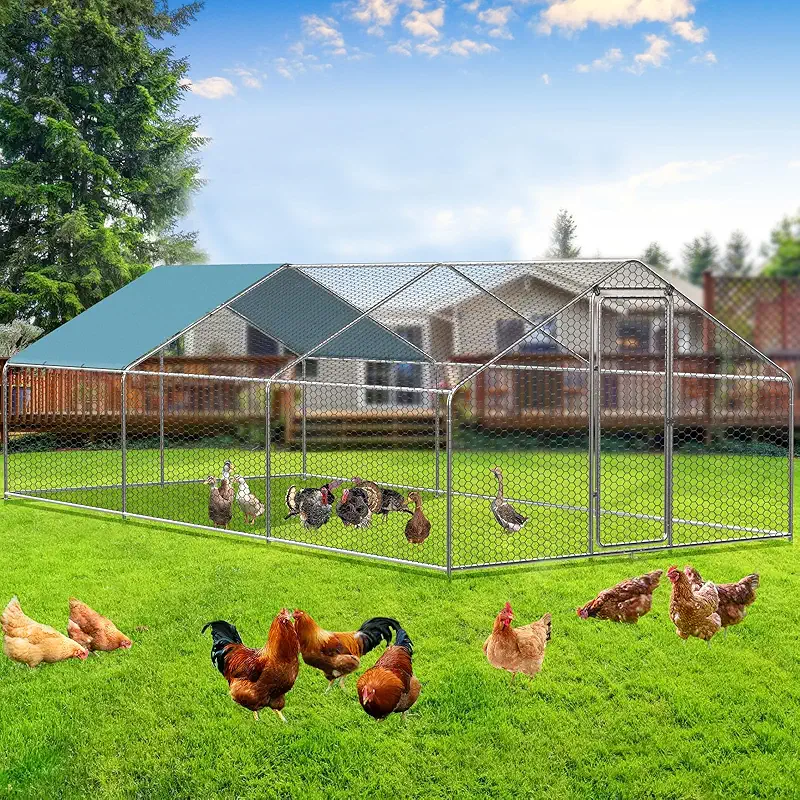
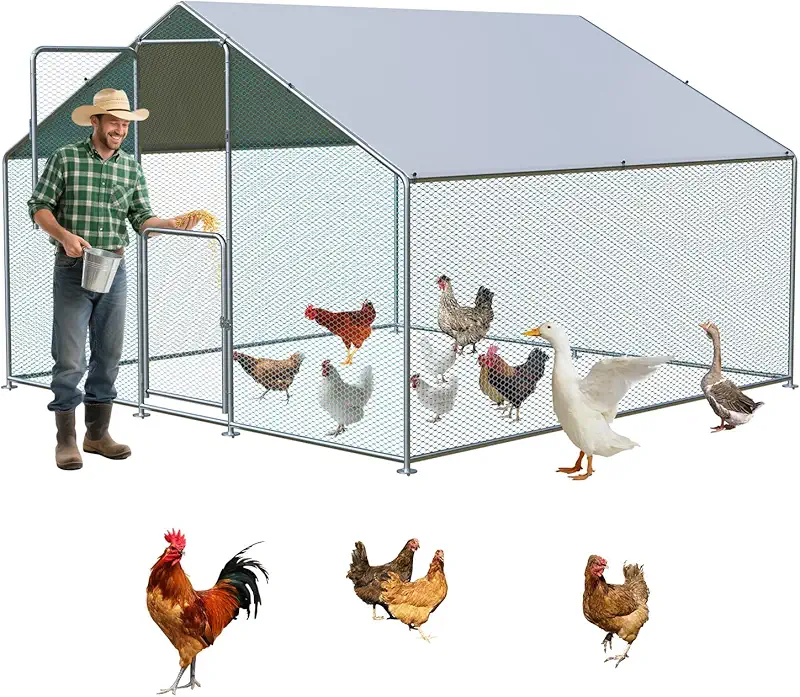
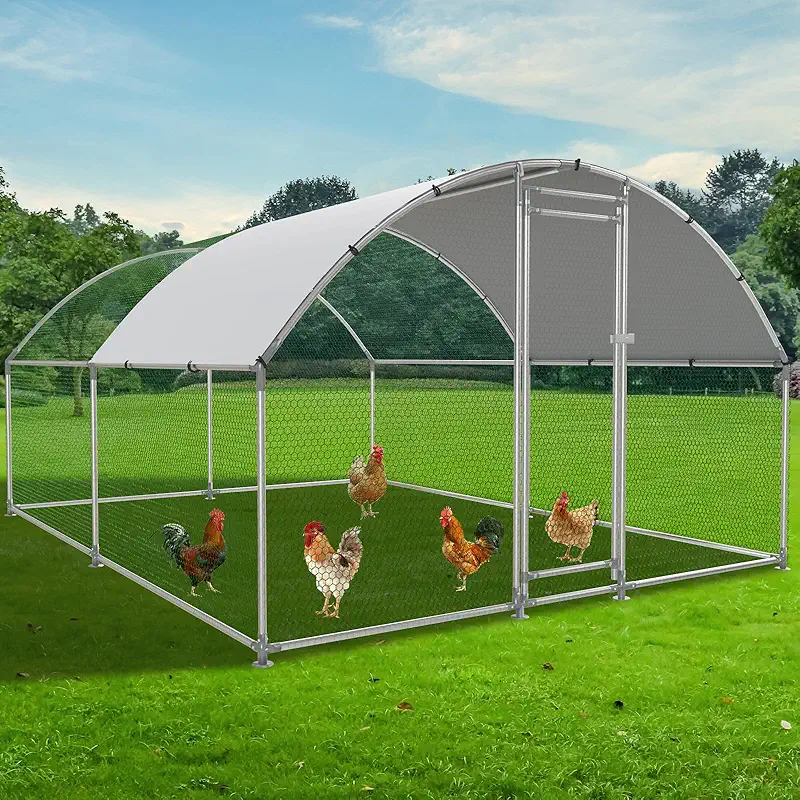
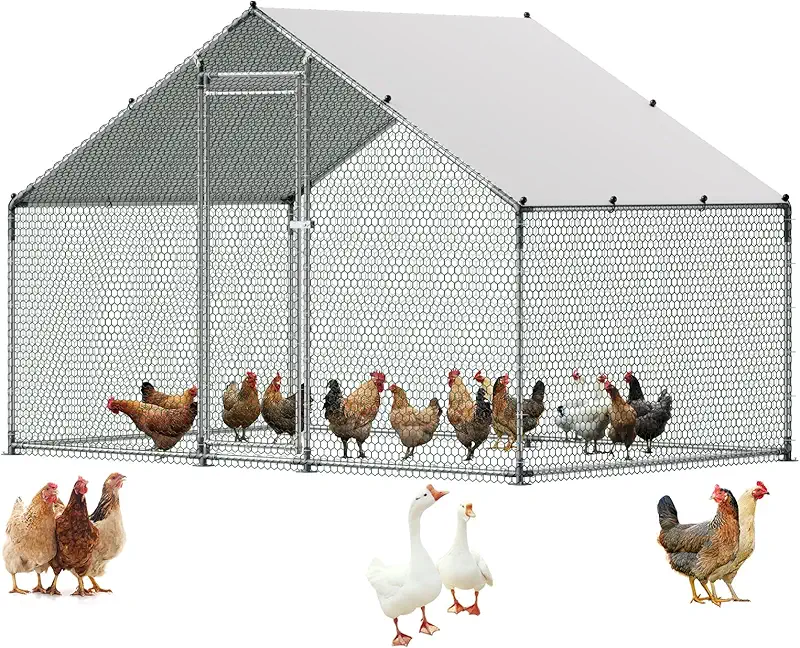
In reality, a good full metal chicken coop is more like a walk-in aviary made for chickens. It is strong, tall enough for you to work inside, and covered in sturdy wire on every side.
Main elements of a good metal coop
- Galvanized steel frame that does not bend when you lean on it.
- Thick wire mesh, not chicken wire that tears like cloth.
- Roof protection (tarp or metal sheet) to keep rain and snow off the birds.
- Secure door and latches that a raccoon cannot easily open.
- Room for a wooden or plastic house inside for roosting and laying.
I like to think of the metal part as the “shell” and the inner house as the “heart”.
The shell keeps danger out. The heart keeps warmth and comfort in.
When you look at any full metal chicken coop, picture a hungry fox jumping on the side or a dog pushing at the door.
If that image makes you nervous, you need a stronger frame or a better latch.
Benefits of a full metal chicken coop for your hens
Let me share what I have noticed in my own flock since moving to metal runs and coops.
These are small daily changes, but together they matter, both for the birds and for me.
1. Safer nights and calmer mornings
Before the metal coop, I would sometimes find fresh claw marks on the wooden door.
The hens would be restless, slow to lay, and oddly quiet the next day. They had clearly heard the night visitor.
With a full metal chicken coop, the sound of scratching on the outside no longer leads to breaking or chewing through boards.
The metal does not splinter, and predators quickly learn that this fence is not worth the effort.
My hens now greet me in the morning with their usual murmurs and soft clucks. That calm mood is worth every screw and panel.
2. Less work for my hands and back
Wooden coops need painting, patching, and sometimes rebuilding. My spare weekends used to be full of small repairs.
With galvanized metal frames and mesh, my work changed: less hammering, more observing chickens.
I rinse the metal with a hose in summer, brush off cobwebs, and check screws once or twice a year. That is usually all it needs.
3. Cleaner space, healthier birds
The mesh sides of a full metal chicken coop let in plenty of fresh air.
Good ventilation is one of the best gifts you can give a hen, especially in damp climates where ammonia and moisture can build up.
Because the frame is raised and the walls are solid wire instead of wood planks, droppings dry faster and the ground does not stay as wet.
I see fewer muddy feet, fewer dirty eggs, and fewer respiratory problems.
4. Flexible layout as your flock grows
Chickens are like potato chips. You rarely stop at just a few.
A full metal chicken coop with panels lets you extend or reshape the run if you add more hens later.
I started with six layers and a modest metal run. Within two years I had twelve, plus three curious ducks.
Instead of building everything from scratch, I simply added an extra metal section and another inner house.
How to choose the right size for your full metal chicken coop
Overcrowding is one of the quickest ways to create stress, bullying, and sickness in a flock.
Metal or not, a coop only works if the birds have enough space to live like chickens, not like sardines.
Here is a simple way I explain it to neighbors who come to see my setup.
| Flock size |
Indoor roosting area* |
Metal run area* |
My feeling |
| 4–6 hens |
20–30 sq ft |
60–80 sq ft |
Comfortable, easy to care for. |
| 8–10 hens |
35–45 sq ft |
100–130 sq ft |
Good balance of space and cost. |
| 12–15 hens |
55–70 sq ft |
150–200 sq ft |
Needs careful planning of perches. |
*Values are approximate and assume standard laying hens, not giant breeds.
If you are undecided, I gently suggest you go one size bigger. Chickens rarely complain about extra space,
and a larger full metal chicken coop gives you room for future additions, a dust bath corner, or a small hospital crate if one hen needs rest.
Daily life inside a full metal chicken coop
People sometimes ask me if metal coops feel “too hard” or “too industrial”.
I tell them to watch my hens for ten minutes. They scratch, dust bathe, preen, and gossip exactly the same as they did in wooden runs.
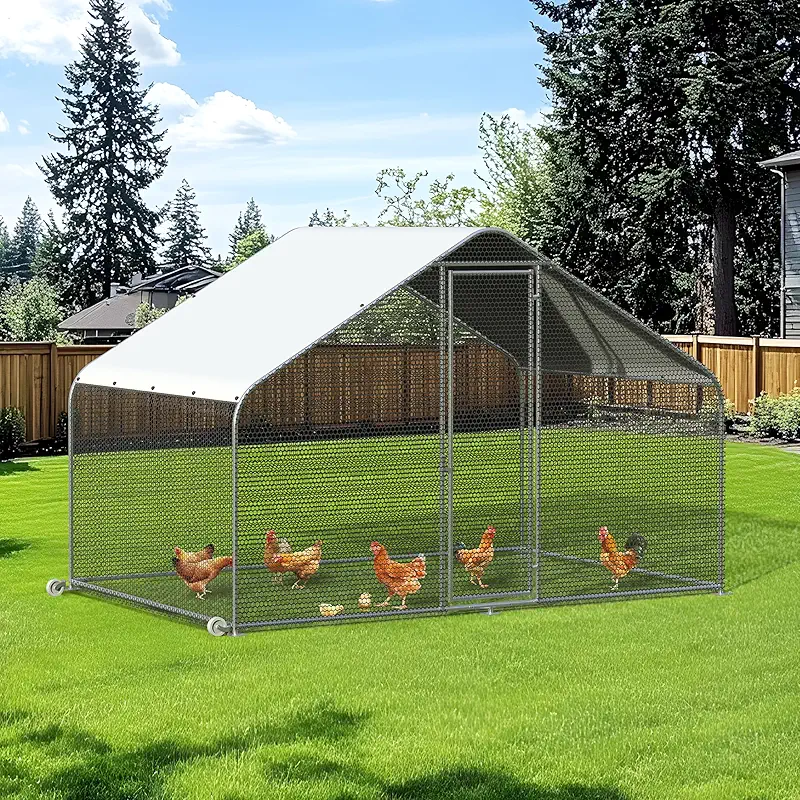
The secret is in how you arrange the inside of the space. Metal gives structure; you provide comfort.
How I set up my metal coop
- Dry corner for feed, raised on blocks, with a simple roof or plastic panel overhead.
- Shaded rest area with a low perch where older hens nap in summer afternoons.
- Dust bath zone in an old tire, filled with dry earth, sand, and a little wood ash.
- Toys and interest like cabbage heads hanging from a string or branches to hop on.
- Inner wooden coop with nest boxes, roosts, and a solid door for night lock-up.
The metal frame holds shade cloth, tarps, or windbreak panels very well.
In winter I clip clear plastic along the windy side to stop drafts at ground level, while still letting air flow higher up.
My hens quickly learned the new routine. At dusk they walk into the wooden house inside the metal run,
I close the inner door, and then the metal door behind me. Two layers of security, one peaceful sleep.
Caring for your full metal chicken coop through the seasons
A full metal chicken coop is tough, but it still appreciates a little gentle care through the year.
I treat mine like a faithful farm tool: not fragile, but worth a few minutes of attention now and then.

Spring and summer
- Wash down the metal mesh with a hose to remove dust and cobwebs.
- Check all ties, clips, and screws after strong winds or storms.
- Add extra shade cloth on the sunny side to prevent overheating.
- Rake the run floor regularly and add fresh dry bedding where needed.
Autumn and winter
- Secure the roof tarp or panels before heavy snow or rain.
- Close gaps at ground level with boards or bricks to reduce drafts.
- Make sure the door opens easily even in frost or mud.
- Keep a path clear so you can reach the coop safely with feed and water.
One of my winter rituals is to stand inside the metal coop at night with a small lantern and just listen.
No whistling wind, no rattling panels, only sleepy clucks and gentle breathing. That quiet tells me everything is in order.
Frequently asked questions about full metal chicken coops
Are full metal chicken coops too hot in summer?
No, not if you manage shade and airflow. The metal frame itself can warm up in direct sun,
but the open mesh walls let heat escape quickly. I always cover at least one half of the roof with a good tarp or sheet
and add shade cloth to the hottest side. Inside the coop I keep plenty of water and a quiet, shaded resting area.
On very hot days my hens pant a bit, but no more than they did in wooden runs.
Will my hens be cold in a full metal chicken coop during winter?
The metal run is only part of the home. Your hens still need a well-insulated inner house with proper roosts, dry bedding,
and no drafts at roost level. The full metal chicken coop acts as a protective shell around that house,
blocking wind and predators. I also hang plastic panels on the windward side and make sure litter stays dry.
Chickens handle cold better than damp, so focus on dryness and ventilation rather than trying to heat the whole space.
How many chickens can I keep in a metal coop?
It depends on the size of the run and the indoor house. As a gentle rule, I aim for at least 4 square feet per bird inside the roosting coop
and 10 square feet per bird in the metal run. More is always kinder.
If you like to spoil your hens with dust baths, perches, and extra feeders, plan a bit of extra room from the start.
Can I move a full metal chicken coop if I change my garden layout?
Many full metal chicken coops are built from panels that you can unbolt or unclamp and then reassemble.
It is not as light as a small wooden tractor, but with two people you can usually shift sections or rebuild it in a new spot.
I have moved mine twice already, once to follow the sun and once to rest the soil. It took a few hours, not a full weekend.
Is a full metal chicken coop noisy when it is windy?
A poorly fastened tarp or loose panel can flap and rattle, yes.
But with tight ties, decent clips, and a bit of care when you first set it up, the sound is usually soft,
more of a gentle rustle than a bang. I always walk around the coop on the first windy day and listen.
Any part that claps or flaps gets extra fasteners. Once that is done, the coop stays surprisingly quiet.