Metal chicken coop cover
Metal chicken coop cover
Metal chicken coop cover: keeping hens calm, dry and safe
I spend more time in the coop than in my own living room, and one thing I learned the hard way:
a good cover on a metal frame makes the difference between nervous hens and birds that hum softly while they scratch.
Let me share what really works out there in the yard.
Gentle advice from a real coop
Every flock and every yard is different. I’ll walk you through how I protect my own girls,
so you can decide which type of metal chicken coop cover feels right for yours.
Why a good metal chicken coop cover matters so much
When people visit my little farm, they often notice how relaxed my hens are.
They dust-bathe, they mutter to each other, and they don’t panic every time a cloud passes.
That calm feeling did not happen by chance. It started the day I finally put a proper cover on my metal chicken coop.
A metal chicken coop is strong, but without the right cover it can feel harsh.
Sun bounces off the tubes, rain drums on the ground, and hawks see straight inside.
I spent one long summer watching my birds pant and hide in the only strip of shade they could find.
I still feel guilty when I think about it.
A well-chosen metal chicken coop cover changes all that. It gives:
- Deep, steady shade so combs do not burn and birds do not overheat.
- Dry ground where hens can scratch after rain instead of standing in mud.
- A softer, quieter space during storms, so they do not fly into the wire in fear.
- A sense of “ceiling” that makes them feel hidden from hawks and owls.
Once I covered my metal run properly, egg laying became more regular, and fights at the feeder almost stopped.
A metal chicken coop cover is not just about weather. It is about giving your flock a safe room outdoors.
Types of metal chicken coop cover I’ve tried
Over the years I have experimented with several kinds of cover on my metal coop.
Some ideas came from neighbors, some from my own mistakes. Here is what I learned,
so you can skip the painful parts.
Heavy-duty tarp covers
What I use on my main run today
- Strong shade, good for hot summers.
- Easy to tighten with ball bungees around the metal frame.
- Can be replaced without changing the whole coop.
Mesh shade cloth
My choice for very hot, dry areas
- Lets heat escape while blocking a lot of sun.
- Less noise during wind and storms.
- Does not flap as hard if you stretch it well.
Plastic tarps and cheap covers
What I do not use anymore
- They crack fast in sun and cold.
- Edges shred, and pieces can blow into the yard.
- They become loud and scary when wind hits them.
Rigid roof panels
Lovely but more work
- Look neat, strong against snow.
- Need extra framing and tools to mount safely.
- Harder to move if you change your coop later.
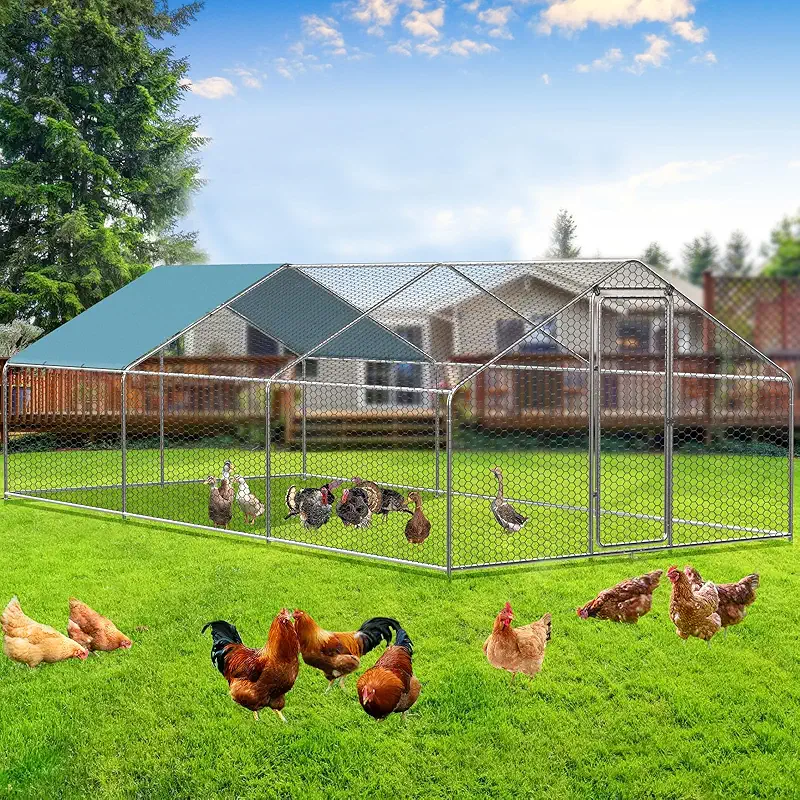
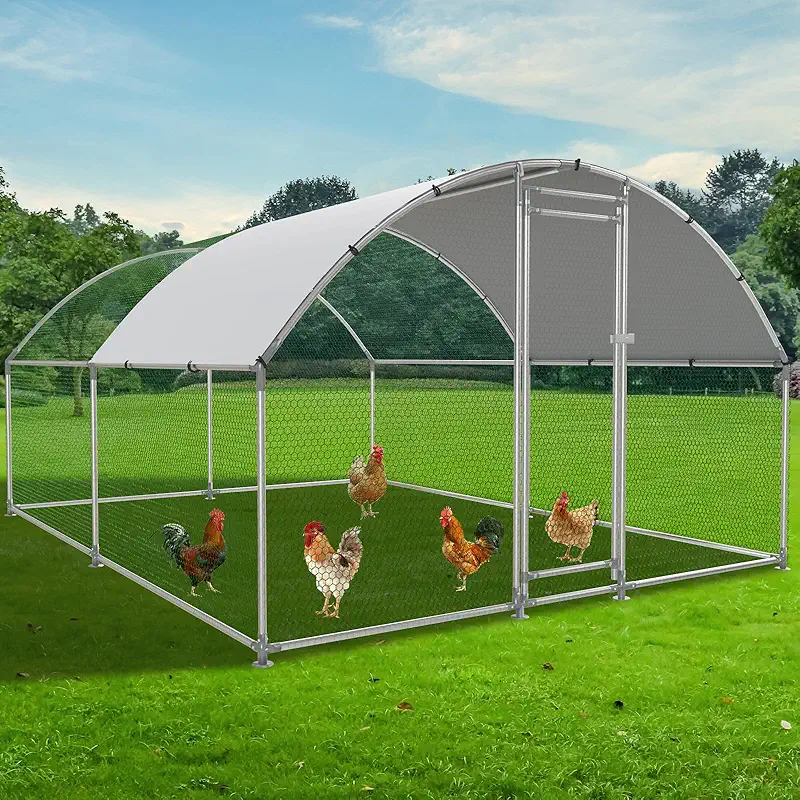
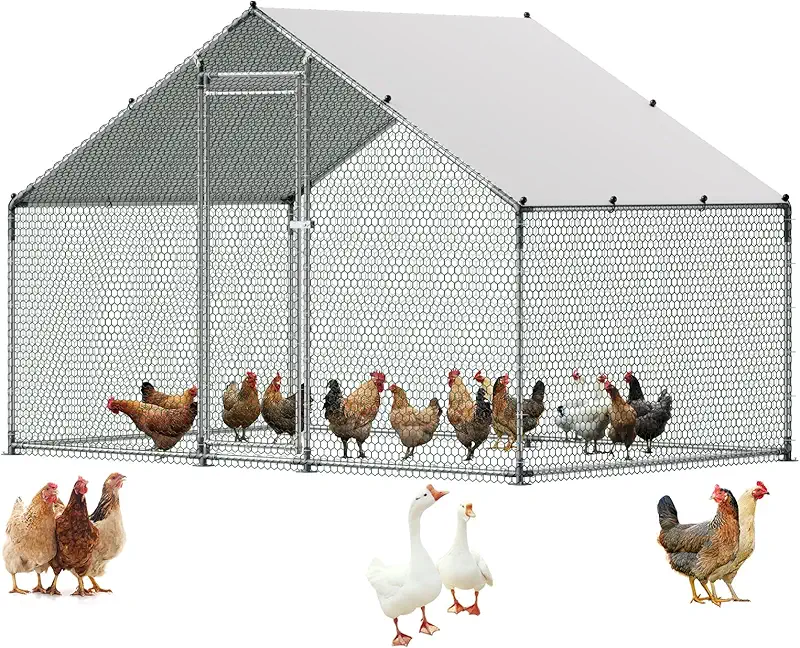
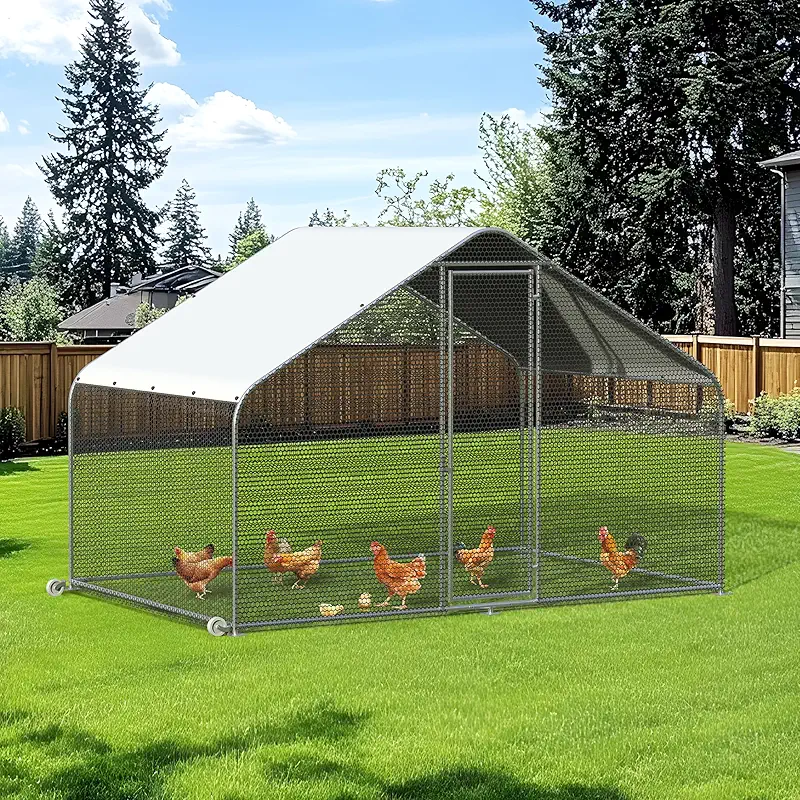
From all this trial and error, I now prefer a sturdy metal chicken coop cover kit:
a strong galvanized frame with a fitted tarp or shade cloth made for poultry.
It hugs the structure, sheds rain well, and lasts much longer than the random tarps I used at the beginning.
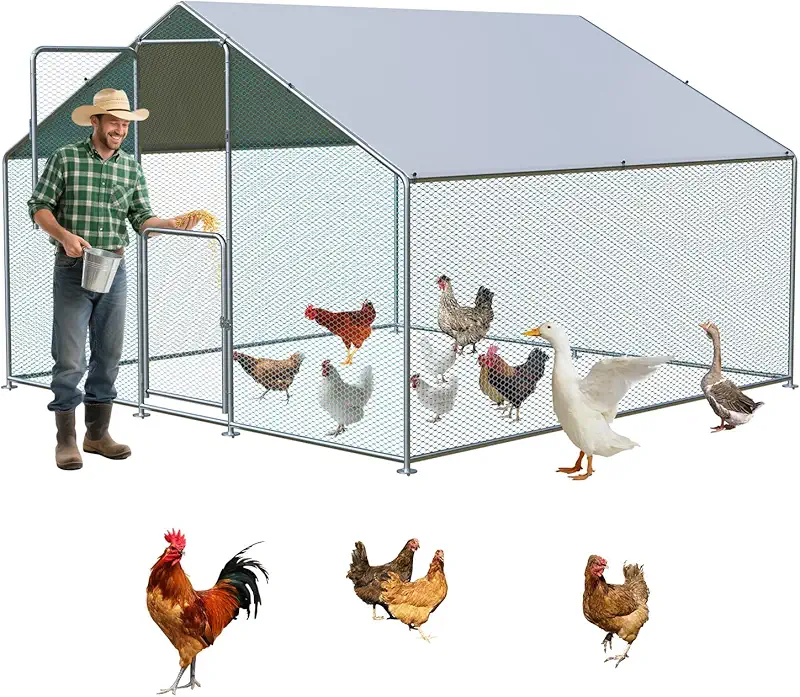
One of my favorite set‑ups: a simple metal frame with a tight, fitted cover. Shade feels like a real roof to the hens.
How to choose the right metal chicken coop cover for your flock
When I help friends pick a cover for their coop, we start with three simple questions:
your weather, your birds, and your own daily routine.
1. Think about your weather first
Your climate decides more than any product description. I live where summers are hot and winters are wet.
Here is how I match the cover to the sky:
-
Very hot and sunny: I lean toward a light-colored shade cloth that breathes.
A solid tarp can trap heat like a car roof. For my larger run, I use mesh on the sides and a denser cover just over the middle.
-
Rainy and windy: A heavier tarp-style cover that reaches a bit down the sides keeps the run drier.
I angle it slightly so water runs off instead of pooling.
-
Snowy: I prefer a strong frame and a cover rated for snow load.
I still go out with a broom to push heavy snow off, but the peace of mind is worth it.
2. Look at your birds’ habits
Some flocks like to sit up high. Others stay low and huddle beneath anything that feels solid.
My old girls prefer a darker corner, while young pullets often choose the sun.
A metal chicken coop cover can give them both if you plan it well.
- Create a deeper shade zone over the resting spots and feeders.
- Leave one or two edges more open for gentle morning light.
- Watch where your hens nap in the afternoon; that is the area to shade the most.
3. Think about your own routine
I am honest with myself: I do not like fighting with tangled ropes in the rain.
I need a cover I can check quickly before work and fix in a few minutes if something loosens.
A good metal chicken coop cover for a busy person should:
- Attach with simple, repeatable clips or ball bungees.
- Have reinforced corners and grommets that do not tear out easily.
- Be easy to slide back a little if you want more winter sun.
I want to picture this
When I browse covers, I imagine myself out there in the dark of a storm,
checking the edges by flashlight. If it feels like too much fuss in my mind,
I know I need a simpler design.
Some metal chicken coop cover ideas that work well together
Usually I do not rely on just one thing. My best setups mix a main metal chicken coop cover with small touches around it.
Here are three simple “recipes” I have used with good results.
Cozy shade and rain combo
For flocks that hate getting wet
I use a strong, fitted tarp cover over the top third of the coop, then hang an extra strip of tarp
down the windward side. It is not fancy, but the ground beneath stays dry enough for scratching even after heavy rain.
Simple, sturdy, forgiving set‑up
This might suit us
Summer breeze shade tunnel
For very hot regions
Here I stretch a lighter mesh shade cloth across the whole roof,
then add a darker section only over the resting area.
Air still moves through, but there is a cool patch where everyone gathers at noon.
Gentle on heat‑stressed birds
Let me imagine this
Split-season flexible cover
For places with four sharp seasons
I clip two shorter covers end to end: one heavy, one lighter.
In summer I unclip the heavier half. In winter I put it back.
The metal frame stays the same all year, only the cover shifts.
One frame, two moods
I could try this
Installing a metal chicken coop cover without stressing your hens
Chickens are creatures of habit. When I first added a big, dark cover over my run,
my birds refused to go underneath it for two days. They walked around it and complained loudly at me.
I learned to make changes more gently.
My calm installation routine
-
I choose a quiet time of day, usually late morning after eggs are laid and before heat builds.
-
I talk to the hens as I bring out the metal chicken coop cover, so they hear my voice and know it is just me.
-
I secure one side loosely first. I let the cover hang, so they can walk under the edge and sniff around.
-
I tighten the cover bit by bit, making sure it does not flap too much or cast sudden, sharp shadows.
-
I stay with them for a while after I finish, sprinkling a little treat under the new shade so they associate it with comfort.

A new cover always feels strange to chickens at first. Soft voices and a few treats go a long way.
If I see any hen pacing or calling loudly, I pause and check: is the cover flapping, or is there a shiny spot that looks like a predator?
Sometimes I adjust the angle or add a little extra clip. Small changes can make a big difference to how secure they feel.
Daily and seasonal care of your metal chicken coop cover
A metal chicken coop cover does not ask for much, but ignoring it for a whole season is how small tears turn into big problems.
Here is the simple routine I follow.
Daily or weekly quick checks
- Walk the length of the coop and look for loose corners or fraying edges.
- Listen during windy days; a new rattle or flap means a clip has shifted.
- Feel the ground under the cover after rain. If puddles form, I know I need to adjust the slope.
After storms, snow, or hard wind
I grew up watching my grandfather go out after every storm, lantern in hand, to check the animals.
I do the same now, though I use a flashlight. I pay special attention to:
- Any pockets of water or snow sitting on the cover.
- Metal corners rubbing hard against the fabric.
- Branches or debris that might have fallen and are pressing into the material.
Season changes
When seasons turn, I ask myself two questions: “Are they too hot?” and “Are they too dark?”
If the answer to either is yes, I adjust the cover.
-
Spring: I check every connection and, if needed, replace tired bungees.
I like to give the cover a gentle wash with a hose to clear dust and bird droppings.
-
Summer: I sometimes slide the cover back a little in the very early morning
to let sunlight onto the ground, then pull it forward again at noon.
-
Autumn and winter: I close gaps where cold wind whips through,
but I always leave enough airflow to keep the air fresh.
I want something sturdy
Common mistakes with metal chicken coop covers (that I’ve already made for you)
I sometimes joke that my hens have been testing products longer than any big company.
They have lived under good covers and under terrible ones, and they have shown me exactly what not to do.
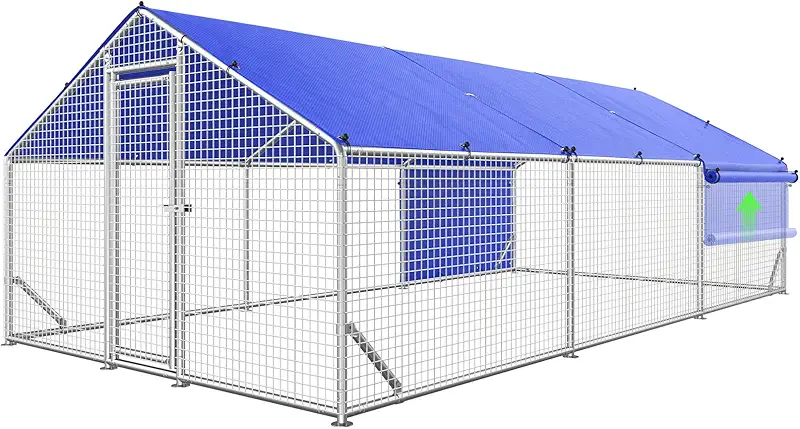
This was one of my early mistakes: a too-thin tarp flapping in the wind. The hens hated the noise.
Using covers that are too small
A cover that barely fits will always fight you. It pulls at the grommets, rubs against the metal frame,
and leaves thin strips of sun that cook the ground. I now choose a metal chicken coop cover that is slightly larger
than I think I need, then pull it tight and trim only if I must.
Ignoring airflow
It is tempting to wrap the whole coop like a gift when the wind bites. I did this once with a cheap plastic tarp.
The air inside turned heavy and damp, and I saw more respiratory issues that winter.
Now I always leave at least one side more open, even in cold weather.
Forgetting the sun’s path
The sun moves from season to season. When I first hung a cover, I placed it where shade fell
on a cool spring afternoon. By midsummer the sun had shifted, and the waterer sat in full heat.
Now I watch the yard at different hours before I decide how to stretch a new cover.
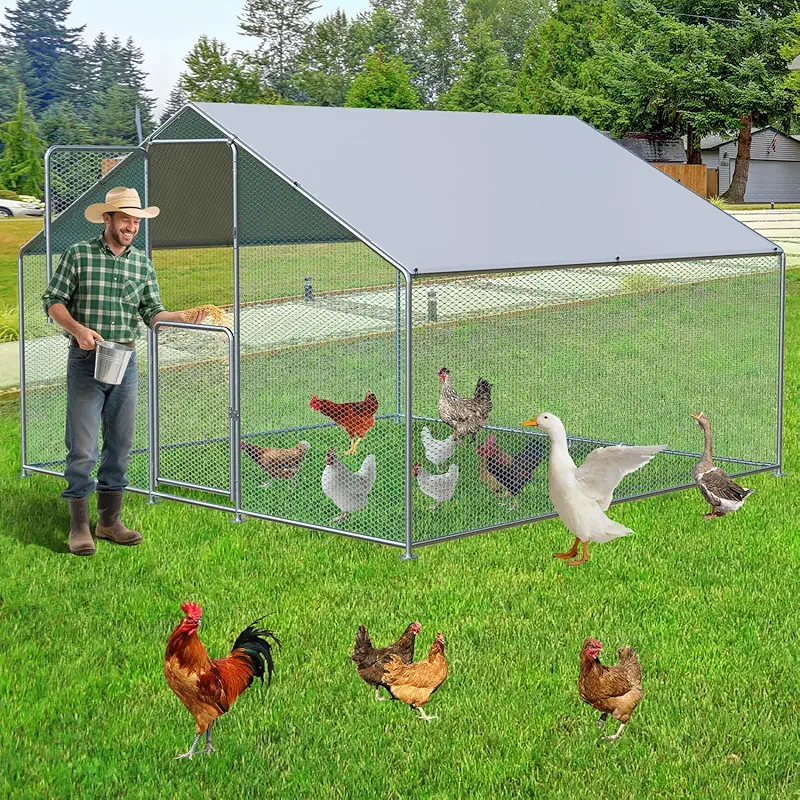
After a few adjustments, the same coop became a calm, shaded space with plenty of air moving through.
FAQ about metal chicken coop covers
Do chickens really need a metal chicken coop cover?
They can survive without one, but they will not thrive as well.
A proper cover protects them from harsh sun, heavy rain, and predators watching from above.
In my own flock, egg production, feather condition, and general calm all improved once I added a solid, reliable cover.
Will a metal chicken coop cover make the run too dark?
It does not have to. You can choose lighter-colored material or mesh that blocks some sun but still lets light through.
I like to cover about two-thirds of the roof and leave a brighter section near the front.
That way, the hens can decide where they want to stand.
How long does a good metal chicken coop cover last?
In my climate, a sturdy, well-made cover on a metal frame usually lasts several years if I keep it tight and check it after storms.
Cheap, thin plastic tarps sometimes started to fail in a single season.
Paying attention to thickness, UV resistance, and strong edges makes a big difference.
Can I put a new cover on an old metal coop frame?
Yes, and I have done this with second-hand frames many times.
I simply measure carefully, choose a metal chicken coop cover that is a little larger than the frame,
and use sturdy ties or bungees. As long as the metal tubes are solid and not rusted through,
a fresh cover can give them a whole new life.
How do I know if my hens like the new cover?
I watch their bodies and listen. Happy hens settle and preen under the shade.
They dust-bathe and even nap in the same spots each day.
If they stay pressed at the far edge of the run, avoid the shaded area,
or call loudly for long periods, I check for noise, flapping, or dark corners that feel unsafe to them.
A few small adjustments, and most flocks relax.
If you are standing in your yard, cover in hand, feeling unsure, you are not alone.
I still pause before I change anything in my coop. When I listen to the birds and notice how they react,
they usually show me what kind of metal chicken coop cover truly suits them.
If you would like to look at some ready-made options built for metal frames,
you can browse a few ideas and imagine how they would feel above your own flock.
Let me quietly browse