When you care about your hens the way I do, you want them safe, dry and calm every single day.
A good metal chicken coop enclosure is like a strong pair of arms around the whole flock.
I still remember the first winter storm that hit my little farm. The wind howled, branches fell,
and I spent half the night outside holding a flashlight, checking on my birds. Back then my run was
just wire on old wooden posts. It sagged, it rattled, and every gust made my hens panic.
That was the night I promised them something better.
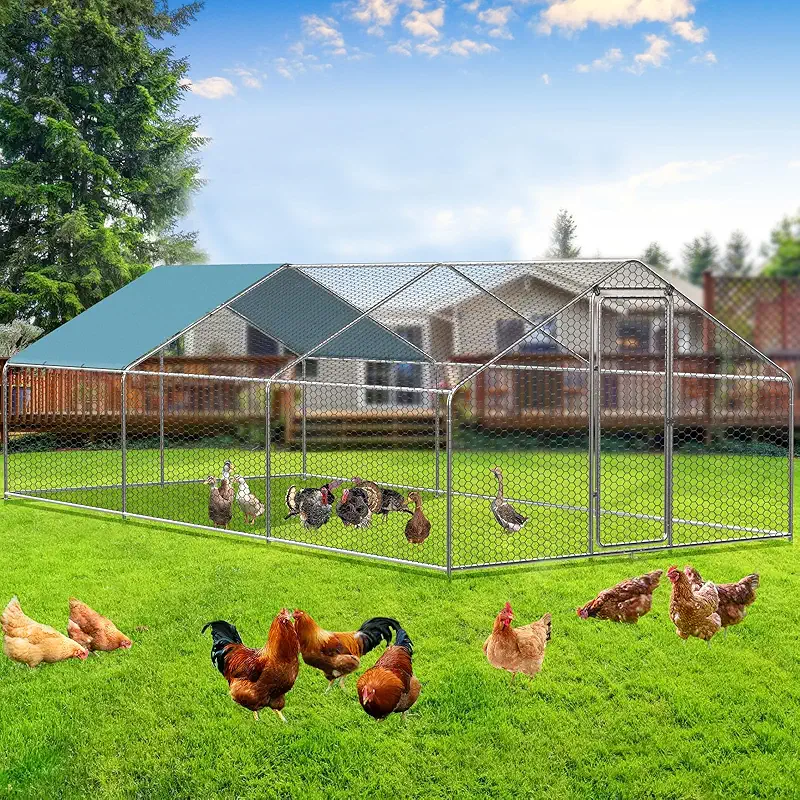
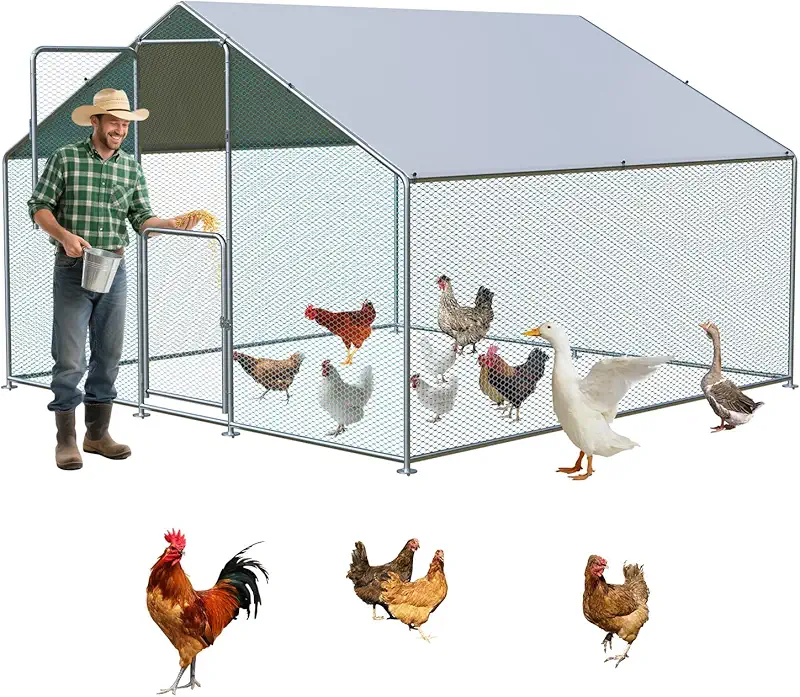
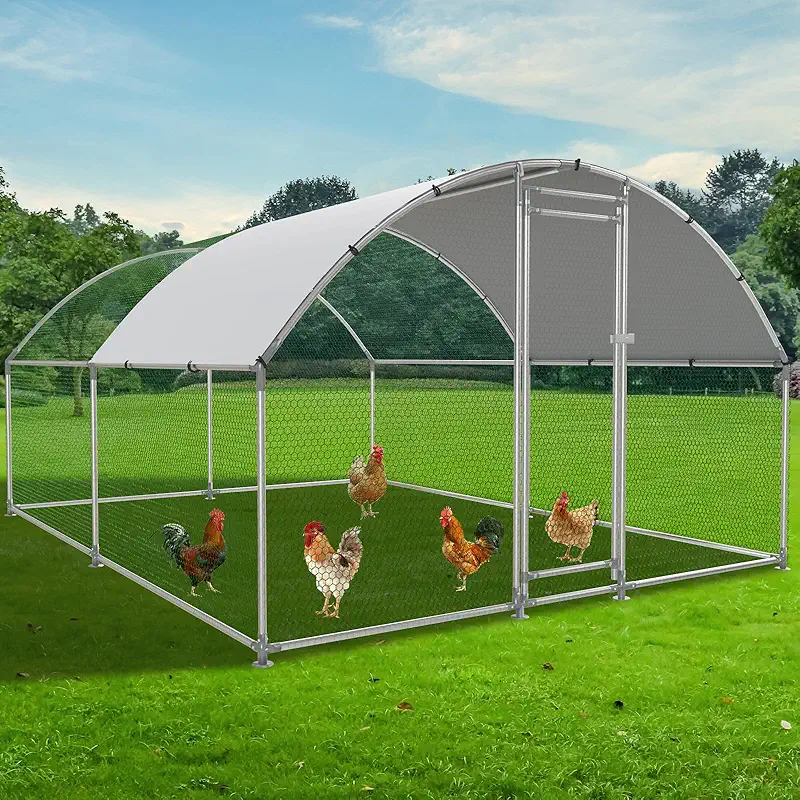
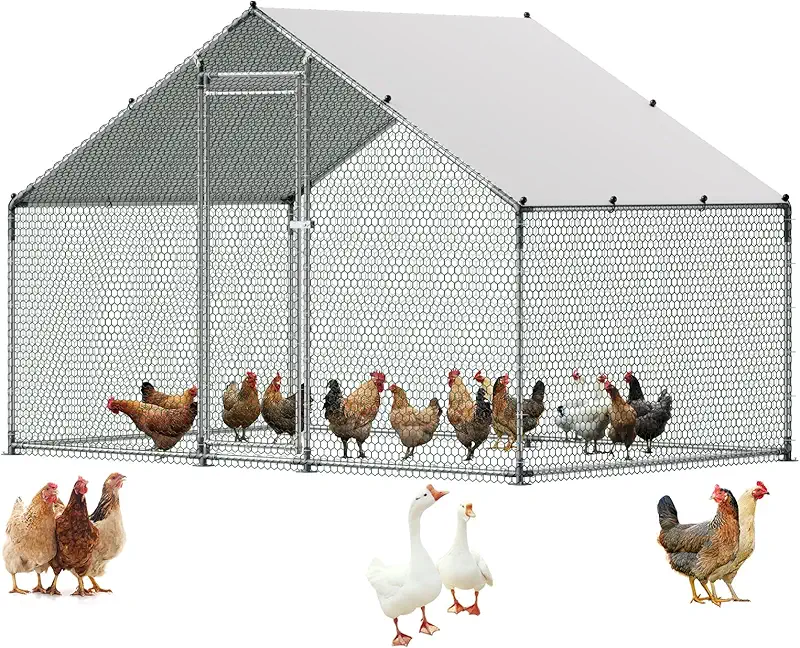
Different sizes, roofs and covers for small backyards and bigger flocks.
From shaky wood to steady steel
I have raised hens for many years now, and they have seen me at my best and at my worst.
They have watched me stumble out in the dark, boots half‑tied, to clear snow off the old coop roof.
They have listened to me mutter under my breath while patching a broken fence after a raccoon visit.
Over time, I learned that a solid metal chicken coop enclosure saves both my nerves and their feathers.
A metal frame does not care if it rains all week or if the sun bakes it in August.
It stands there, quiet and reliable, while the hens scratch, dust‑bathe, nap, and gossip about each other.
When I switched from a patchwork wooden run to a sturdy metal enclosure, the first thing I noticed was the calm.
My hens stopped pacing the fence line during storms. They knew the walls would not wobble.
In this guide I want to walk you through what I have learned, in simple words, as if you were standing here in my yard
with a cup of coffee in your hands and a curious hen pecking at your shoelaces. We will talk about size, roof styles,
covers, predator safety, and the small details that quietly change daily life with chickens.
Why a metal chicken coop enclosure can feel kinder to your flock
People often think “metal” means cold, harsh, or industrial. My experience has been the opposite.
A good metal chicken coop enclosure can actually make the yard feel softer and more peaceful,
because it removes constant little worries.
With a solid metal enclosure my hens get:
A steady frame that does not sag or warp in the rain.
Sides that stay tight, so predators cannot push in.
Room to move without me fearing every gap or weak joint.
I often stand by the run in the evening, when the light turns golden and the clucks soften into sleepy murmurs.
In the old days, I would scan every corner: “Is that board loose? Did the staple pull out?”
Now I mostly just count heads and whisper goodnight. The metal frame and welded wire sit there like a quiet promise.
A metal enclosure also gives you freedom. You can hang feeders from the roof bars without worrying they will twist
the structure. You can add windbreak panels in winter or shade cloth in summer and the frame supports it.
It becomes not just a fence, but the bones of your whole outdoor chicken space.
Different styles of metal chicken coop enclosure
There is no single “right” style. The best enclosure is the one that fits your yard, your weather, and your flock’s habits.
Over the years I have tried and helped friends set up several shapes and sizes.
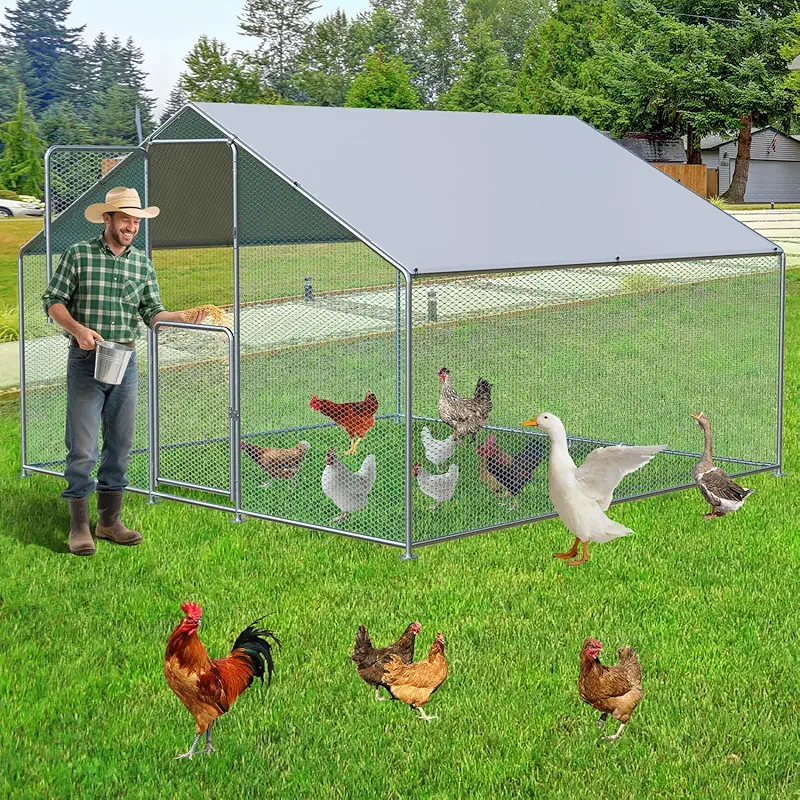
Walk‑in metal enclosures: Tall enough for you to stand inside.
These are my favorite because you can clean, refill water, and gently catch birds without crawling.
Low profile runs: Shorter and more compact. They can work for very small yards,
but you may need to stoop to reach feeders or hens.
Covered “house plus run” combos: A small coop house attached to a metal run.
Handy if you are just starting and want a more complete setup in one spot.
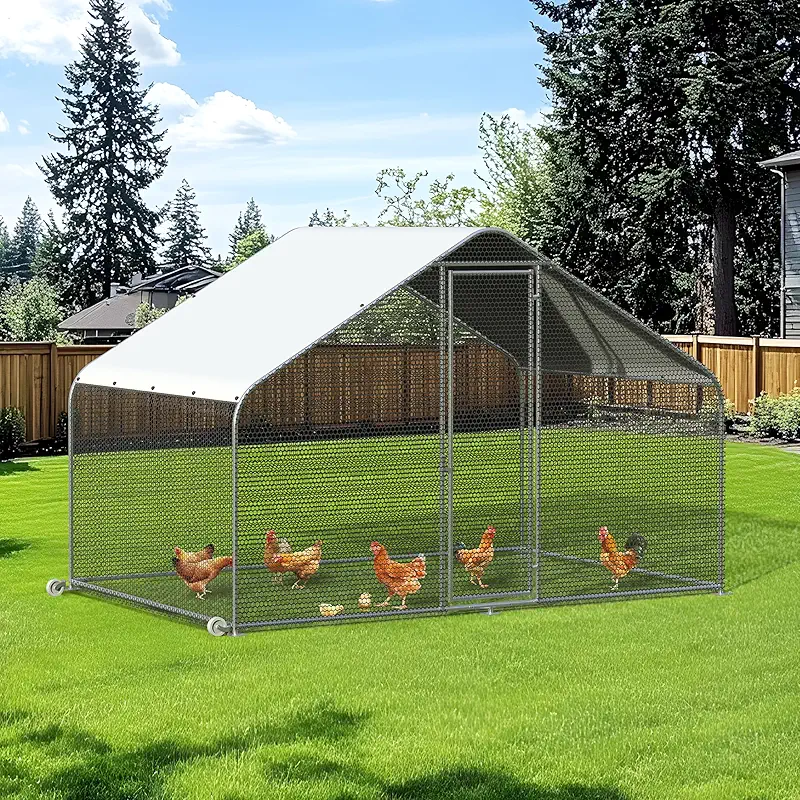
Many metal chicken coop enclosures also come with roof styles like a simple sloped roof or an arch shape.
The roof matters more than most people think. A good roof keeps snow from piling, rain from soaking the ground,
and wild bird droppings away from feed and water.
Looking at some typical metal chicken coop enclosure setups
Below I will describe a few kinds of metal enclosures you are likely to meet when you browse around.
These are not official names, just the way I talk about them with friends and neighbors.
No matter which way you lean, keep your hens’ daily comfort in mind: where they dust‑bathe, where they hide from wind,
where the shy ones can slip away from the bossy hen.
Tall walk‑in metal chicken coop enclosure
Good for 6–12 hens, depending on size and how much free‑range time they get.
This kind of enclosure feels almost like a little barn aisle. You walk in upright, sweep easily, hang feeders and
waterers at a comfortable height, and check every hen without chasing them around. Hens often grow calmer when they
see you move gently at their level instead of crawling on hands and knees.
Usually chosen by keepers who visit the flock several times a day and want cleaning to stay simple.
Medium metal run with roof cover
A tidy choice for 4–8 hens when yard space is limited.
I like this style for small suburban yards. The roof cover offers shade in summer and helps keep the run dry after rain,
so the hens’ feet do not spend all day in mud. A dry run also means less smell and fewer flies, something neighbors
quietly appreciate.
Often picked by new keepers who want a neat look that sits well beside a lawn or patio.
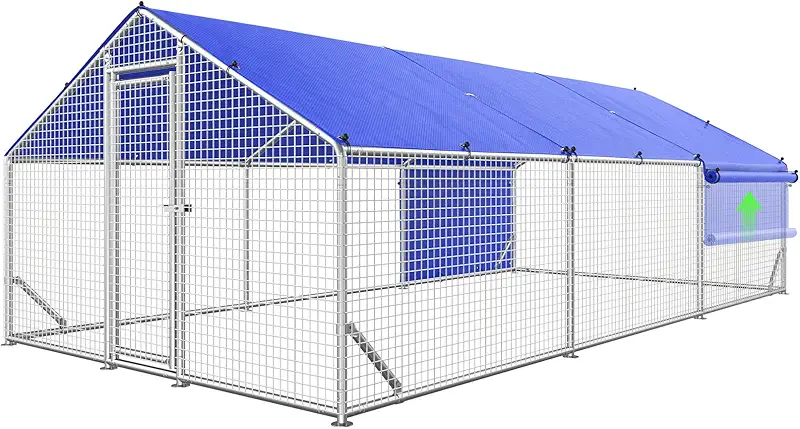
Large metal chicken coop enclosure for bigger flocks
For 10+ hens or mixed flocks with ducks and roosters.
When you keep more birds, flock harmony becomes more important than ever. A spacious metal enclosure lets
lower‑rank hens drift away from pushy ones, gives room for dust‑bathing spots, and allows several feeders so
nobody gets bullied at mealtime.
Common among small farms and families who collect eggs for relatives and neighbors.
Metal chicken coop enclosure with full side panels
Extra shielding from wind, snow and sideways rain.
In harsher climates I like to give my birds a place where winter winds cannot whip through the wire.
Enclosures that accept side panels or tarps allow you to create a snug “porch” area. The hens still get fresh air
and daylight, but they can tuck themselves out of the gusts.
Chosen where winters bite hard or autumn storms come sideways off the fields.
Safety first: keeping predators out and hens calm inside
My hens have taught me that they do not just need walls; they need to feel safe.
A frightened hen does not lay well, does not rest deeply, and can even turn on flock mates.
So when you look at a metal chicken coop enclosure, think like a fox for a moment, and then
think like a shy pullet.
Predator‑wise details I always check
Wire size: I prefer small openings so raccoon paws cannot reach in and pull at feathers.
Frame strength: The metal should not twist easily. If I can wobble it with one hand,
a determined animal might do the same.
Door latches: Simple hooks are often not enough. I like spring latches or carabiners.
Ground line: I look for ways to secure the bottom, like ground stakes or a wire “skirt”.
I still remember one particular night when I found muddy paw prints near the run, circling like a question mark.
The hens were all there, sleepy and unharmed. The tracks stopped at the metal wire. No pushed‑in corners,
no ripped mesh, just quiet breathing and a row of bright eyes peeking at my flashlight. I said “Good work, girls,”
but really I was thanking the enclosure.
Comfort details for gentle, steady hens
Safety is not only about keeping danger out; it is also about making life inside smooth and predictable.
Calm hens forgive the odd loud truck or barking dog much more easily when their daily routine feels solid.
Shade and shelter: Metal enclosures with roof covers or shade cloth help prevent heat stress.
I watch my hens in summer: if they pant with wings held out, they need more shade.
Dry footing: I like to add a layer of sand or wood chips under the roofed part,
so even after rain there is a dry area for dust‑bathing.
Quiet corners: Shy hens appreciate a tucked‑away corner with extra straw or leaves.
A longer metal run makes it easier to create these gentle spaces.
How big should your metal chicken coop enclosure be?
This is the question I hear most. Friends ask, “Is this enough for four hens?” and hold their hands apart as if
measuring a fish. The truth is that more space is almost always kinder, but we must gently work with the yards we have.
As a simple rule for the run area, I like to give at least 10 square feet per hen, and more if possible.
So for 6 hens, I would aim for 60 square feet or larger. If your birds will stay in the enclosure all day,
I push that number higher when I can.
Things I think about when choosing size:
How often will the hens free‑range outside the enclosure?
Do I plan to add more birds next year? (Most of us do.)
Will I sometimes need a separate area for a broody hen or a new arrival?
One of my early mistakes was choosing “just enough” space for the eight hens I had that year.
By autumn I had adopted two more from a neighbor who had to move. Suddenly the run felt busy,
and little quarrels broke out near the feeder. From then on I have always chosen a metal chicken coop enclosure
that feels a little bigger than today’s needs. Chickens have a way of multiplying in your heart.
Daily life inside a metal chicken coop enclosure
When your enclosure is well chosen, daily chores shift from stressful scrambles to small, quiet rituals.
I like to open the run in the morning while holding a warm mug. The hens pour out of the coop house,
wings stretching, soft muttering as they hop down the ramp. Because the metal frame is high and steady,
I move easily along the inside, collecting the previous day’s feeders and checking water.
I hang my main feeder from a crossbar so it stays at chest height for the hens. That simple trick keeps
the feed cleaner and reduces waste. In a flimsy structure I always worried about the weight;
in a solid metal chicken coop enclosure I do not give it a second thought.
Every week or so, I rake out the busiest area of the run, especially under the feeder,
and add fresh wood chips or sand. Because the roof keeps the ground from turning to mush,
this job is quick and almost pleasant. The hens follow the rake, hunting for the odd bug I uncover,
scolding me in gentle clucks if I block a favorite dust spot for too long.
And in the evening, when I lock the doors, I run my hand along the metal posts.
They are cool, firm, and quiet. It gives me a sense of peace to know that even if the night brings foxes,
raccoons, or stray dogs, there is a solid boundary between them and my sleeping flock.
Browse different metal chicken coop enclosure shapes and covers that could fit your yard.
FAQ about choosing a metal chicken coop enclosure
Is a metal chicken coop enclosure too hot for summer?
It can be hot if you leave it bare in full sun, just like a car in a parking lot.
But with a good roof cover and some shade cloth on the sunny side, a metal enclosure can stay pleasantly cool.
I always make sure my hens have shade from mid‑day sun, plenty of fresh water, and good airflow.
In my yard, the metal frame actually helps because I can clip shade cloth and tarps right to it,
moving them as the sun shifts through the seasons.
Will metal rust and fall apart quickly?
Most metal chicken coop enclosures use galvanized steel, which holds up well outdoors.
Over the years I have seen a little surface rust where I scratched the coating or at some joints,
but nothing serious. I keep an eye on those spots and, if needed, touch them up with a bit of rust‑resistant paint.
Compared with the wooden runs I built long ago, my metal structures stay straighter and stronger much longer,
especially in wet seasons.
How many chickens can I keep in a typical metal chicken coop enclosure?
That depends on the size of the enclosure and how much time your birds spend outside it.
As a gentle guide, I like at least 10 square feet of run space per hen.
So if a metal enclosure offers around 60 square feet of floor area, I feel comfortable with about six hens
that also free‑range sometimes. If they stay inside all day, I try to go bigger.
When in doubt, I always lean toward fewer birds or a larger enclosure, for their sake and my own peace of mind.
Can I move a metal enclosure if I change my layout?
Many metal chicken coop enclosures can be moved, but it is more of a careful shuffle than a light push.
With two adults it is usually possible to lift and walk a medium‑sized run a short distance,
especially if you empty feeders and remove heavy items first. I have done this when rotating my hens onto fresh grass.
For larger structures, I sometimes take off a panel or two to make them lighter and easier to shift.
I always move slowly so the frame does not twist.
Do I still need a separate coop if I have a metal chicken coop enclosure?
Yes, I strongly recommend a proper coop or sheltered sleeping area inside or attached to the metal run.
The enclosure keeps predators out and gives space to roam, but hens also need a cozy, draft‑free place to roost at night
and to lay eggs. On my place, the coop sits inside the metal run like a small wooden house in a fenced yard.
The metal enclosure protects the whole area, while the coop offers warmth, nest boxes, and roost bars.