
Metal chicken coop for 10 chickens
Metal chicken coop for 10 chickens
When you keep ten hens, their coop is more than just a cage. It is their tiny village, their safe night house, and your peace of mind on stormy evenings. I have raised hens for many years, and metal coops have been my quiet allies against foxes, wind and rusting old wood.
On this page I share what I have learned, from my own flock, about choosing a metal chicken coop for 10 chickens that feels safe, calm and easy to live with every single day.
Note: links on this page may be affiliate links. The price is the same for you, but it helps me feed my own hens and keep sharing real-life advice.
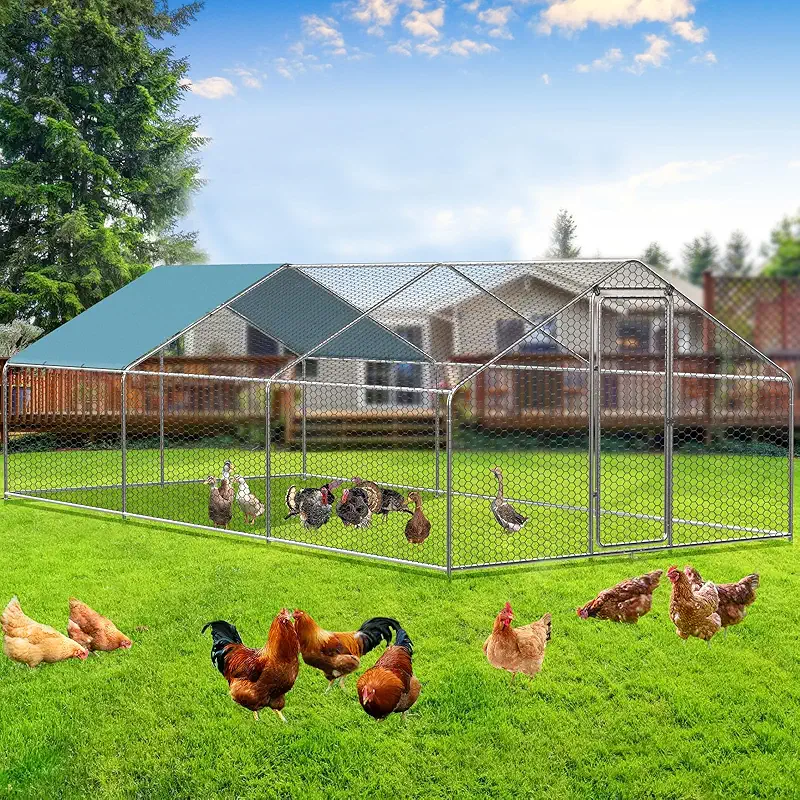
When I bought my first metal chicken coop for 10 chickens, I was tired. Tired of fixing soft wooden corners, tired of dragging heavy runs around the yard, and tired of waking up at night when I heard the distant bark of a dog or the cry of a fox. I wanted something that felt solid even when the wind howled across the field.
My hens are not numbers to me. Each one has a name and a little story. I still remember how Maple, my quiet red hen, used to freeze whenever a shadow crossed the old coop. Since I moved them into a sturdy metal run with plenty of space, she walks with her head higher. That is why I care so much about choosing the right coop, especially for ten birds. Ten is just at that point where crowding can start to cause stress, pecking and illness if the space or design is wrong.
A good metal coop is not about shining silver bars or fancy shapes. It is about calm nights, easy cleaning, and hens that stretch their wings without bumping into each other. In the next sections, I will walk you through the simple things I always check before I say “yes, this is good enough for my flock”.
How much space does a metal chicken coop for 10 chickens really need?
The first mistake many new keepers make is believing the number written in the product title. A coop might say “for 10–12 chickens” but that usually means ten very small, polite birds that never flap, never dust bathe and never argue. Real hens are not like that.
For my own medium-size hens, I aim for at least:
- 4 square feet per hen indoors for sleeping and rainy days.
- 8–10 square feet per hen in the run if they are not free-ranging daily.
- Enough headroom so they can flap onto a perch without hitting the roof.
That means a metal chicken coop for 10 chickens ideally offers around 40 ft² of sheltered area and 80–100 ft² of secure run, if your birds spend most of the day inside it. If you let them free-range in the garden every afternoon, you can live with a little less, but I still prefer generous space. Hens forgive many things; crowding is not one of them.
I remember one winter when I had to confine my flock for weeks because of heavy snow and hawks constantly circling above. The only reason everyone stayed calm was the extra space in the metal run. They still had room to dust bathe, stretch, and keep a respectful distance. Feathers stayed smooth, combs stayed bright red, and no one turned into a bully.
Why metal instead of wood for 10 chickens?
I still like wooden coops for small backyard flocks, but once you keep around ten hens, your coop lives a harder life. There is more scratching, more droppings, more dust, more pecking and more weight on every joint. Here is what I have seen again and again with my own birds.
What I love about metal coops
- Stronger against predators. A fox can chew soft wood; strong wire and metal bars are far less forgiving.
- Easier to clean. Smooth metal surfaces handle scraping, hosing and disinfecting better.
- Less rot and warping. Rain and snow slowly eat away at wood, especially on the ground.
- Longer runs are possible. Metal frames support larger enclosures without bending as easily.
What to watch out for
- Heat in summer. Bare metal can get hot, so shade and good airflow are important.
- Cold edges in winter. Hens need a sheltered, draft-free inner house, not just open wire.
- Cheap thin wire. Some “metal” coops use weak mesh that dogs can bend; I avoid those.
In my own yard, metal has survived storms that snapped old wooden panels in neighboring gardens. After one particularly wild night, I walked outside expecting the worst. Instead I found my hens calmly preening, their metal run still solid, only a few leaves inside. That quiet morning convinced me to stick with metal frames for any flock of ten or more birds.
Looking closer at a metal chicken coop for 10 chickens
To make things easier, let us imagine we are standing together in front of a decent-sized metal chicken coop for 10 chickens. I will tell you what my eyes look for, step by step, just as I do when I choose housing for my own flock.
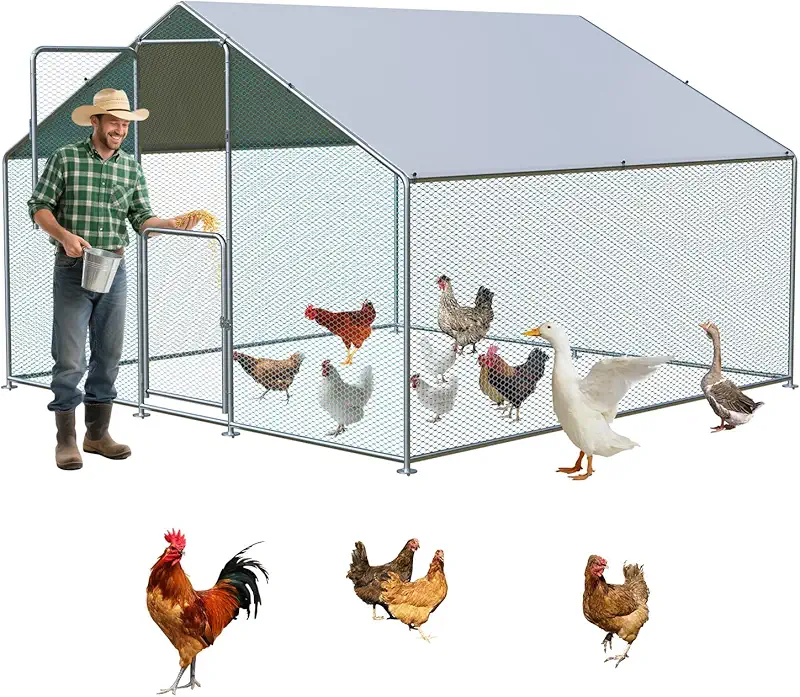
1. The frame and joints
I gently shake the frame. It should not wobble like a loose gate. Ten hens are not heavy by themselves, but wind and time will test every joint. I prefer coops with:
- Galvanized steel tubes or sturdy square metal bars.
- Bolted joints or strong clamp connections, not flimsy push clips.
- A frame that feels heavy enough to stay put, yet light enough to move with two people if needed.
On one of my older runs, I once skimped and bought a lighter frame. The first real storm twisted it just a little. After that, the door never closed quite right again. I learned my lesson: the backbone of a coop matters more than nice paint or pretty shapes.
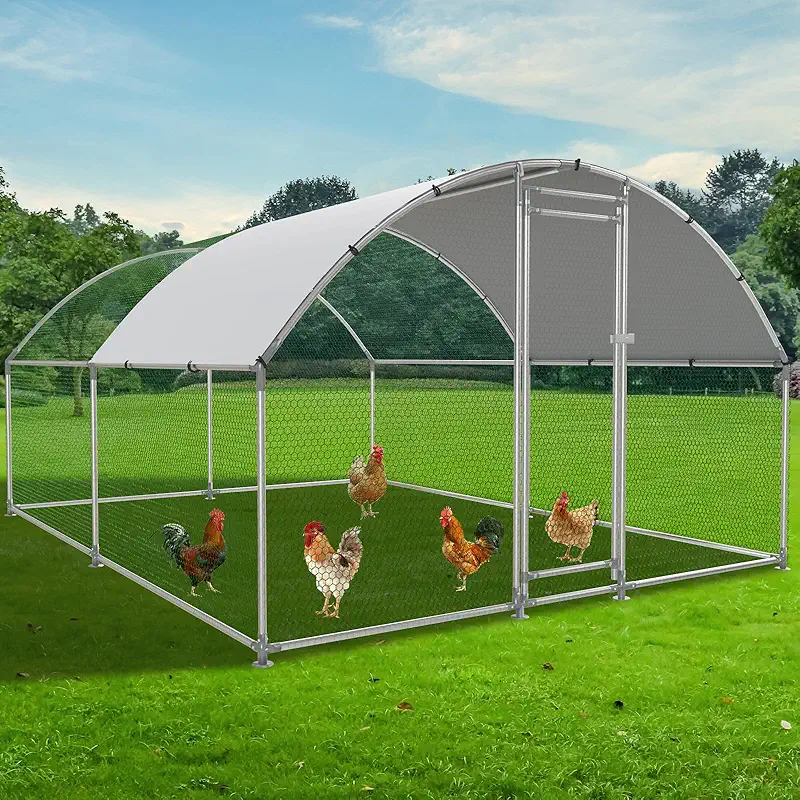
2. The wire and openings
Predators test your coop at night when you are warm in bed. I have seen foxes climb, dogs jump, rats squeeze and raccoons reach their hands through wires. That is why I pay close attention to:
- Wire thickness: thin decorative wire is not enough for real predators.
- Mesh size: smaller gaps keep out rats and make it harder for paws to grab birds.
- Secure attachment: wire should be fastened tightly to the frame, not just loosely tied.
One night, a stray dog tried to dig under my metal run. He did not get in, but in the morning I saw dirty paw marks and a shallow trench. The wire and frame were untouched. That morning I quietly thanked my past self for choosing stronger mesh, even though it had cost a little more.
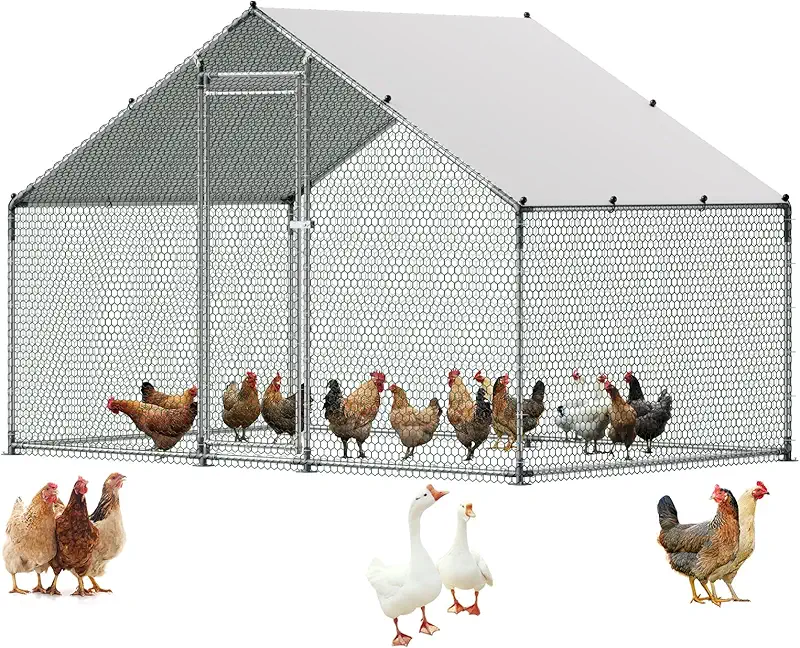
3. Roof, shade and rain protection
Hens are tough, but they do not like being soaked or baked. A metal chicken coop for 10 chickens should give them a dry, shaded place every single day, in every season. I look for:
- A solid or tarp-style roof over at least part of the run.
- Good slope so rain does not pool and sag on top.
- Enough covered area that all ten hens can shelter together.
On hot days, my girls all crowd under the roofed corner, dust bathing in the dry soil and gently panting. On wet autumn days, they line up along the driest spot, watching the rain like people watching a slow movie. A good roof keeps them comfortable without you having to rush outside with emergency covers.
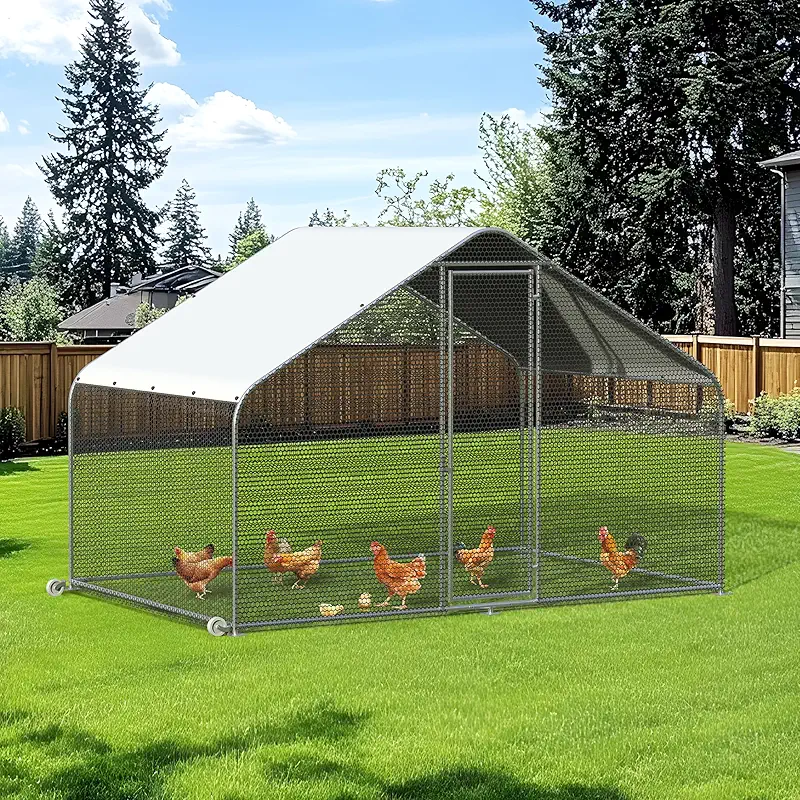
4. Doors, access and cleaning
This is the part most people ignore at first—and then curse later. Ten hens mean a lot of daily chores: feeding, watering, collecting eggs, checking feet and feathers, cleaning droppings. If you cannot comfortably enter and move around the coop, these simple tasks become back-breaking.
I like:
- A human-sized door that I can walk through upright.
- Doors that open wide enough for a wheelbarrow or bucket.
- Latch systems that are simple for humans, tricky for raccoons.
When I first started, I used to crawl into a low wooden pen to refill water in winter. My coat caught on nails, my knees were always muddy, and the hens rushed around my head like little helicopters. Now, with taller metal runs, I step in calmly, speak softly, and everyone relaxes. Cleaning takes minutes instead of an hour.

5. Inner house, roosts and nesting space
Many metal coops are mainly runs, with the inner sleeping house added as a separate piece. Ten hens need:
- At least 3–4 good perches, about 8–10 inches per bird.
- 3–4 nesting boxes, so lining-up hens do not argue.
- Ventilation near the roof, but no drafts at perch height.
My hens like to sleep close together, but not on top of each other. If perches are poorly placed, the lowest hen ends up covered in droppings by morning. So I always check if there is room to arrange roosts at the same height, with just a little space between them. Calm sleep makes calm days.
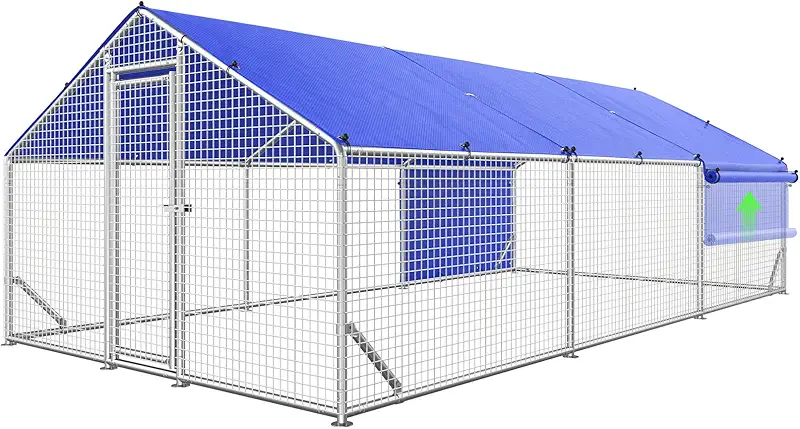
With a flock of ten, a solid metal run combined with a simple inner house often gives you more real comfort for the money than tiny decorative wooden “palaces”.
When I choose, I picture myself cleaning it on a dark, rainy evening. If it still feels manageable in my mind, it is usually a good sign.
Day-to-day life with a metal chicken coop for 10 chickens
A coop can look perfect in photos and still be frustrating in daily use. Let me share how my own routine feels with a metal coop and ten hens, so you can imagine your future mornings and evenings more clearly.
I start my day before sunrise. I put on my boots, listen for the soft clucking inside the coop, and open the door. Because the metal run is secure, I am not in a rush if I oversleep by half an hour; my hens are still safe. They hop down from the roosts, stretch their wings, and make their quiet morning sounds. I breathe out. Everyone is still here.
Cleaning is simple. I use a wide scraper to remove droppings from any flat metal surface, then add fresh bedding to the inner house. Once in a while I hose down the run walls and let the sun dry them. Metal does not soak up smells the way old wood does, so the air stays fresher with less effort.
In summer, I attach extra shade cloth on the sunny side of the run and place waterers in the coolest spots. In winter, I cover part of the wire with clear plastic to block wind while still letting in light. The frame makes it easy to tie and remove these seasonal additions.
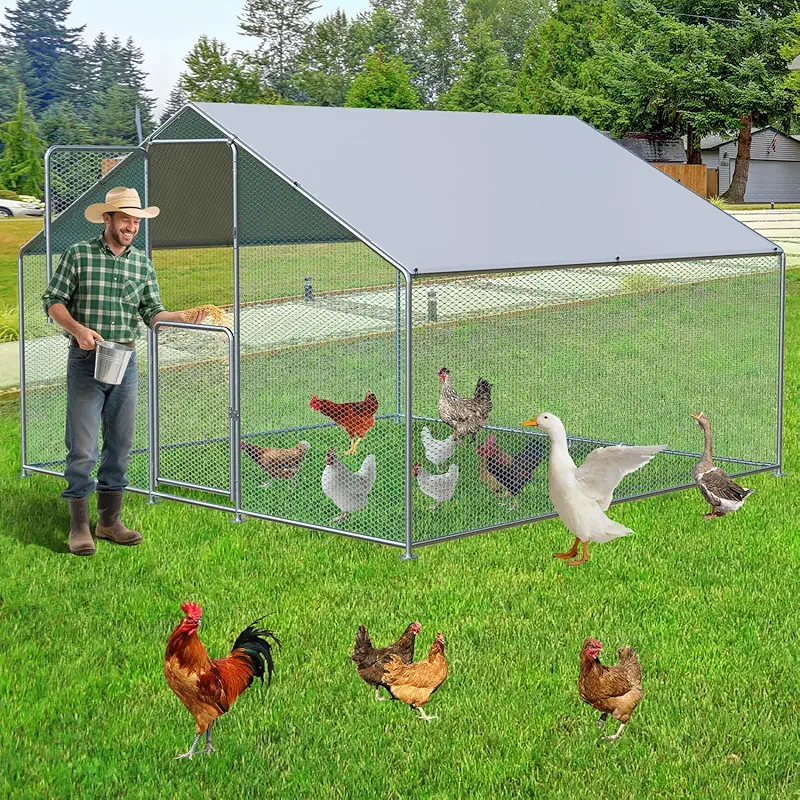
The greatest gift of a good metal chicken coop for 10 chickens is not its shine or size. It is the quiet trust you build with your flock. When storms roll in and the sky turns strange, I know my hens are dry and fenced. I can sit by the window, sip tea, and listen to the rain without that tight knot of worry in my chest.
FAQ about choosing a metal chicken coop for 10 chickens
1. Is a metal chicken coop for 10 chickens safe in winter?
Yes, it can be very safe in winter if you give the hens a draft-free sleeping area and deep, dry bedding. Metal by itself can feel cold, so I always use a well-insulated inner house or wooden sleeping box inside the metal run. The metal frame keeps predators out, while the inner house keeps warmth in.
I do not heat my coop unless the weather is truly extreme. Instead, I focus on keeping everything dry and blocking strong winds. Ten hens together share body heat, and if they are healthy and dry, they handle cold far better than damp drafts.
2. Will a metal coop get too hot for my hens in summer?
It can, if there is no shade or airflow. Metal under direct sun can feel like an oven. That is why every metal chicken coop for 10 chickens should have shaded areas, good ventilation and, if possible, a little natural shade from trees or buildings.
In my yard, I hang extra shade cloth on the sides that face the harshest afternoon sun. I also place waterers in several spots, so no hen has to cross the brightest, hottest area to drink. On very hot days, I sometimes freeze bottles of water and lay them in shallow trays so the air around them feels slightly cooler.
3. How long will a metal chicken coop for 10 chickens last?
With galvanized metal and decent care, many coops last for years. My oldest metal run has passed through heavy snow, summer storms and playful children leaning on it. After several seasons, only the tarp roof needed replacing; the frame and wire are still strong.
To extend life, I check for rust once or twice a year, especially at joints and along the ground. If I see any, I clean and treat it early before it spreads. I also avoid constantly dragging the coop on rough ground; lifting and moving with help is kinder to the frame.
4. Can I move a metal chicken coop for 10 chickens around my yard?
Many metal runs can be moved, but it depends on their size and weight. A large, solid metal chicken coop for 10 chickens will usually need two adults to lift and shift it a few feet at a time. I like to slide mine slowly across the grass every few weeks so the ground inside can rest and regrow.
If you plan to move your coop often, look for designs that are not too tall or heavy and that have simple rectangular shapes. Curved or very tall roofs can catch the wind when you lift them, making the move more awkward and less safe.
5. How do I know if a metal coop is really big enough for 10 hens?
Ignore the “for 10 chickens” label for a moment and look at the actual measurements. Write them down, then mark the length and width on the ground with a rope or sticks. Step inside that space and imagine ten feathered bodies dust bathing, stretching wings, and queuing for the feeder.
If it already feels tight with just you standing there, it will feel even tighter for your hens. When in doubt, I size up. A calm flock is worth more than a little money saved. If you would like to see different sizes and shapes side by side, you can browse several options here and compare quietly at your own pace.