
Metal chicken coop kit
Honest thoughts on choosing a metal chicken coop kit for calm, safe and happy hens.
I still remember the first night a fox circled my old wooden coop. I could hear my hens shifting on the roost, soft worried clucks in the dark. I was standing there with a flashlight, heart pounding, asking myself if I had done enough to keep them safe.
That was the season I moved to a sturdy metal chicken coop kit. I did it for my birds first, and also for my own peace of mind. Since then, I have helped neighbors and friends choose their own metal runs and coops, and I have seen which details really matter in daily life.
On this page I want to talk to you as if we were standing by the run together, boots in the mud, a hen under each arm. I will share gentle, practical advice, small stories from my flock, and simple ways to decide if a metal chicken coop kit is right for you and your birds.
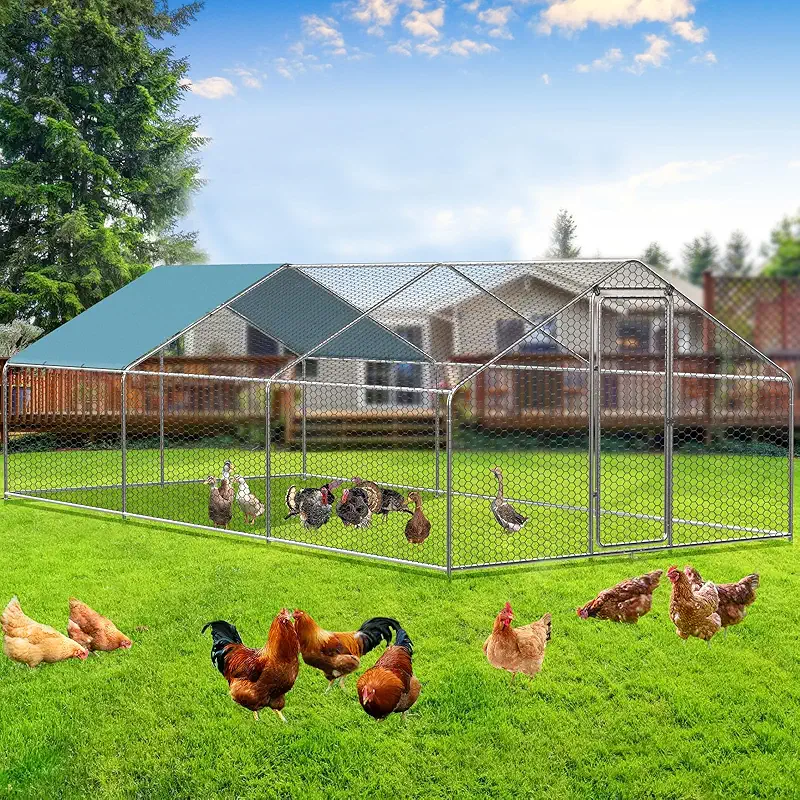
When I choose a new coop or run, I don’t rush. I take my time, read carefully, and picture my birds inside it in the worst weather we get here.
Why a metal chicken coop kit can feel like a quiet promise to your hens
Wood has a lovely, old-farm charm. I still use wood for my nesting boxes. But after years of rain, snow, and stubborn predators, metal frames and wire panels started to feel less like a luxury and more like a calm, steady promise to my flock.
With a metal chicken coop kit, I notice fewer little worries nibbling at my mind. The frame does not swell in wet weather, doors close cleanly, and the structure does not twist when I lean against it with a bale of straw in my arms. My older hen Daisy loves to scratch near the edges; she has never managed to dig under the heavy base of the metal run.
Another quiet blessing is cleaning. I hose down the wire when mud and feathers build up, and it does not soak up moisture. In warm months, this keeps the smell gentler and flies less interested. I still deep-clean the bedding of course, but the metal sides themselves do not demand much attention.
Predators test the boundaries almost every week. I find teeth marks on the mesh, small paw prints in the damp soil, and once, a raccoon that spent half an hour trying to find a weak spot while I watched from the kitchen window. When the mesh is strong and fixed to a solid metal frame, I sleep better. My hens do too; their night clucks are softer and slower.
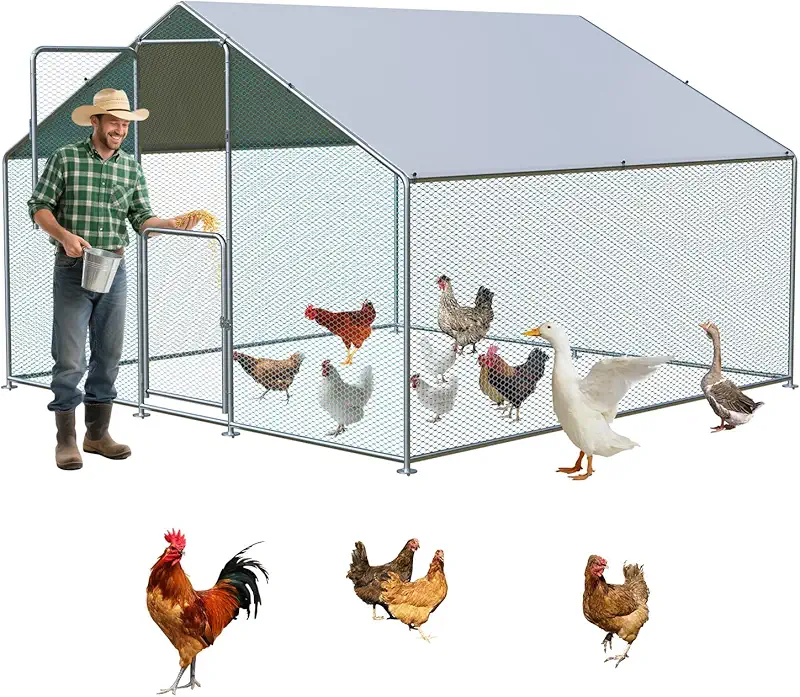
I always picture my clumsiest hen, Bessie, bumping into the sides when I choose a coop. If it can handle her, it can handle anything.
Key things I look for in a metal chicken coop kit
When I help a friend choose a kit, I ask a few gentle but important questions. These questions are not about fancy features, but about real moments: heavy snow, hard rain, summer heat, muddy boots, and sleepy early-morning egg collection.
1. Size that fits the flock, not just the yard
It is tempting to choose a coop that fits perfectly into a corner of the garden, but your hens don’t understand corners; they understand space to stretch their wings and dust-bathe in peace. For standard-sized hens, I like at least 10 square feet of run space per bird if they are mostly confined. If they free-range daily, I can be a little more flexible, but I still give them breathing room.
I often picture my birds on a rainy day when they cannot roam the yard. If I imagine them shoulder to shoulder with no room to scratch, I know the coop is too small. Overcrowding makes them peckish and sharp with each other, and I prefer a flock that murmurs, not squabbles.
2. Mesh strength, gaps and peace of mind
Thin, flimsy mesh is one of the first things I rule out. My foxes can bite through weak wire faster than I can boil the kettle. I prefer welded wire or a strong hex mesh that feels firm under my hand. If I push with my palm and the wire bows easily, I imagine a determined raccoon doing the same.
I also pay close attention to mesh gaps. Small chicks and bantams can squeeze through tiny spaces, and rats and weasels love a careless opening. When I look at a metal chicken coop kit, I check photos and descriptions for mesh size. I like gaps that are small enough that I cannot easily poke a finger through.
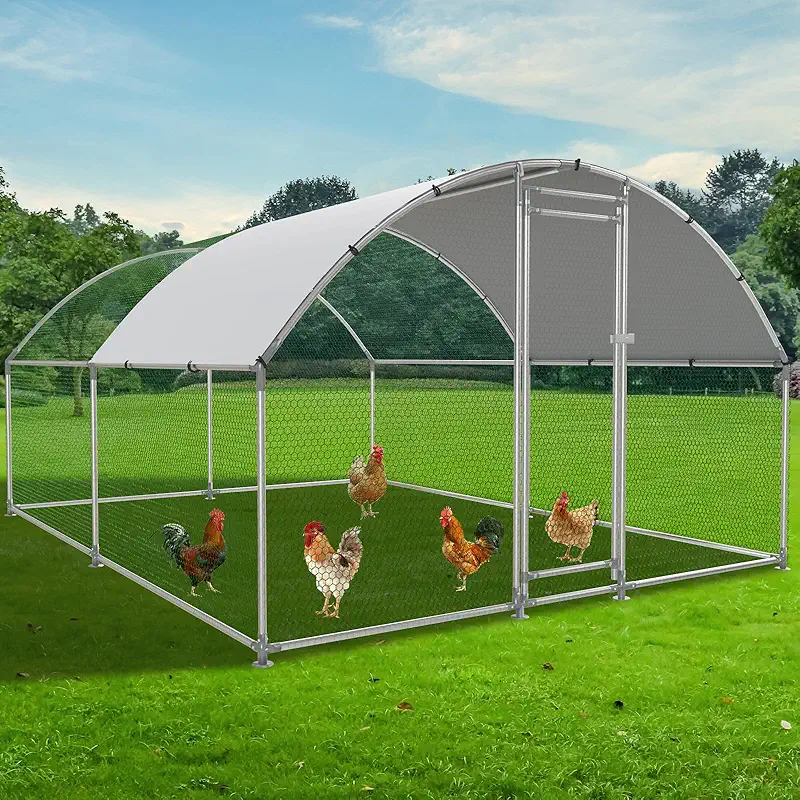
3. Roof style and weather in your yard
My weather is a little wild: hot summers, snow in winter, heavy autumn rains. A decent roof on a metal chicken coop kit is not just about keeping feathers dry; it keeps feed, bedding, and your own hands dry too. A sloping or peaked roof helps snow slide off instead of piling up and stressing the frame.
I like roofs that give a good amount of shade but still allow breeze. On very hot days, I hang wet burlap along the sunny side of the run and let the wind blow through. The metal structure handles that extra bit of weight and moisture without warping.
Pros and cons of metal chicken coop kits from my own backyard
Nothing in chicken keeping is perfect. Metal runs and coops solve many problems, but they bring their own small challenges. Here is how it feels after years of living with them.
What I truly appreciate
- Frames that stay square and steady even after storms and kids leaning on them.
- Mesh that does not swell, rot, or splinter like wet wood can.
- Cleaning with a hose and scrub brush instead of sanding and repainting.
- Better resistance to chewing from foxes, raccoons and neighborhood dogs.
- Less worry about termites and wood-boring insects.
- Easy to extend with extra panels when my heart says “just two more hens.”
What can be a little tricky
- Metal can get hot under strong sun, so shade and ventilation matter a lot.
- Assembly often needs two calm pairs of hands and patience with bolts.
- In very windy spots, the structure may need extra anchoring to the ground.
- Without extra draft protection, winter winds can whistle through the mesh.
- Sharp edges from cut wire need to be checked and gently bent or covered.
How I set up a new metal chicken coop kit step by step
The day a new kit arrives, I put on my oldest clothes, make a pot of tea, and remind myself that the goal is not speed but safety. Here is the way I usually go about it.
My gentle assembly routine
-
Choose the spot with your hens in mind.
I watch where the sun falls throughout the day and pick a place with morning light and afternoon shade. I avoid low, soggy ground if I can, or I build up a slight mound with gravel and earth. -
Lay out every piece before you begin.
I spread all the tubes, connectors, and mesh panels on the grass and match them with the instruction sheet. This quiet sorting step saves frustration later when bolts seem to vanish. -
Build the frame slowly and square.
I loosely fit all corners first, then tighten everything once the shape looks right. If a friend is helping, we keep our voices calm; hens hear the mood of their keepers. -
Fix the mesh carefully.
I run my hand along each edge, checking for gaps and sharp points. When I find a prickly bit, I bend it outward and down or cover it with tape or a cap so no hen or child gets scratched. -
Anchor the coop to the earth.
In windy spots, I use ground anchors or heavy paving slabs along the base. I remind myself that foxes are patient and wind has a long memory. -
Add roosts, nests, and comfort.
A bare metal run becomes a home when I bring in wooden perches, nesting boxes filled with straw, a dust bath, and a hanging feeder. I always leave a little open space for their joyful sprints.
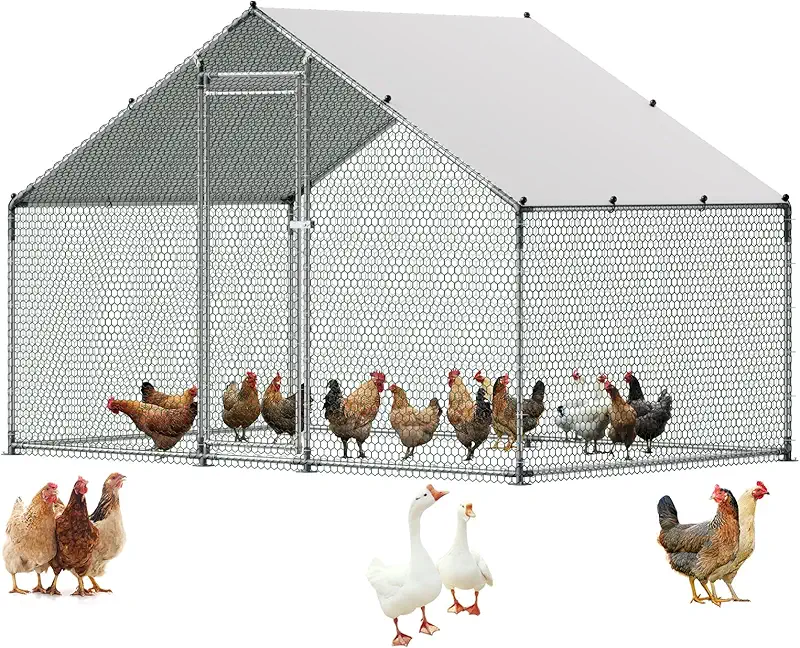
When I move hens into a new metal coop, I spend the first evening sitting nearby. Their soft bedtime talk tells me whether they feel safe.
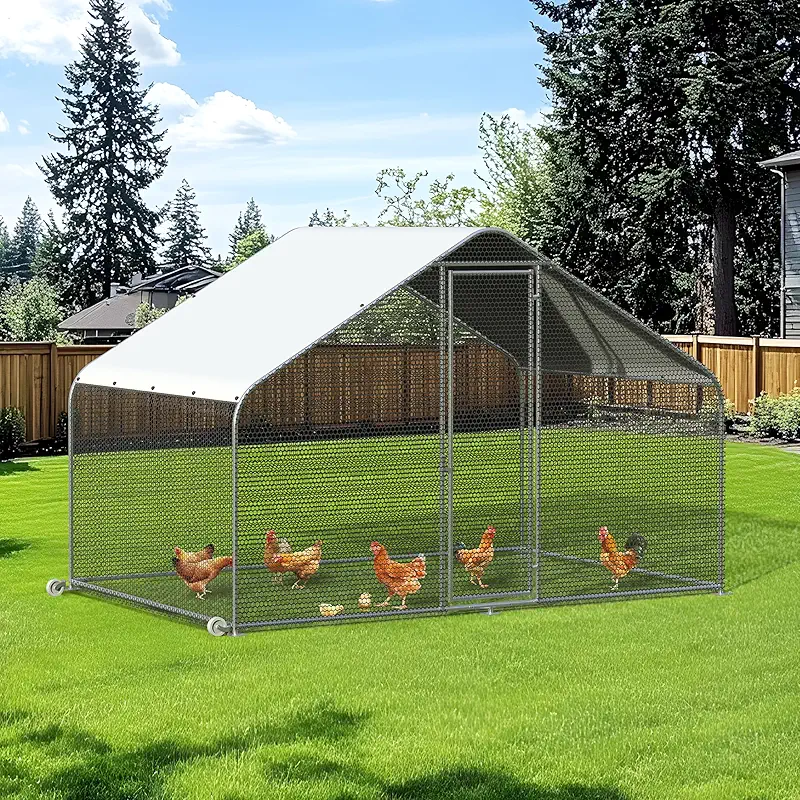
Adapting a metal chicken coop kit to your seasons
The same metal frame can feel very different in January and July. Over the years, I have learned a few gentle tweaks that make my hens comfortable in both biting cold and heavy summer heat.
Keeping hens snug in winter
Metal itself does not make a coop cold; drafts and dampness do. In winter I hang windbreak cloth or plywood panels on the windiest sides of the run, leaving the top open for fresh air. Inside the sheltered area I add extra dry bedding, raised roosts, and a thick layer of straw for scratching.
I never fully seal a metal chicken coop kit because hens need ventilation to avoid moisture building up. Frost on combs often comes from damp air, not just low temperature. When I see their breath in the cold air but the bedding is dry, I know I have the balance about right.

Keeping hens cool in hot weather
In summer, shade is kindness. I use shade cloth, old sheets, or climbing plants over parts of the run. Metal frames hold these easily. I make sure water is always in the shaded area, and I sometimes float a frozen bottle in the drinker during heat waves.
Dust baths become very important when it is hot. I keep a wide shallow tub of dry sand and soil in the run. Watching my hens roll on their backs, wings stretched into the dirt, almost makes the heat feel worth it. The metal structure simply gives them a safe circle in which to do it.
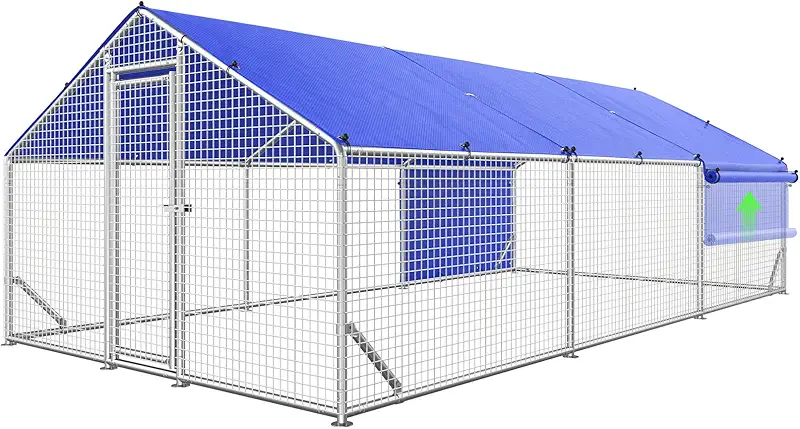
When a metal chicken coop kit is the right choice for you
I do not believe there is one perfect coop for everyone. But there are a few signs that a metal kit might gently suit your life and your flock.
- You want a structure that can stand in all weather with little fuss.
- Your yard has curious predators and you want stronger mesh and frames.
- You don’t enjoy repainting and repairing wood every few years.
- You may want to expand the run later as your flock slowly grows.
- You like the idea of washing down surfaces for easier cleaning.
If you love the warmth of wood, remember that you can still mix materials. Many people use a secure metal run along with a wooden house for roosting and nesting. The hens care less about the material and more about whether they can feel safe, dry, and free to be themselves.
When I look over the range of metal chicken coop kit options, I try to imagine one simple scene: a stormy night, with wind slapping rain against the sides and my most timid hen, Clover, tucked into the middle of the flock. If I can picture the kit standing firm through years of nights like that, I feel more at ease choosing it.
Take your time. Read through the details slowly, the way you might read a recipe for a special family meal. Your hens may never thank you with words, but you will see their gratitude in the way they relax, dust-bathe, lay eggs, and greet you at the door each morning.
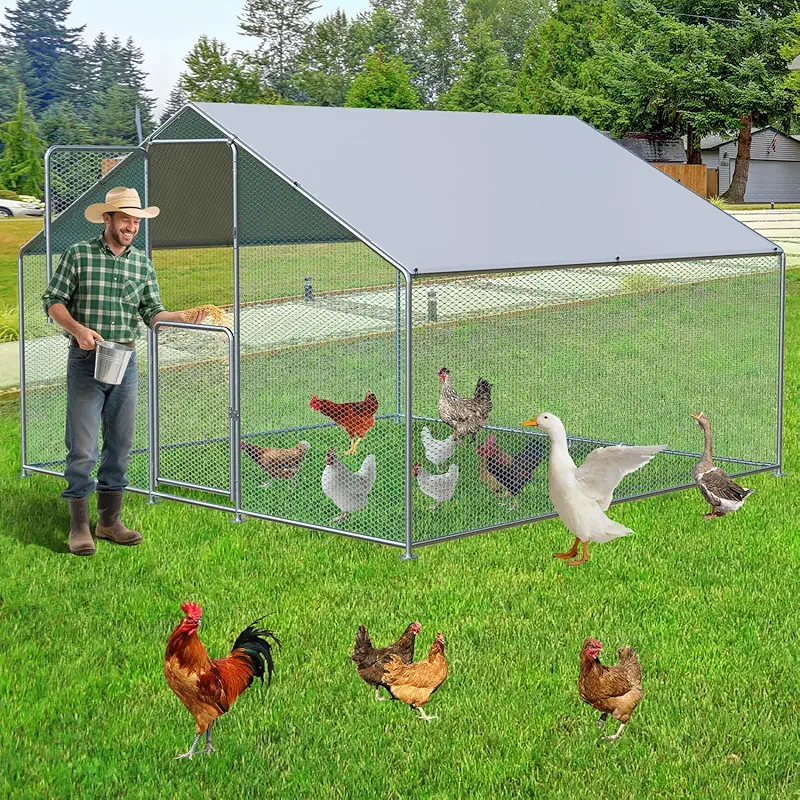
Metal chicken coop kit – FAQs from my yard
Yes, they can be very safe in winter when you think about drafts and dampness first. Metal itself does not make your birds cold; open sides and wet bedding do. I like to use windbreaks on the exposed sides of the run, deep dry bedding, and raised roosts where hens can tuck their feet under their feathers. As long as air can still move gently through the top to carry out moisture, my hens stay comfortable, even when the metal frame is cold to the touch.
Any coop can get too hot if it is in full sun with no shade, whether metal or wood. With a metal kit, I pay special attention to shade and airflow. I hang shade cloth, add a roof cover, and place water where it is always cool. I also make sure at least two sides of the run are open enough for a good breeze. When I see my hens panting and holding their wings away from their bodies, I know it is time for extra shade or a mister, no matter what the coop is made of.
With kind handling and a little care, a good metal kit can last many years. My first one is still standing strong after several winters and some silly accidents with the wheelbarrow. I check for rust once or twice a year, especially near the ground, and I touch up any rubbed areas where protective coating has worn away. Because the frame does not swell or rot, it tends to stay straight and reliable longer than most cheap wooden frames.
Many kits can be moved, but not always easily by one person. Smaller runs can sometimes be dragged slowly across the yard by two people, with the hens removed for safety. Larger structures might need to be partly disassembled. When I know I may want to move a run later, I avoid setting posts in concrete and instead use ground anchors or heavy blocks that I can reposition.
I think so, as long as you are patient with the assembly. Many first-time keepers like metal kits because they solve some big worries: predators, rot, and major repairs. The main learning curve is understanding how much space hens truly need, how to arrange perches and nest boxes inside, and how to manage weather. The metal frame simply gives you a strong, predictable starting point while you grow confident as a keeper.