
Metal chicken coop with cover
A safe dry yard so your hens can scratch, dust-bathe, and gossip in peace.
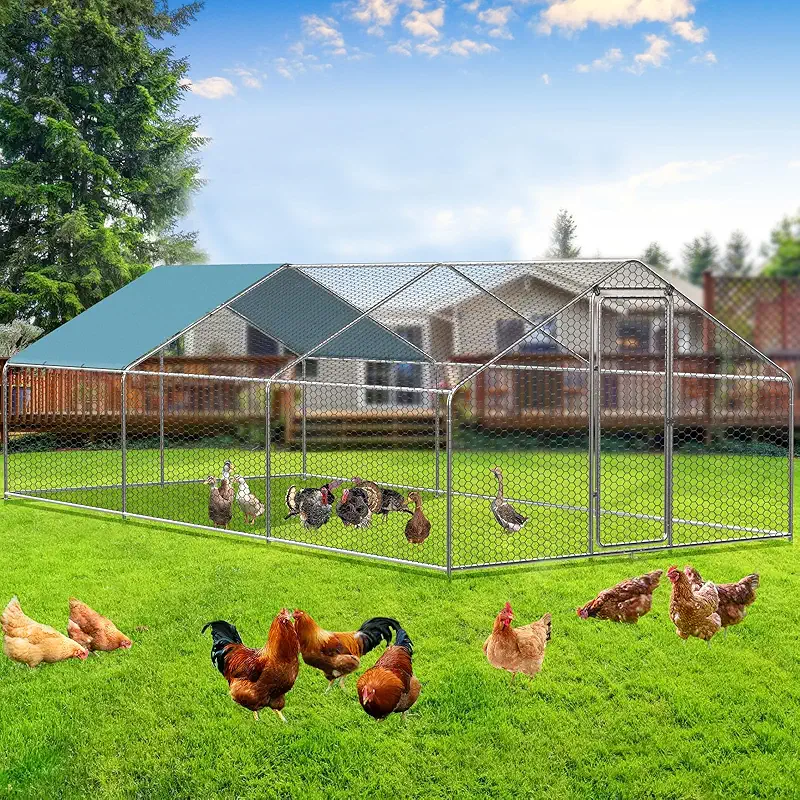
Metal chicken coop with cover
I have raised hens through heavy rain, summer heat, and a couple of nasty storms. A sturdy metal chicken coop with cover has been the one thing that kept everyone dry, calm, and safe when the sky turned dark.
- Strong metal frame that does not sag when the wind picks up.
- Covered roof so mud, hawks, and wild guests stay out.
- Plenty of space for scratching, dust bathing, and stretching wings.
Why a covered metal coop changed my mornings
I still remember one winter morning when I walked out to the run and saw my hens standing in ankle-deep mud. Their feathers were soaked, and their eyes looked tired. I felt I had failed them. That was the day I decided I would never again rely on a flimsy open run with a random tarp tossed on top.
When I moved to a proper metal chicken coop with cover, everything became calmer. The girls stayed dry in the rain, cooler in the sun, and I could finally drink my morning coffee without worrying about wind ripping away some cheap plastic sheet.
Over the years I tried wooden runs, makeshift fences, and even a setup made from old pallets. They all worked “for now” but they always needed fixing, patching, and tying down again. A metal frame with a solid cover is the first solution that felt like it respected my time and my hens at the same time.
What I look for in a metal chicken coop with cover
Sturdy metal that forgives my mistakes
I am not an engineer. I over-tighten some bolts and forget others until I see them a week later. A good metal coop forgives that. The tubes are thick enough not to bend when I lean a ladder on them, and the joints hold even if I need to move the run a bit.
- Strong galvanized steel so rust takes longer to show up.
- Firm connections that do not wobble when hens jump on the sides.
- Enough height so I can walk in without bumping my head every time.
My older run was low and flimsy. I used to crawl in on my knees to catch a stubborn hen. With a decent metal frame I walk inside, stand straight, and handle everyone gently.
Safe wire and mesh that respects curious beaks
Hens are curious. They poke, peck, and squeeze through anything that looks interesting. The mesh around a metal chicken coop with cover must keep them in and keep trouble out.
- Wire small enough that raccoon hands and weasel heads stay outside.
- No sharp edges near the ground where feet and combs can get scratched.
- Firmly attached mesh so it does not sag or flap during wind.
The cover: where comfort truly begins
The roof is what turns a simple run into a real shelter. A good cover does three things at once: it keeps the rain out, softens the sun, and slows down the wind.
On my farm I prefer covers with a slight slope so water runs off instead of pooling. I also like when part of the run is more shaded and part is lighter, so the hens can pick their favorite spot.
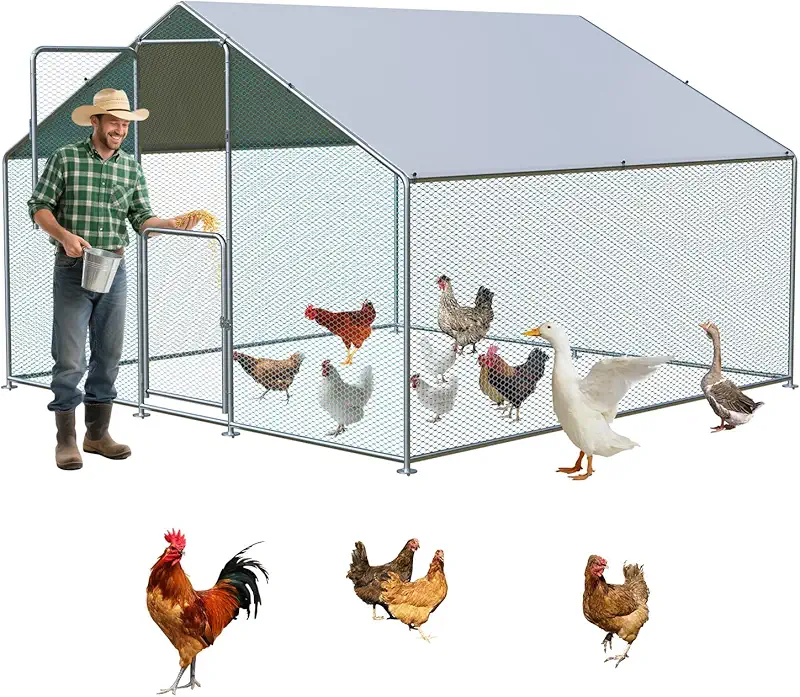
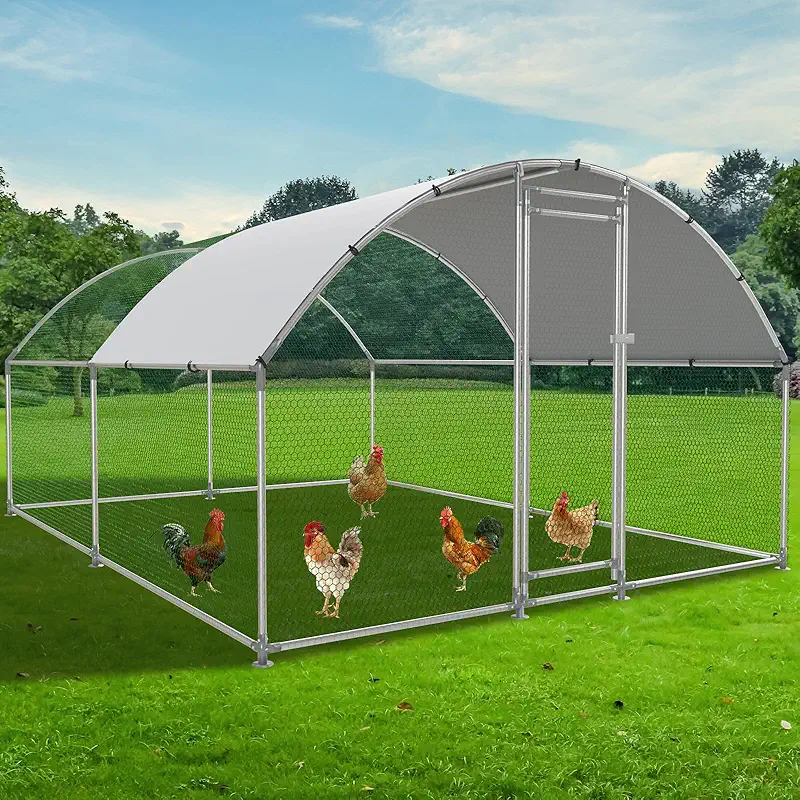
Flexible sizes I like to choose the size based on the number of hens I might have in two years, not today. A bit of extra space always turns into peace among the flock.
How a covered metal coop keeps hens happy in all weather
Chickens do not complain the way we do, but they still show when the weather bothers them. When the run was muddy and open, my flock would huddle under the small house, feathers puffed up, clearly waiting for the day to end. That broke my heart.
With a proper metal chicken coop with cover, the whole mood changed. On rainy days they still scratch around under the dry roof. On summer afternoons they dust bathe in the shade, then move to the brighter edge to enjoy the evening light.
Rain and snow: dry feet, calm hearts
Wet ground chills a chicken from the feet upward. Once their feet get cold and muddy, they spend more energy staying warm and less on laying eggs and staying healthy.
A covered metal run keeps the main walking area dry. I like to add a thick layer of wood shavings or coarse sand there, so even after days of drizzle the ground is still comfortable.
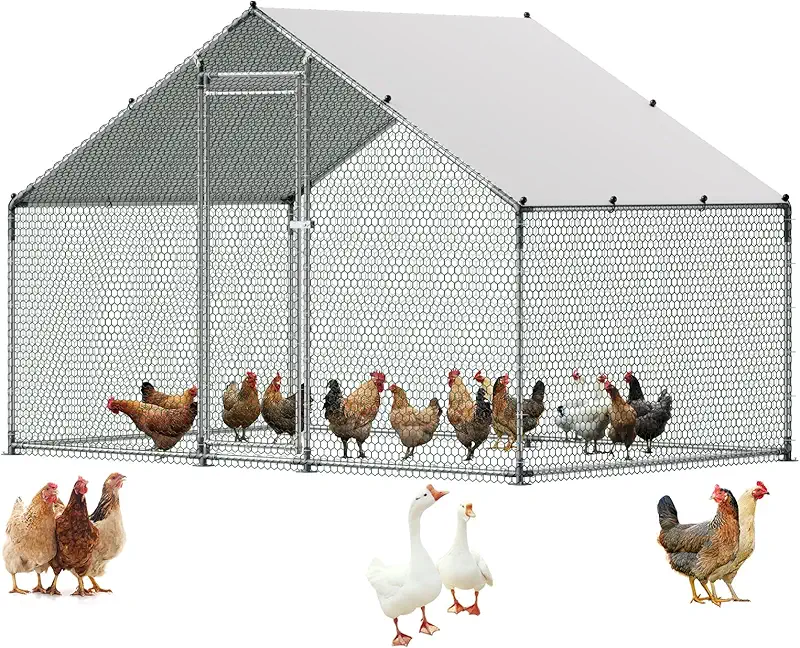
Sun and heat: shade that actually works
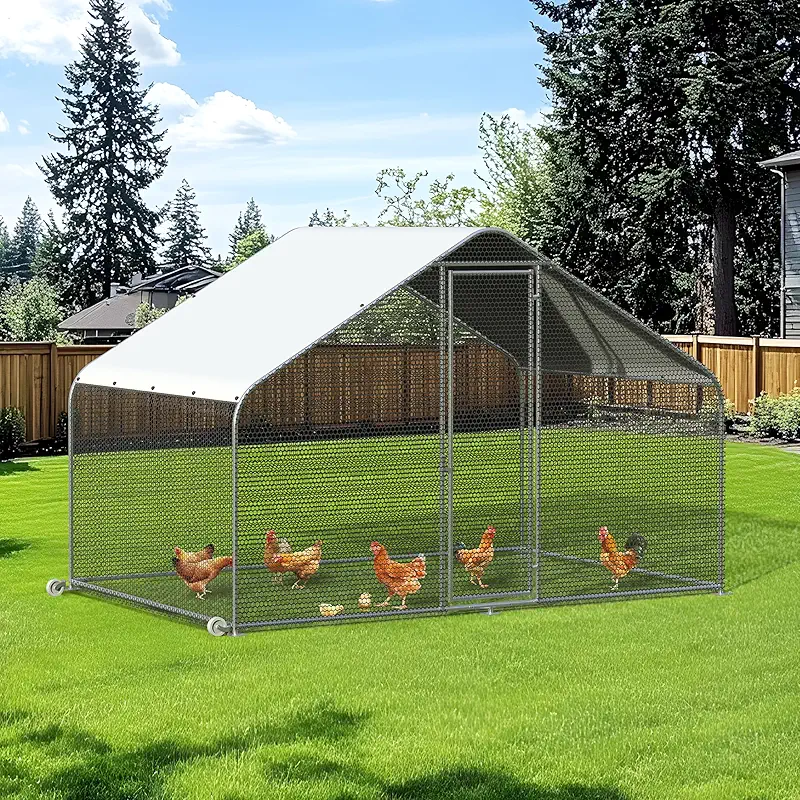
Chickens handle cold better than heat. In strong sun, they pant, lift their wings, and search for shade. A thin, light-colored cover over a metal frame makes a big difference. Under my covered run the air stays a little cooler, and the ground does not bake.
On the hottest days I hang a small waterer inside the shaded part of the coop and add frozen water bottles to their main drinker. The hens spend hours there, calmly preening instead of pacing around the yard looking stressed.
Wind and hawks: the invisible threats
Where I live, hawks and cold winds come across the field without warning. An uncovered run feels like a parking lot, open and exposed. With a roof and side mesh, my hens feel enclosed yet still bright and airy.
I like covers that slightly hang over the edges of the frame. That small overhang breaks the wind at just the right height and gives shy birds a place to hide.
Daily life inside a metal chicken coop with cover
I want my hens to feel that their run is more than a cage. It should feel like a little world of its own. A strong metal structure gives me the skeleton, and then I add comfort in layers.
Space to be chickens, not decorations
My rule is simple: if I cannot see my bossiest hen walking away from the others for a break, the run is too small. Inside a metal coop I like to add:
- Branches at different heights for perching during the day.
- Dust bathing corners filled with dry soil, sand, and a little wood ash.
- Hanging cabbage or seed blocks to give them something to peck that is not each other.
With enough room and small distractions, pecking order arguments stay brief and mild. A covered space also keeps the dust bath dry so they can groom their feathers even after rain.
Cleaning and moving: thinking of your own back too
I care about my hens, but I also care about my knees. A walk-in height metal chicken coop with cover means I can rake, shovel, and scrub without crouching for half an hour.
When I chose my current setup, I looked for:
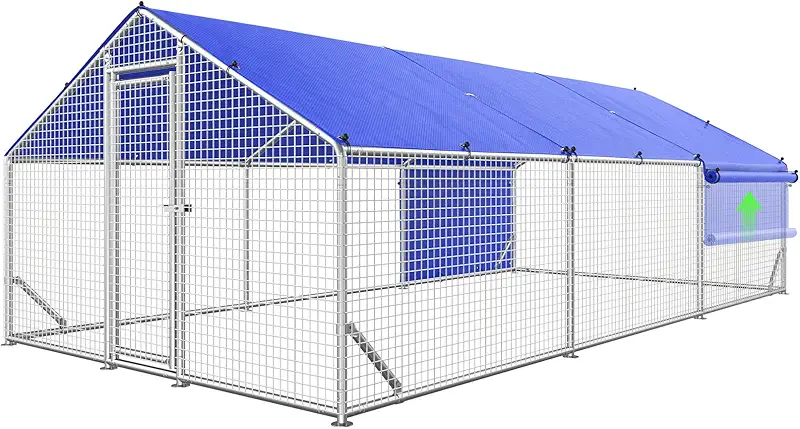
- A door wide enough for a wheelbarrow or at least a large shovel.
- A flat threshold so I do not trip while carrying buckets.
- Panels that can be loosened if I ever want to extend or move the coop.

A coop that is easy to maintain is a coop that stays clean. Clean ground means healthier feet, fewer worms, and less smell drifting toward your neighbors.
Choosing the right size for your flock
Many people, including myself in the beginning, make the same mistake: they pick a coop based on the number of hens they have right now. But once you fall in love with chickens, there is always “just one more” breed you want to try.
When sizing a metal chicken coop with cover, I think in three circles:
- Today’s flock: the number of birds sleeping in your coop tonight.
- Next spring’s flock: a few chicks you may raise or a rescue hen you may welcome.
- Comfort space: extra room so lower-ranked hens can step aside.
For standard-sized hens, I like to give at least 10 square feet per bird in a covered run, more if possible. For smaller bantams you can get away with less, but they also enjoy flying and perching higher, so vertical space matters too.
If you are not sure which size might feel right for your yard and your flock, have a quiet look at different shapes and dimensions and imagine your birds walking, flapping, and resting in each one.
Metal vs wood: what has worked better for my hens
I love the look of wooden coops. Fresh wood smells good and blends into the garden. But after a few seasons of rain, snow, and sun, the boards swell, the doors twist, and the repair list grows.
With a metal chicken coop with cover, the structure stays straight. The frame does not care if a storm blows in during the night. I do keep an eye on rust and check the joints once or twice a year, but the overall shape remains trustworthy.
What my hens seem to prefer
Chickens do not tell us in words, but they show us with their feet. When given a choice between a dry, covered metal run and a wet open yard, my hens go straight for the covered ground. They know where their feathers stay dry.
For sleeping they still prefer a sheltered wooden coop or house inside or next to the run, but for daytime living a metal frame with cover has been the calmest space I have ever offered them.
FAQ about choosing a metal chicken coop with cover
Yes, as long as you also provide a draft-free sleeping area inside the run or close to it. The metal frame and cover keep snow and wind off the main yard, but chickens still need a sheltered house with bedding for the night. In my winters, the covered run stays usable even when the rest of the yard is icy, so the birds can stretch and move instead of being locked inside all day.
They should not, if the run is well ventilated and the cover is light-colored or reflective. I always look for good airflow on the sides and some open mesh that allows breezes in. On very hot days I add extra shade cloth, cold water, and sometimes a small fan outside the mesh pointed along the coop, never directly at the hens. Under a thoughtful cover my birds stay cooler than in the open sun.
It depends on the exact size, but I always plan for more room than the numbers on the box suggest. For a peaceful flock, around 10 square feet of covered run per standard bird is a kind starting point. If you have active breeds or roosters, giving even more space will make life easier for everyone. When I choose a model, I imagine my flock on a rainy day when they all want to be under the roof at once.
Many of them can, but they are heavier than simple net runs. I have moved mine by taking off a few panels at a time and re-assembling them in a new spot. Some lighter models can be dragged slowly by two people. If you think you will move yours often, choose a size and weight that match your strength and helpers.
With gentle care, several years and often much longer. The frame itself is usually the longest-lasting part. The cover fabric may need replacing after some seasons of sun and wind, but that is a simple way to refresh the coop without rebuilding everything. I check my bolts once or twice a year and touch up any scratches to slow down rust. This quiet maintenance keeps the coop safe for the hens and peaceful for me.