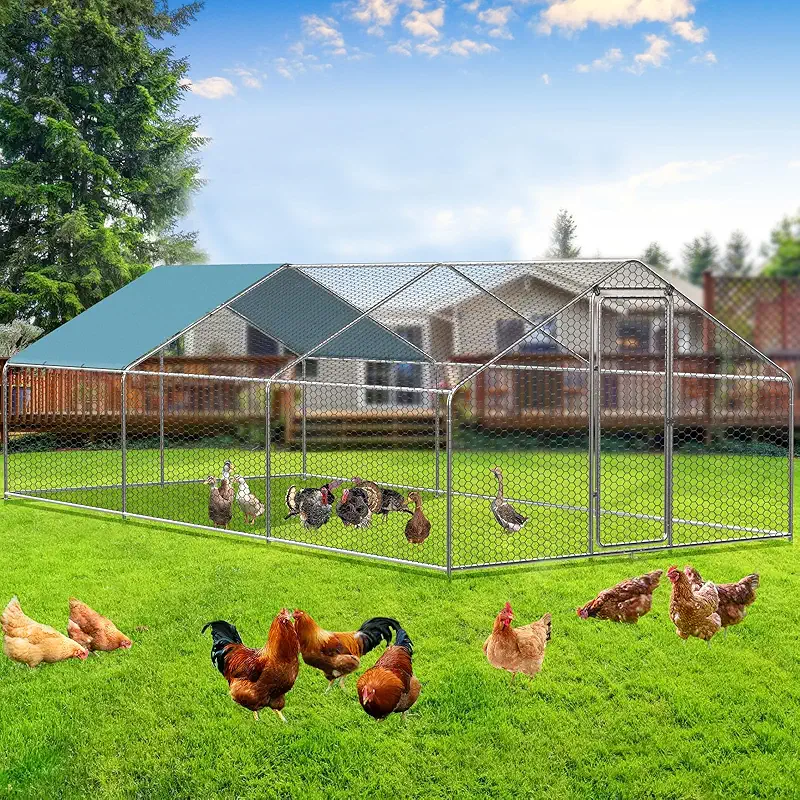
My hens have kept me company for years, through cold winters, hot summers, and a lot of muddy mornings.
A solid metal coop has saved them more than once from storms and sneaky predators. Let me walk you through
what really matters when you look at metal chicken coops for sale, so your flock can stay safe, dry, and peaceful.
Let me compareYou will see different metal runs and coops I’d feel calm putting my own hens in.
Why I slowly moved to metal chicken coops
When I started keeping chickens, I built a cute little wooden coop from old pallets and stubborn optimism.
It looked charming, the kind of thing you’d see in a picture book. My hens loved it at first, and I was proud
every time I carried a warm egg back to the house.
But after the first winter, the truth showed up in the corners. The wood started to swell and crack.
Damp straw clung to the floor. Mites found their way into every tiny gap. I remember one cold evening,
kneeling in the run with a headlamp on, gently lifting each hen to check for parasites. Their trust in me
felt heavy in my hands, and I realised that “pretty” was not enough. They needed something stronger.
That is how I ended up searching for metal chicken coops for sale. I was not thinking about
fashion or trends. I was thinking about the quiet cluck of relaxed hens, and about going to bed at night
without worrying about foxes and raccoons testing every board.
For me, a coop is not just a structure. It is a promise: “You can sleep. I will keep you safe.”
A good metal coop makes that promise a little easier to keep.
Over time I learned which metal runs are sturdy enough for rough weather, which doors really lock properly,
and which roofs stay dry inside even when the wind comes sideways. I also learned how to soften a metal coop
so it feels warm and gentle for the birds that live in it.
What to look for in metal chicken coops for sale
When you browse different metal chicken coops for sale, it can feel a little overwhelming.
So many shapes, sizes, and shiny photos. Let me share the checklist I quietly run through in my head
every time I look at a new coop or run online.
1. Space: how many hens, really?
People often ask me, “How many chickens can I fit in this coop?” I gently turn the question around:
“How many chickens can live in it and still relax?” There is a big difference. Overcrowded hens get stressed.
Stressed hens peck each other, stop laying, and become unhappy.
Inside sleeping area: aim for around 3–4 square feet per hen.
Outdoor run: 8–10 square feet per hen is a kind, generous goal.
Headroom: enough height so a full-sized hen can stretch and flap.
When you read product descriptions, you will often see optimistic numbers, like “good for 8–10 chickens.”
I usually cut that number down by one third in my mind. If they say 9 hens, I imagine it for 6.
That simple habit has saved my flock from a lot of needless stress.
2. Wire thickness and predator resistance
One of the biggest advantages of metal coops is their strength. But not all metal wire is the same.
A hungry raccoon with strong fingers can bend thin wire far more than you would expect.
When I scan metal chicken coops for sale, I pay more attention to the wire than to the color or shape.
Prefer heavy-gauge steel wire over very thin mesh. Stronger wire feels firm if you
imagine pressing it with your hand.
Look for small openings in the mesh so nothing can reach in and grab a sleeping hen.
Doors and latches should be metal as well, not weak plastic clips.
One winter, a fox tested my run every night for a week. I saw the muddy prints, the bite marks on the mesh.
The wire held, and my hens woke up each morning calm and unbothered. That memory is why I never ignore
wire quality now.
3. Rust protection and weather
Metal is strong, but only if it does not crumble away. That is why galvanised steel
matters so much. When I look at metal chicken coops for sale, I always check whether the frame and mesh
are properly galvanised or coated.
Where I live, we get heavy rain, snow some years, and hot sun in summer. My first cheap metal run
started to rust around the joints after just one wet season. Now I look for:
Galvanised tubes and mesh described clearly in the details.
Joints and corners that look tight, not gappy or flimsy.
A roof shape that lets water run off instead of pooling.
If you live somewhere coastal or very wet, this is even more important. A good coating on the metal
is like a raincoat that never gets tired.
Making a metal coop feel warm and gentle
Some people worry that a metal chicken coop feels cold or harsh. I understand that worry.
Chickens, to me, are soft creatures who like familiar, quiet spaces. The metal frame gives us strength,
but we add the warmth.
When I bring home a new metal run or coop, I always plan a little “softening day.”
The structure gives me safety; I add comfort.
Bedding and floor comfort
On bare ground, I build up layers:
First, a layer of dry wood shavings or chopped straw.
On top, a little extra straw in their favorite corners.
In wet areas, I put down some builders’ sand to help drainage.
Metal keeps predators out, but soft bedding keeps sore feet away. When my hens settle down at night,
they shuffle their toes into the bedding and make happy little grunts. That sound tells me
I chose the right balance.
Shade, wind, and simple covers
Many metal chicken coops for sale come with a basic roof panel or tarp. I like to see that,
but I usually add more:
A solid shaded corner, using a tarp or corrugated panel, where hens can hide from hot midday sun.
A windbreak on the side the winter wind normally hits from. A simple sheet of plywood or a thicker tarp works.
A dry patch under cover for feeding and dust bathing after rain.
On stormy days, I stand in the run for a moment and just listen. If the birds are still scratching,
preening, and softly talking to each other, I know they feel secure. That is the goal.
Daily life with a metal chicken coop
Once the coop is chosen and built, the real test begins: living with it day after day.
Here is how my own metal setups have behaved through the seasons.
Cleaning and health
One thing I quietly appreciate about metal is how easy it is to clean. Wooden walls absorb smells and
mites like a sponge. Metal panels and wire can be brushed, sprayed, and dried quickly.
Every few weeks in warmer months, I:
Rake out old bedding and let the ground air out.
Scrub perches and any solid panels with warm soapy water.
Use a gentle poultry-safe spray on joints and corners where mites could hide.
My hens tell me the truth with their feathers. Smooth, shiny feathers and bright eyes mean the coop is doing its job.
If I ever see dull feathers or restless pacing, I look again at airflow, bedding, and crowding.
Weather stories from my flock
I remember one night when the wind roared so loudly I could feel it through the bedroom walls.
I pulled on my boots and coat and went out with a flashlight, half expecting to find chaos.
The metal run was holding firm, roof tarp flapping but tight. Inside, the hens were lined up on the perch,
eyes half-closed, barely noticing the storm. I walked back to the house wet but grateful.
In summer, the challenge is different. On the hottest days, I check the metal surfaces with my hand.
If any part feels too hot to touch comfortably, I add more shade or adjust the cover.
A well-placed shade cloth can drop the temperature inside the run in a very noticeable way.
Choosing the right size and shape for your yard
Every garden is different. Some of us have wide open grass, others have narrow side yards or sloping ground.
When I look at metal chicken coops for sale, I imagine them in real spaces, not just on a clean white background.
Long runs for busy, curious hens
If your birds are full of energy and you cannot always let them free range, a long rectangular metal run
can be a blessing. My most active hens like to trot up and down, wings slightly open, as if they are
on their own little runway.
Long runs make it easier to:
Separate a shy hen or a new arrival without isolating her completely.
Create different “zones” – a dust bath at one end, food and water in the middle, a quiet corner at the back.
Rotate bedding and keep the ground from turning into one big muddy patch.
Taller coops for your own comfort
My back is not as young as it once was. After too many mornings bending over in low coops,
I started to value height. Some metal chicken coops for sale are tall enough to step into.
Those are a joy to clean and check.
If you have the space, a walk-in style metal run lets you:
Stand upright while cleaning and refilling feeders.
Spend quiet time inside with the flock without crouching.
Inspect perches, nests, and corners more easily.
Gentle buying checklist before you decide
Before you settle on any of the metal chicken coops for sale you see online, I suggest sitting down
with a cup of tea and walking through this simple checklist. It has saved me from hasty choices more than once.
How many hens do I have now, and might I add one or two later?
Is there enough shaded area for the hottest days?
Can I reach every corner to clean without straining?
Is the wire strong and small enough to keep predators out?
Does the roof shape make sense for the kind of rain or snow we get?
Where will I put food and water so they stay clean and dry?
Am I comfortable with the assembly steps and tools needed?
When those answers feel calm and settled in your mind, the coop you choose is far more likely
to serve both you and your birds for many seasons.
I’ll check optionsLook for the shapes, sizes, and wire strength that match your notes and your yard.
As someone who cares deeply about chickens, I try to recommend only types of metal coops and runs I would
consider for my own birds. Links on this page may lead to products where I receive a small commission,
at no extra cost to you. It helps keep the feed bin full and the advice honest.