
Metal chicken run with roof
When I built my first little wooden pen, I thought my hens would be fine. Then the first winter storm came, the ground turned to mud, and my girls stood there, wet and confused, looking up at me as if to say, “Really, this is it?”. That was the day I promised myself that every flock I keep would have a safe, dry, solid metal chicken run with roof.
Over the years, I have tried many setups. The runs that stayed strong were always the sturdy metal ones with a proper roof, good mesh, and doors that do not sag. On this page I want to share what I have learned, in simple words, so your flock can be dry, safe and calm in every season.
I’ll talk as a fellow chicken keeper, not as a salesman. I know how it feels to worry about foxes, hawks, or a sudden storm at night. A good metal chicken run with roof will not remove every problem, but it will let you sleep easier.
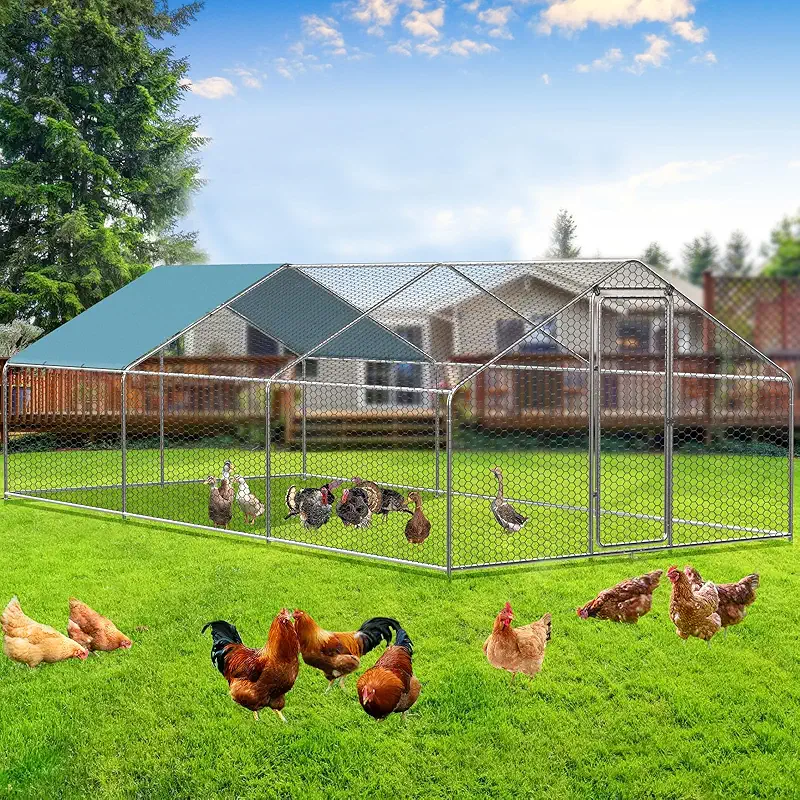
Why a metal chicken run with roof changed my flock’s life
I live where the weather cannot decide what it wants to be. One day we have hot sun, the next day freezing rain, and in between a strong wind that pushes everything sideways. My hens do not care about weather forecasts. They just want a dry place to scratch, a safe place to dust bathe, and a run that does not blow apart in the first storm.
When I finally moved my birds into a solid metal chicken run with roof, three big things changed:
- They stopped huddling in the corner every time the sky went dark.
- The ground stayed firmer and cleaner, even after days of rain.
- I stopped spending my weekends fixing warped wood and broken mesh.
A good roof is not just about keeping the rain off. It protects feed from getting soaked, bedding from turning to sludge, and your hens from overhead threats like hawks and owls. The metal frame adds another quiet blessing: it does not twist, swell, or rot with time the way soft wood does.
How to choose a solid metal chicken run with roof
Each yard and flock is different, but there are a few things I always look for. When I walk around a metal chicken run, I run my hand along the frame, look up at the roof line, and listen for small creaks. A good run feels calm and still under your touch.
Here are the main points I check before I trust a run with my hens:
1. Frame strength and coating
The frame is the backbone of any metal chicken run with roof. Thin tubes may look fine in pictures, but out in the field you feel the difference. I lean on the frame with my shoulder. If it feels like it may bend, I walk away.
- Galvanized steel: resists rust and stays smooth for years.
- Thick-walled tubes: stand up better to dogs jumping, kids leaning, and wild winds.
- Simple joints: fewer weak points, easier to tighten if they loosen with time.
I have watched cheaper frames twist slowly after just one harsh season. A small extra bit of thickness in the metal saves you years of worry.
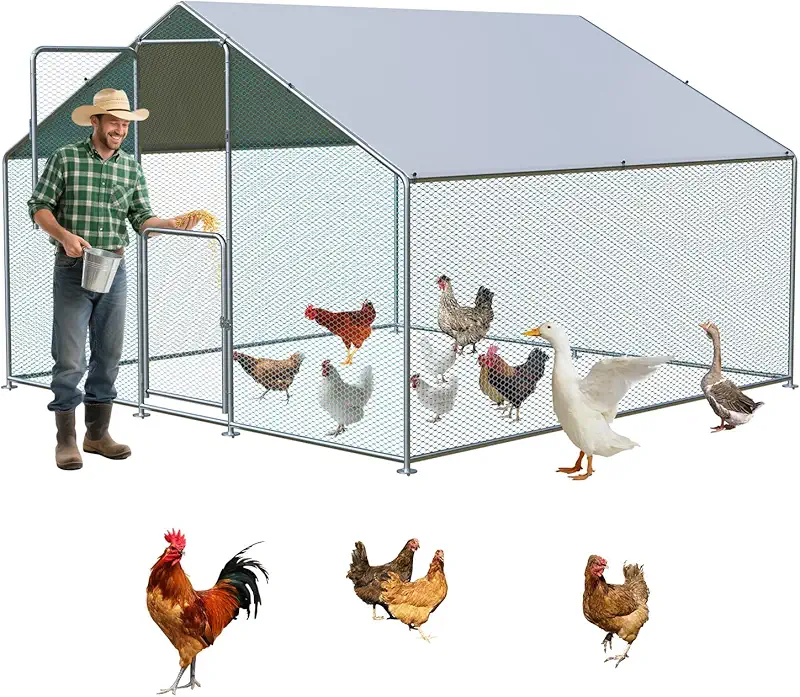
2. Roof design that truly protects
The roof is where many runs fail. A thin, floppy cover that lifts with the first gust is not a real roof. For my flock, a roof must keep the worst of the rain and sun away without turning the run into an oven.
- Decent pitch: water should slide off, not sit and pool.
- Secure fastening: zip ties alone are not enough; look for clamps, straps, or strong ropes.
- Partial shade: solid roof over one part, lighter mesh or open area over another.
A good metal chicken run with roof gives your hens choices. On hot days mine will stand right at the edge of the shade, catching a little breeze while still avoiding direct sun. On rainy days they tuck themselves deep under the roof and shake the drops off their feathers.
3. Mesh that keeps predators out, not hens in
People often think of the mesh as a fence to keep hens from wandering. I see it more as a shield against things that want to get in. In my area that means foxes, neighbor dogs, raccoons, and rats. In your area the list may be different, but the idea is the same.
- Small openings that paws and snouts cannot squeeze through.
- Metal that feels firm when you press on it with your palm.
- Mesh that is attached tightly to the frame with wire or metal clips.
On some metal chicken runs with roof, I still add an inner skirt of hardware cloth around the lower part. It is an extra step, but I sleep better knowing a raccoon cannot simply tug a loose panel aside.
Daily life inside a metal chicken run with roof
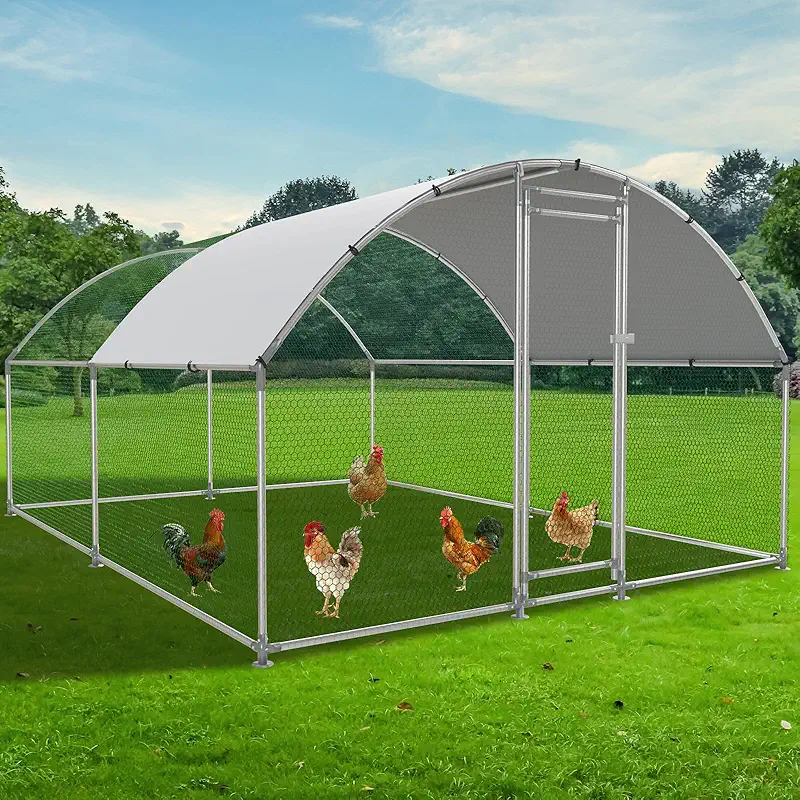
My favorite part of the day is late afternoon. The sun is lower, the air is soft, and the hens settle into their routines. Some scratch under the roof, some take slow dust baths near the edge, and the brave ones stretch their wings and jump up on the lower bars of the frame.
In a metal run with roof, you can shape that daily life in small ways:
- Hang feeders and waterers from the frame so they stay clean and dry.
- Place a simple roost bar under the roof so hens can perch and watch the world.
- Put a box of dry sand or soil in the most sheltered corner for dust bathing in winter.
I like to scatter a little scratch grain under the roof right before dusk. The hens walk around quietly, picking up every last piece. While they do, I watch their feet, their feathers, the way they move. A steady roof and strong sides make that moment feel peaceful instead of rushed.
My honest pros and cons of metal runs with roofs
Every setup has trade‑offs. I have kept hens in wooden runs, open yards, electric netting, and now in several metal chicken runs with roof. Here is how I see the balance.
What I love
- Steady protection from rain and snow so hens can stay outside more.
- Less damage from sun on combs, wattles, and plastic feeders.
- Frames that stay straight even after heavy storms.
- Cleaner ground around feeders and doors.
- Fewer night worries about dogs, foxes and raccoons.
What to keep in mind
- Assembly takes some time, especially if you are alone.
- A big run needs a reasonably level spot or you will have gaps.
- Some covers may need replacing after years of strong sun.
- In hot areas you still need airflow and maybe extra shade cloth.
Size guide: how big should your metal chicken run with roof be?
When people ask me how big their run should be, I usually smile and say, “A little bigger than you think.” Hens are small, but they turn every bit of space into a story: a favorite dust spot, a secret laying corner, a quiet place to avoid the bossy hen.
As a simple rule, I aim for at least 10 square feet of run space per hen in a covered metal run. More is always better, especially if your flock spends most of the day inside the run rather than free‑ranging.
Some everyday examples
- 4 hens → try to give them at least 40 square feet (for example, 6.5 ft × 6.5 ft).
- 8 hens → around 80 square feet (for example, 8 ft × 10 ft).
- 12 hens → 120 square feet or more (for example, 10 ft × 12 ft).
Remember, your coop usually sits inside or against the run, and it takes some of that space. Leave room for you to walk in, turn, and carry buckets without bumping into nervous hens.
Many metal chicken runs with roof come in long rectangular shapes. I often prefer a shape that is a little wider instead of extremely long and narrow. That way, hens can run side to side and create several “zones” instead of lining up in a tight hallway.
Weather, seasons and your metal chicken run with roof
My flock has lived through baking hot summers, sideways winter rain, and a few frightening wind storms. A well‑built metal run with roof becomes your quiet partner in each of those seasons.
Rain and snow
Under a good roof, hens still scratch, preen and chat while the sky pours down. I watch them shake the droplets off their backs and go back to their business, instead of standing in a wet mess.
- Choose a roof that does not sag under wet snow.
- Make sure the lowest side of the roof drains away from the coop door.
- Place bedding or gravel under high‑traffic spots to avoid mud.
Summer heat
Metal can get hot, but shade and airflow make all the difference. My metal chicken run with roof is never closed on all sides. Air must move. I add a piece of shade cloth on the sunniest side and keep water in the shadiest corner.
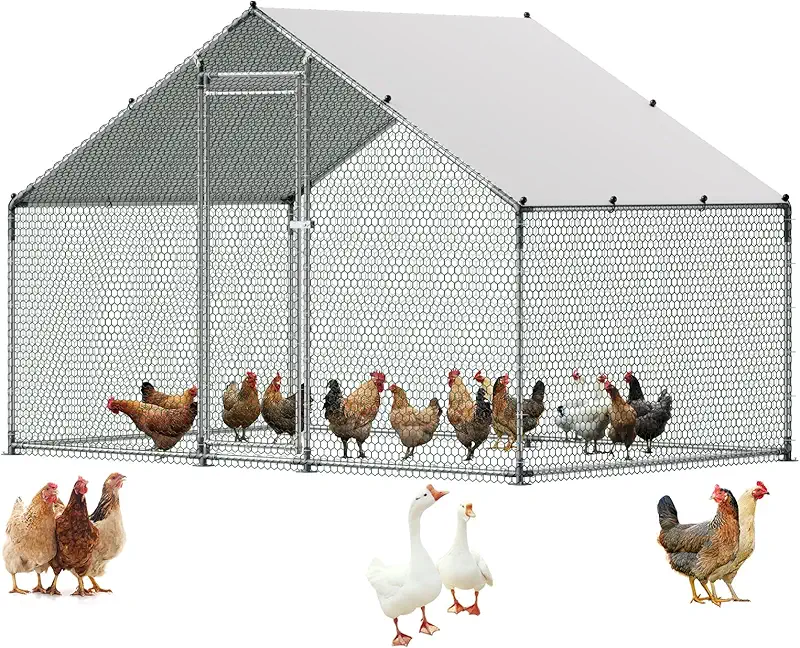
In the hottest weeks I check the run in the afternoon. I stand at hen‑height and feel the air. If I feel trapped heat, I open more sides, add extra shade toward the west, or even move waterers a bit so they stay cooler longer.
Easy ways to make your metal run feel like home
A metal chicken run with roof is a strong shell. What turns that shell into a comforting home are small, thoughtful touches. Over time, I noticed which of these touches my hens truly use and which they ignore.
Simple enrichments my hens actually enjoy
- Low roosts: a sturdy bar or branch 12–18 inches off the ground.
- Dust‑bath corner: a box or tire filled with dry soil, wood ash and sand.
- Hanging greens: cabbage, kale or weeds tied from the roof frame.
- Quiet nook: a crate or pallet leaned against the wall for shy hens.
You do not need fancy toys. Hens love simple things that move a little, rustle, or change the ground under their feet.
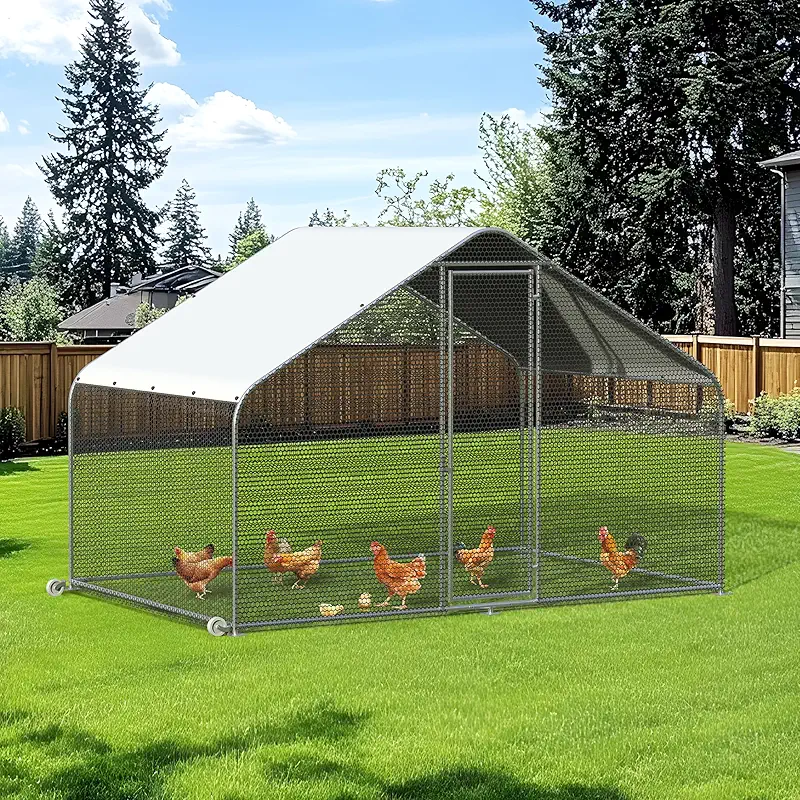
What I love about a strong metal frame is that it gives you anchor points for all these small comforts. You can hang feeders, greens, toys and even little wind chimes without worrying that the structure will twist or sag.
Maintenance: keeping your metal chicken run with roof sound for years
I am not a fan of endless chores. I want my runs to be safe with just a little regular care. Luckily, metal chicken runs with roof are not demanding if you check a few things now and then.
My quiet monthly check
- Walk the entire frame and gently shake a few vertical posts.
- Look at every roof connection and tighten any loose fasteners.
- Check mesh edges near the ground for digging marks or bent wires.
- Look and feel for rust spots, especially where metal pieces touch.
I do this when the hens are busy scratching. They hardly notice me. If I find a weak point, I fix it the same day with new clips, wire, or a simple brace.
Floor care and cleanliness
The roof keeps most of the rain off, but the floor still needs love. I rake droppings and old bedding toward a compost pile and add a fresh layer of dry material.
- In wet months I like coarse wood chips or gravel under high‑traffic paths.
- In dry months I use straw or leaves for a softer scratching layer.
- Under feeders I keep a bit of bare ground so I can quickly remove spilled feed.
A clean, dry floor means fewer smells, fewer flies, and healthier feet and feathers.

Safety stories from my own flock
One winter night I woke to a strange sound, like metal tapping on stone. I grabbed a flashlight and walked out to the run. A neighbor’s dog had broken off his chain and was jumping against the side of my metal chicken run with roof, barking and pawing.
The hens were awake, of course, but safe. The frame did not move. The mesh did not give. The dog eventually lost interest and wandered off. I stood there for a while, hand on the cool metal, feeling grateful I had chosen a strong run.
Another time, during spring, a hawk spent two days circling the property. My hens stayed under the roof almost all the time, peeking out but not stepping into the open. When the hawk flew low, they ran back to the deepest part of the covered run and froze. Because the roof was there, they could still enjoy fresh air, dust baths, and companionship without being exposed.
These small stories are why I gently push new chicken keepers toward a metal chicken run with roof sooner rather than later. We cannot control all risks, but we can give our birds a good solid shelter to face them from.
Frequently asked questions about metal chicken runs with roofs
Listening to your hens when you choose
Charts and guides are helpful, but your birds are the best teachers. When you look at different metal chicken runs with roof, try to picture how your hens move, where they like to sit, who avoids whom, who always wants the highest spot. The right run is the one that quietly fits their habits.
Take your time, breathe, and choose with a calm mind. Your flock will feel that care every day when they step out under a solid roof, scratch on dry ground, and settle in for the night without fear.