
Metal walk in chicken coop run
Metal walk in chicken coop run
What I learned after many muddy boots, early mornings and a lot of clucking.
I have kept chickens for many years, in all kinds of weather and all kinds of coops. Wooden sheds, small plastic houses, open runs with old wire fencing – my hens have seen it all. The calmest I have ever felt, though, was after I moved them into a solid metal walk in chicken coop run. I could finally close the gate at night and know they were safe, dry and had enough space to stretch their wings.
On this page I want to walk you gently through the things I wish someone had told me earlier about choosing and using a metal walk in chicken coop run. I will share simple, honest tips from my own yard, so you can skip a few mistakes and enjoy more quiet time with your flock.
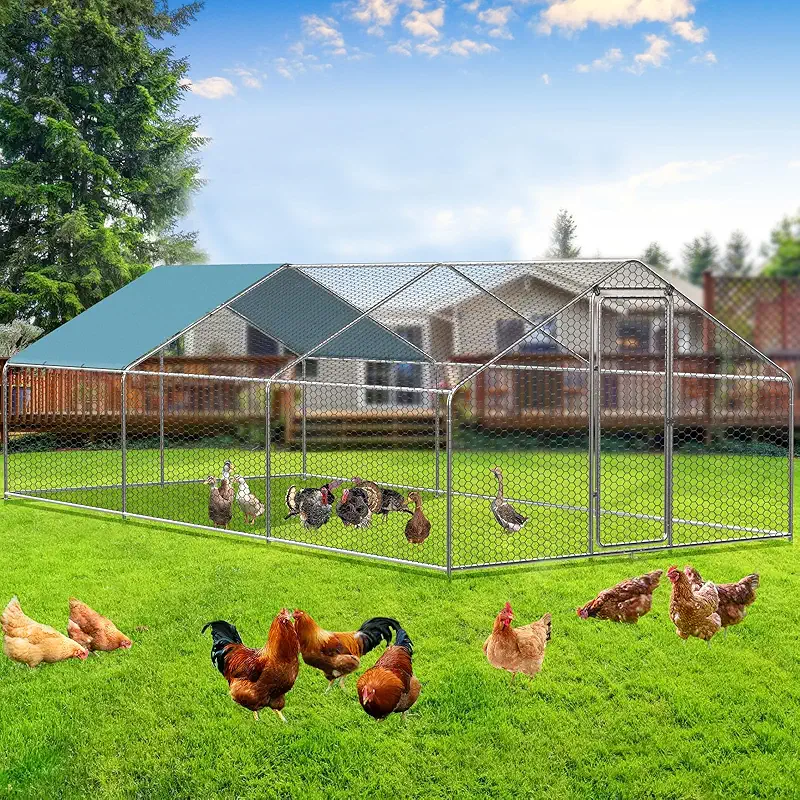
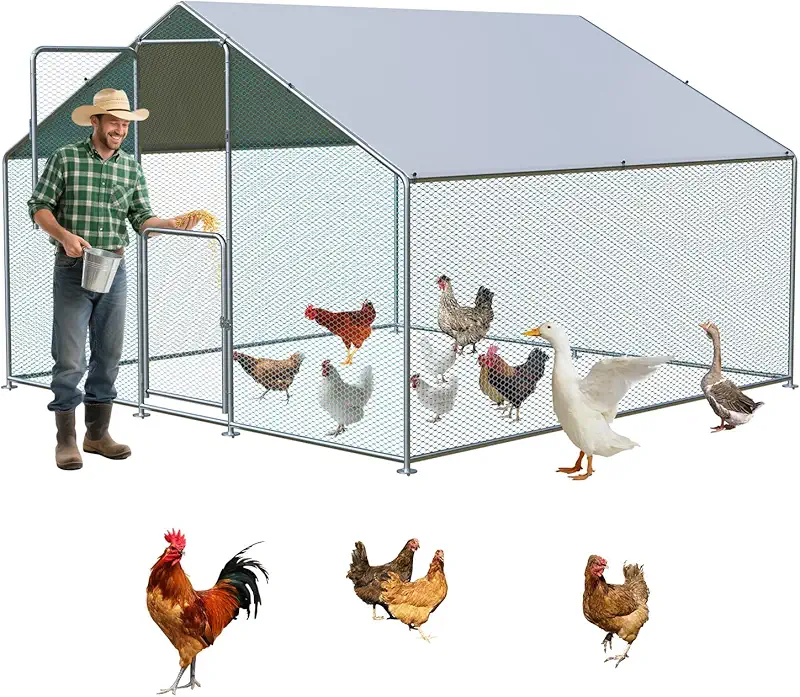
- Walk-in height so you can care for your birds without crouching and bumping your head.
- Metal frame for better strength against wind, snow and lively children leaning on the sides.
- Wire mesh to keep out dogs, foxes and nosy wildlife while still giving plenty of fresh air.
- Space to add your favorite wooden coop, perches, dust bath and feeders inside one secure area.
- Easy to cover with shade cloth or tarps so your hens stay cool in summer and dry in rain.
Why I moved from wooden runs to a metal walk in chicken coop run
When I started with chickens, I did what many people do: I bought a small wooden coop with a tiny run attached. It looked cute in the pictures. For a few months it seemed fine. Then the roof started to leak, the doors warped in the rain, and I could not even stand inside to fix things. Cleaning day became a battle of splinters and muddy knees.
One winter night I went out with a flashlight and noticed a pair of bright eyes just beyond the run. A fox. The wire on my old run was thin and already bent in places where my kids had leaned against it. That was the moment I decided I needed something stronger and taller. That search led me to a proper metal walk in chicken coop run.
The biggest change for me was peace of mind. With a solid metal frame and secure gate, I stopped waking up at every little noise outside. I still check on the birds at night, because I care about them, but the worry in my chest is much smaller.
A metal walk in chicken coop run is not only about predators, though that is a huge part of it. It is also about making your daily chores kinder to your body. I am not as young as I used to be, and bending over tiny doors with a bucket of feed is not my idea of a gentle morning. Being able to walk in, stand up straight and move around my hens feels like a small luxury every single day.
Key things to look for in a metal walk in chicken coop run
When people visit my yard and see my run, they often say, “I want something like this, but I am not sure what to choose.” Let me share the simple checklist I use now. It comes from muddy boots, frozen waterers, and many, many mornings with a coffee mug in hand while watching my birds.
1. Height: can you really walk in?
The phrase “walk in” is important. Some products use those words even though you still have to duck. For me, a true metal walk in chicken coop run lets you stand up without hitting the roof with your head or your hat. It sounds like a small detail, but it changes everything.
- Check the listed height and compare it to your own height plus a bit for boots and a cap.
- Think about guests or family members who may be taller than you.
- Remember that you may want to hang feeders or waterers from the frame.
From my own yard: My first “tall” run was just barely high enough for me. Then my son grew taller and started helping with the chickens. He kept banging his head on the cross bars. Now I always look for a run where he can stand comfortably too. It makes cleaning day much more pleasant for everyone.
2. Strength of the frame and mesh
Not all metal is the same. Thin, hollow poles can bend in strong wind or when a dog jumps against the side. I like a metal walk in chicken coop run with:
- A frame that does not wobble when you push on it with both hands.
- Mesh or wire that feels firm, without big gaps at the bottom.
- Connections that are bolted or securely clamped, not just loosely pushed together.
I also pay attention to the door area. That is where we go in and out every day, and where predators will naturally test first. A good metal run has a sturdy latch that cannot be opened easily by a raccoon-like paw, and it should close snugly without gaps.
3. Space for the flock you actually have
Many product pages mention how many chickens a run can “hold”. I always smile at that word. I do not want to hold my chickens; I want them to live well. I prefer to think of the number as “how many hens can be comfortable here for hours each day”.
As a gentle rule, I like at least 10 square feet of run space per standard hen, and more if possible, especially when they will spend long winter days inside the run instead of free ranging.
- Count the birds you have now, not the birds the box suggests.
- Consider if you might add a few more hens later (most of us do).
- Think about space for a dust bath, perches, a small table or bench for you.
4. Roof and weather protection
A metal frame is easy to cover. That is one of the reasons I like a metal walk in chicken coop run. I can add shade cloth in summer, clear plastic panels in winter, and tarps on the windy side. The frame does not sag like some wooden structures do.
If you live where snow is heavy, make sure the roof style and frame are suitable. A sloping roof helps snow to slide off. In rainy areas, a slight slope or peak stops water from pooling on top of any cover you add.
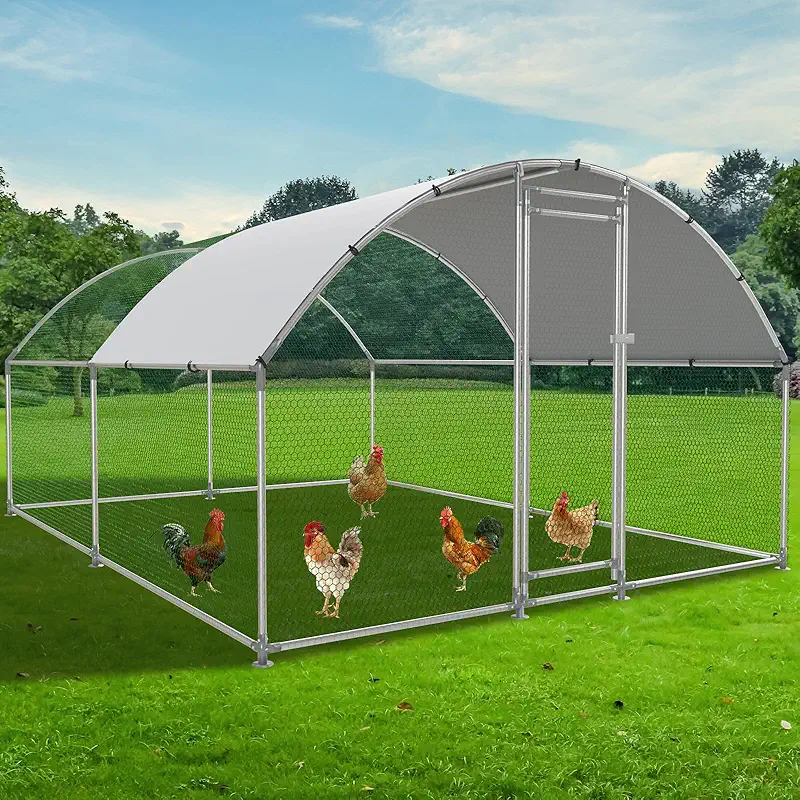
Whether you have a small backyard or a larger homestead, you can usually find a metal walk in chicken coop run that fits your space. Some are long and narrow, good for placing along a fence. Others are more square, leaving room in the middle for a central dust bath and perches.
I like models with a door you can open fully while carrying a bucket, and with enough side height to place my wooden sleeping coop inside the metal run. That way, at night they sleep in wood, but they spend their days in the strong outer shell of metal.
How I set up my metal walk in chicken coop run step by step
When the big boxes arrived for my current run, I felt both excited and a bit nervous. Metal poles, mesh panels, little bags of screws – it can look like a lot. But with patience and a simple plan, it becomes quite manageable. Here is how I usually set things up.
1. Choose the right spot
I walk my yard at different times of day before deciding. I watch where the sun hits in the morning and afternoon, where the ground stays soggy after rain, and where the wind tends to come from. A metal walk in chicken coop run is not something I move every week, so a little planning matters.
- Look for morning sun to dry the ground and cheer your hens.
- Try to give them some afternoon shade if your summers are hot.
- A slight gentle slope helps rainwater drain instead of forming mud puddles.
2. Build the frame slowly and check for square
I like to lay out the metal pieces loosely on the grass first so I can see the shape. Then I build the base rectangle and check that the corners are square. After that, I work my way up, adding the vertical supports and roof pieces.
My little habit: I keep a cup of tea nearby and stop every so often to step back and look at the frame from a distance. If something looks crooked now, it will bother me later. It is much easier to adjust poles before the wire is on.
3. Attach and secure the mesh
The mesh or wire is what really makes the metal walk in chicken coop run a safe place. I pay careful attention, especially near the ground and near the door.
- Pull the mesh tight but not so tight that it distorts the frame.
- Overlap pieces where they meet, especially at corners.
- Use extra ties or clips closer together along the bottom edge.
I like to run my hand slowly along the wire, feeling for sharp edges or gaps. If my hand can find a space, a curious nose or paw can too. This quiet inspection only takes a few minutes and has saved my birds more than once.
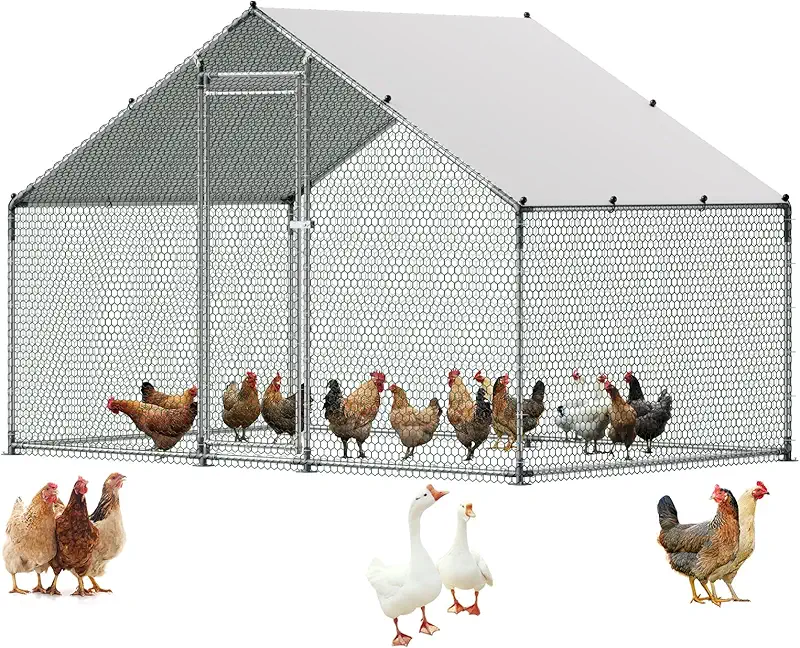
Some people like an all-in-one solution. I prefer flexibility. My wooden coop sits neatly inside my metal walk in chicken coop run, with a pop door that opens into the big secure area. During the day, the birds scratch, dust bathe and explore. At night they go up into their wooden house to sleep.
This “coop within a run” idea works well if you already have a coop you love, but want better protection around it. When I first added a metal run around my old coop, it felt like my flock had moved into a safer neighborhood overnight.
4. Add shade, shelter and fun
Once the basic structure is up, the real joy begins. A metal walk in chicken coop run is like a safe playground for your birds. I like to add:
- A low bench or sturdy branch for them to perch on during the day.
- A big shallow box or old tire filled with dry soil and wood ash for dust bathing.
- Hanging treats, like cabbage or bunches of herbs, from the frame.
On one side of my run I hung a simple tarp, angled so rain runs off. In summer it gives shade, and in winter it breaks the cold wind. The frame makes it easy to tie on and adjust as the seasons change.
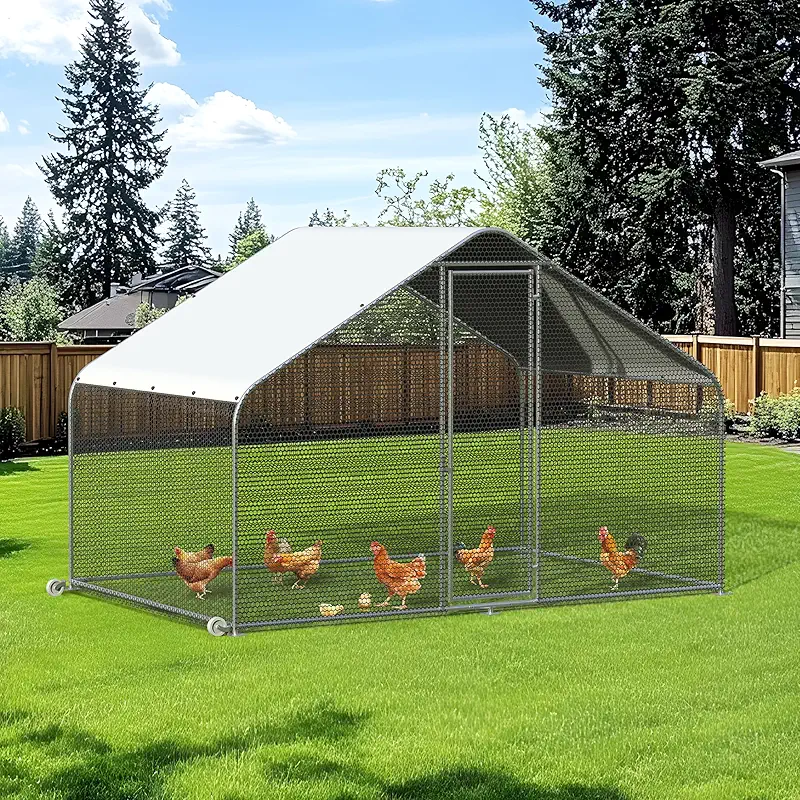
When you look at metal runs, pay attention to the roof style and the way the frame is built. Rounded roof models are nice for hanging feeders and toys, while more square shapes can feel like a small outdoor room where you and your chickens share the morning.
Daily life inside a metal walk in chicken coop run
One thing I love about a metal walk in chicken coop run is how it changes the daily rhythm with the flock. Instead of wrestling with little doors and bending to reach everything, I walk in like I am stepping into a small garden that happens to be full of feathers and soft sounds.
Morning routine
In the morning, I open the main gate, greet the girls and listen for any unusual quietness or strange noises. Because I can walk in, I see each hen clearly. I notice who is bright-eyed and who is moving more slowly.
My quiet check: I always glance at their feet and combs, and I look at the droppings on the floor. The open, walk-in layout makes it easy. I do not have to reach through small access panels and guess what is happening inside.
Cleaning and bedding
Cleaning used to be something I postponed. In a tight wooden run I had to kneel down, twist my body and drag out heavy trays. In a metal walk in chicken coop run, I simply bring in a rake or shovel and work slowly and comfortably.
Some days I just top up with fresh straw or wood shavings. Other days I do a deeper clean, scraping and raking. Because I can stand up straight and move freely, I am more willing to do “little and often” cleaning. The run smells fresher and the birds stay healthier.
Weather worries
Weather used to keep me on edge. Now, with a metal frame and good mesh, my mind is calmer. When a storm comes, I make sure the covers are secure and there are dry spots inside the run. The birds quickly learn where to go when the wind rises or the sun gets too hot.

If you are tired of crawling into cramped spaces, consider a taller metal walk in chicken coop run that lets you move naturally among your hens. I cannot promise that chores become fun every single day, but I can say they become a lot more gentle on your back and your mood.
Predator protection and peace of mind
I respect predators. Foxes, raccoons, coyotes, even neighborhood dogs – they are just doing what comes naturally. My job is to love my chickens enough to protect them. A metal walk in chicken coop run gives me one more strong line of defense.
I still lock the hens in their wooden house at night, but knowing they are also inside sturdy metal walls makes it easier to sleep. I no longer wake up at every bark outside. That quiet confidence is hard to put a price on.
Common mistakes people make with a metal walk in chicken coop run
Over the years, I have seen friends and neighbors set up their own runs. Some choices worked beautifully, others caused headaches. Here are a few common mistakes you can gently avoid.
Underestimating mud
Chickens plus rain plus time equals mud. Metal runs are strong, but they do not magically prevent soggy ground. If your run sits in a low dip, all the water will find its way there.
- Choose a spot that is not the lowest point in your yard.
- Consider adding a few inches of gravel or coarse sand under the main walking areas.
- Use deep bedding like wood chips to give the birds a dry place to scratch.
Forgetting about access for wheelbarrows
At first, I thought a single person-sized door would be enough. Then I tried to move a full wheelbarrow of bedding through that narrow space. Now, I pay close attention to how wide the main gate is and how it opens.
Not planning for future flock size
Many of us start with “just three hens” and then, one day, we find ourselves bringing home a few more. Chickens can be like quiet potato chips that way. If you can, give yourself a little room to grow. A slightly larger metal walk in chicken coop run today can save you from rebuilding everything later.
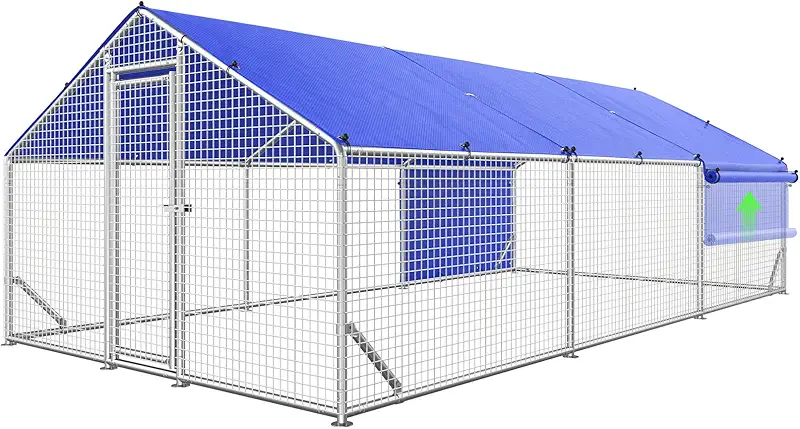
As you look at different metal runs, think not only about today, but also about the next couple of years. Will you want more hens? A separate area for chicks? A section for a broody hen? A sturdy, walk-in metal frame gives you the freedom to adapt as your little flock and your own heart both grow.
Ignoring how it looks and feels
This may sound shallow, but it matters: you will see your metal walk in chicken coop run every day. It will be part of the view from your window and part of the place you walk through with your morning drink. If you like the way it looks and feels, you will naturally spend more time with your birds, and that is good for them and for you.
FAQ about choosing a metal walk in chicken coop run
Metal can get hot in strong sun, but the key is shade and airflow. I always cover at least part of the roof with shade cloth or a light-colored tarp and make sure there is good cross-ventilation. Inside the run, I add extra waterers, a shallow pan for them to stand in if they like, and dusty, shaded corners where they can cool off. With these simple steps, my hens stay comfortable even in the height of summer.
Quality metal runs are usually coated or galvanized to slow down rust. After years outdoors, small spots can appear, especially near the ground or where the mesh is cut. When I see a rough patch, I clean it and dab on a bit of protective paint. This little bit of seasonal care has kept my runs strong for a long time. Good drainage under the run also helps, because standing water is hard on any material.
Product descriptions sometimes suggest high numbers, but I prefer to be generous. As a gentle guideline, I aim for at least 10 square feet per hen in the run. So a 10x10 foot run (100 square feet) feels good for around 8 to 10 standard hens, especially if they also have time to free range. If space allows, more room is always kinder. Happy birds with space to move are easier to manage and a joy to watch.
Many metal runs can be moved, but they are not as light as tiny mobile tractors. I have moved mine by taking off any roof covers, then gently lifting one side at a time with the help of another person. On soft ground we slide it slowly. It is possible, just not something I do every week. If you think you may want to move your run often, choose a size and shape you can handle without stress.
I like having both. My metal walk in chicken coop run is the safe outdoor area, and my wooden coop inside it is the cozy bedroom. At night the birds go into the wooden house to roost on bars and lay eggs in nest boxes. During the day they enjoy the open, airy space of the metal run. Some people create small enclosed sleeping areas inside the metal frame, but however you do it, your hens will appreciate a snug, sheltered place to sleep and lay.
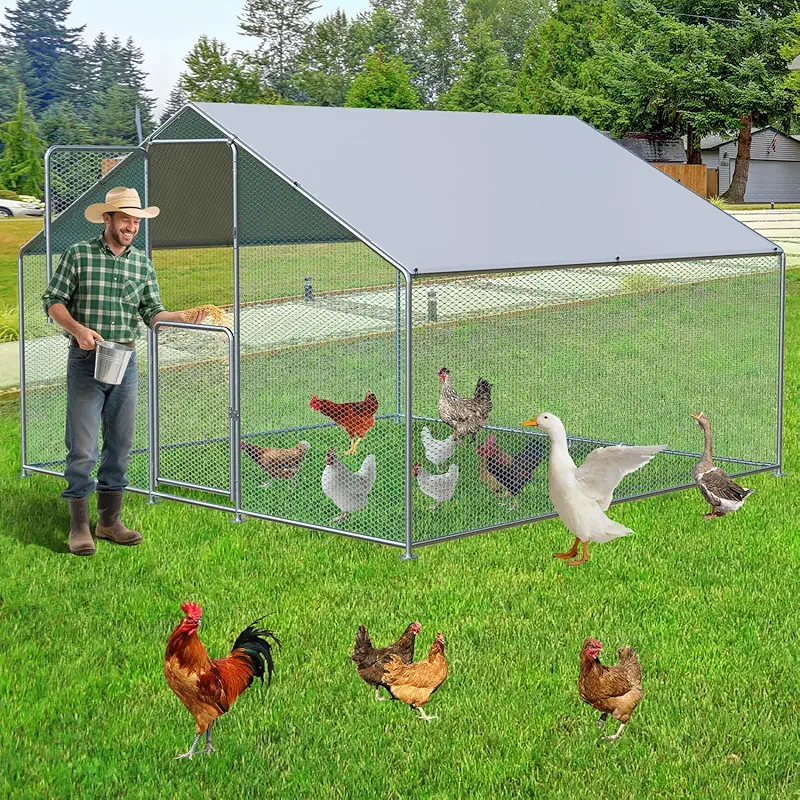
If you care for your hens the way I do, you probably want them to have a space that feels safe, generous and easy to live with. A well-chosen metal walk in chicken coop run can give you that – a place where they can scratch and chatter, and where you can walk in calmly, close the gate and know everyone is protected.
Take your time. Picture your mornings and evenings, your weather, your soil and your flock. Let your heart and your common sense work together. When the right run arrives and you stand inside it for the first time, listening to your hens settle at your feet, you will feel the difference.