Why Replacement Parts for Metal Chicken Coop Setups Matter
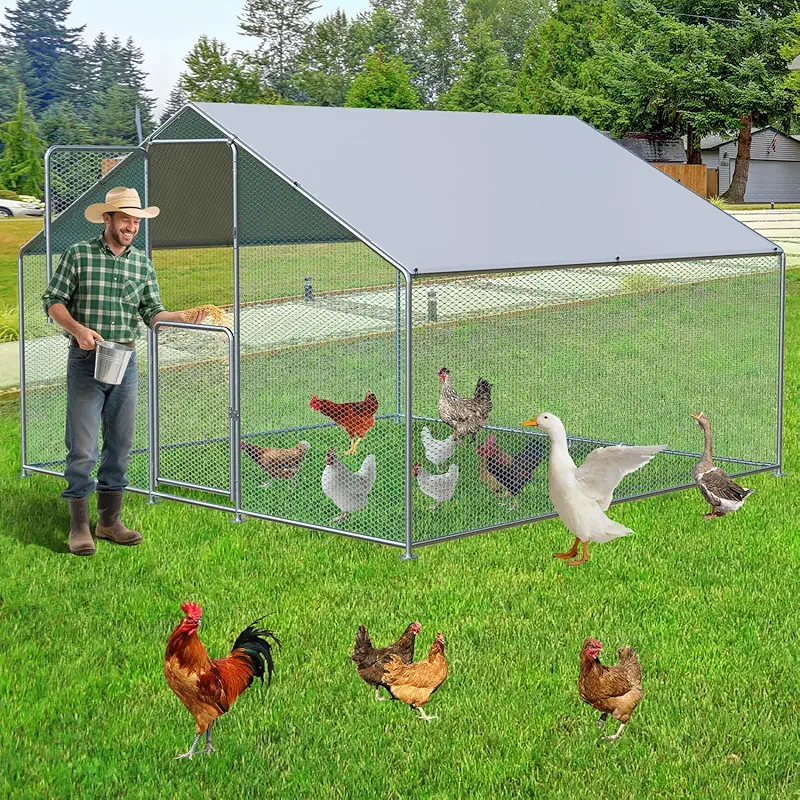
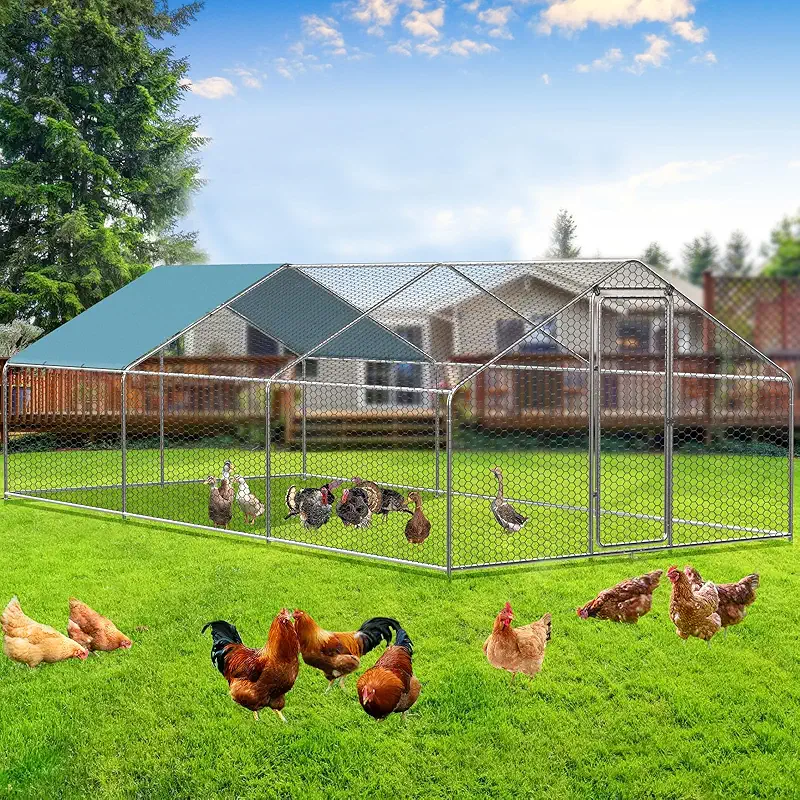
A metal coop frame is like a skeleton. If a single bone goes weak, the whole body feels it. The same happens in a run: one rusty joint or bent panel can turn into drafts, leaks, or even a night‑time entry point for predators. Using the right replacement parts for metal chicken coop repairs keeps your structure strong and your birds relaxed.
Over the years, I have noticed three quiet signs that tell me it is time to think about replacement parts:
- The door no longer closes smoothly, and I have to “wiggle” it into place.
- Panels move or rattle when the wind blows or when a hen flies up on them.
- Rust marks show where clamps or screws used to be tight and shiny.
- Walk the perimeter and gently shake each panel.
- Look along the bottom for gaps under the wire.
- Check roof seams and tarp edges for sagging.
- Test every latch and hinge at dusk, when you close up.
When I do this simple walk once a week, I catch problems while they are still small. A loose clamp becomes a 3‑minute fix, not a broken panel. A sagging tarp becomes a new bungee, not soaked bedding and grumpy hens. That is the real value of keeping replacement parts for metal chicken coop hardware on hand: small, gentle adjustments instead of emergencies.
Essential Replacement Parts for Metal Chicken Coop Owners
Let us look at the parts that most often need love. These are the items I always keep nearby in a labeled box in the shed. I will share how I use them, and the little details that matter when you choose them.
1. Replacement Wire Panels and Mesh
Over time, wire panels can bend where children lean, where dogs jump, or where snow piles up. Rust also loves low spots where water pools. I see this first along the bottom edge of the run. When a section starts to bow in or out, I plan for a replacement panel before it turns into a hole.
When choosing replacement wire for a metal run, I look for:
- Galvanized steel mesh to resist rust in rain and snow.
- Small openings, usually around 1/2 inch, so raccoon fingers cannot reach through.
- Sturdy gauge that does not bend easily in my hands.
Sometimes I do not remove the old mesh. Instead, I layer stronger wire over the weak spot and attach it tightly with new clamps or heavy zip ties. It is not fancy, but it is safe, and the hens only care that the breeze and the predators stay on the outside.
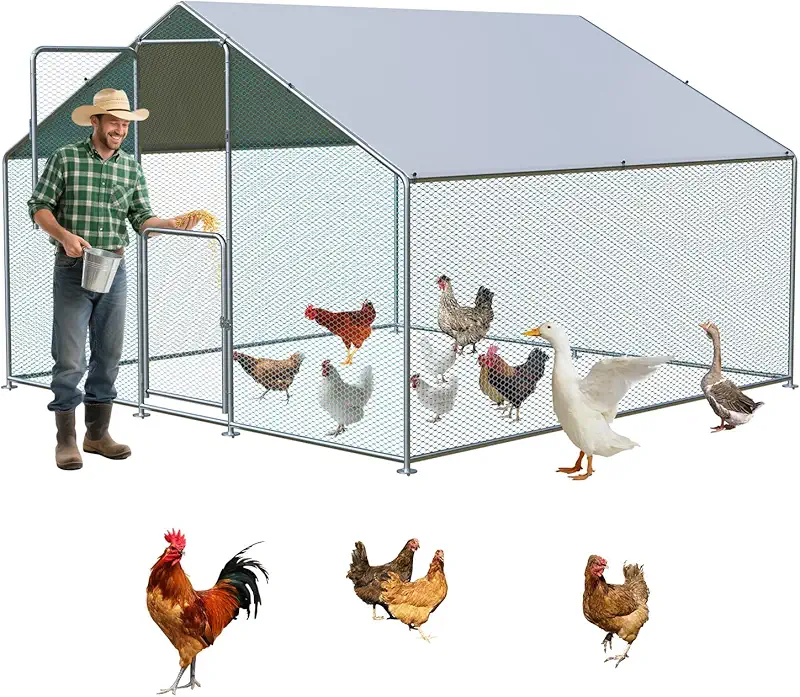
Stronger mesh along the lower edge keeps curious paws away from your flock.
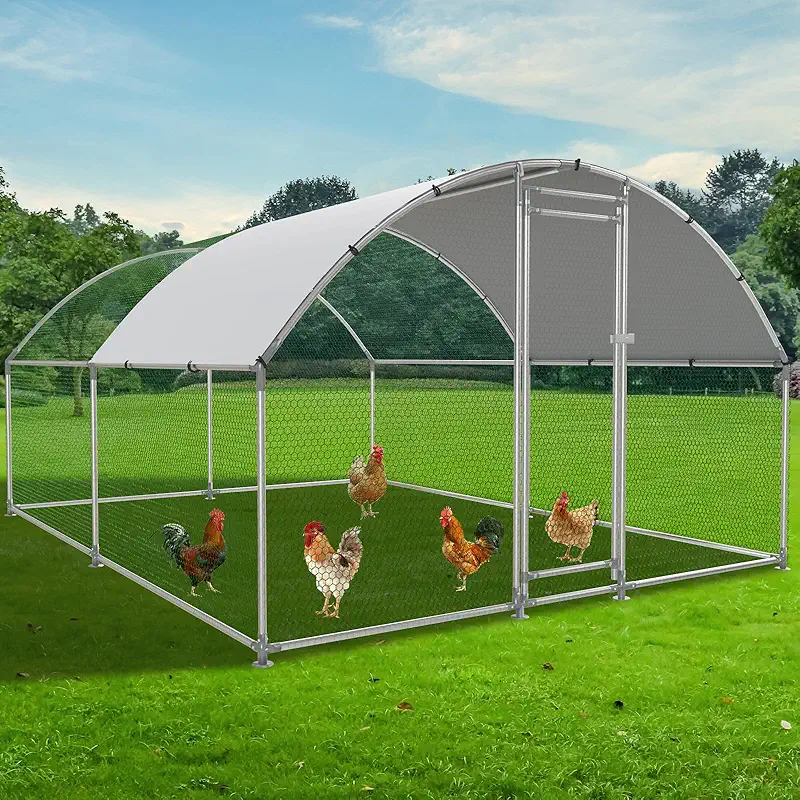
Panels that fit your frame size make repairs simple and calm.
2. Connectors, Clamps, and Zip Ties
On most metal chicken coops, the weakest points are not the tubes themselves, but the joints that hold them together. Sun, frost, and wind slowly work on those spots. That is why replacement parts for metal chicken coop frames almost always include fresh clamps and connectors.
I keep three kinds of connectors around:
- Metal tube clamps to join frame bars securely.
- Heavy‑duty zip ties for quick fixes and for extra support along the bottom and roof edge.
- Carabiner clips to close gaps and secure latches.
When you tighten a new clamp, listen for the change in sound when you tap the bar. A loose joint sounds dull, a tight one sounds sharper. That is my simple little test, learned on cold mornings with a bag of hardware in my coat pocket.
3. Door Hardware: Latches, Hinges, and Handles
I am very soft‑hearted with my hens, but I am strict with my doors. A coop door must close the same way a fridge closes in a busy kitchen: smoothly, predictably, every time. If a hinge sags or a latch no longer lines up, I do not wait.
Replacement parts for metal chicken coop doors can be small, but they have a big job. Look for:
- Rust‑resistant hinges that match your bar thickness.
- Simple latches that you can operate with cold fingers in winter.
- Extra safety like a carabiner or clip, so raccoons cannot open the latch at night.
I always test new hardware with my eyes closed. If I can find and fasten the latch quietly in the dark, then I know I will not fumble during a stormy night when I am hurrying the birds inside.
Weather Protection: Roof Covers and Wind Shields
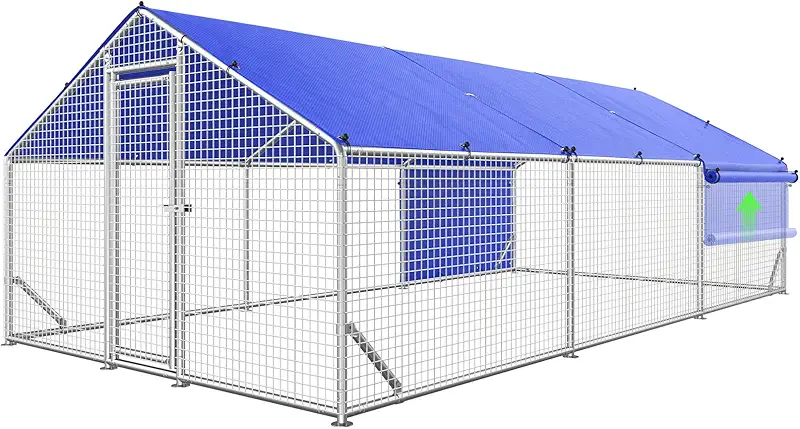
The metal frame and mesh keep predators out, but the roof and side covers keep your hens dry, calm, and warm enough. Replacement parts for metal chicken coop weather protection are often simple: tarps, shade cloths, bungee cords, and clips.
The first winter with my big metal run, I underestimated the wind. One night a gust ripped half the tarp loose, and rain blew straight into the roost. The hens were fine, but I felt awful. The next day I ordered stronger covers and more clips, and I never again left weather protection to chance.
Here is how I think about roof and side replacements now:
- Roof covers for rain and snow: thick, UV‑resistant tarps that do not flap too much.
- Side panels for wind: clear or mesh panels that block drafts but still let the air move.
- Extra bungee cords so I can cross‑brace covers and stop them from snapping in the wind.
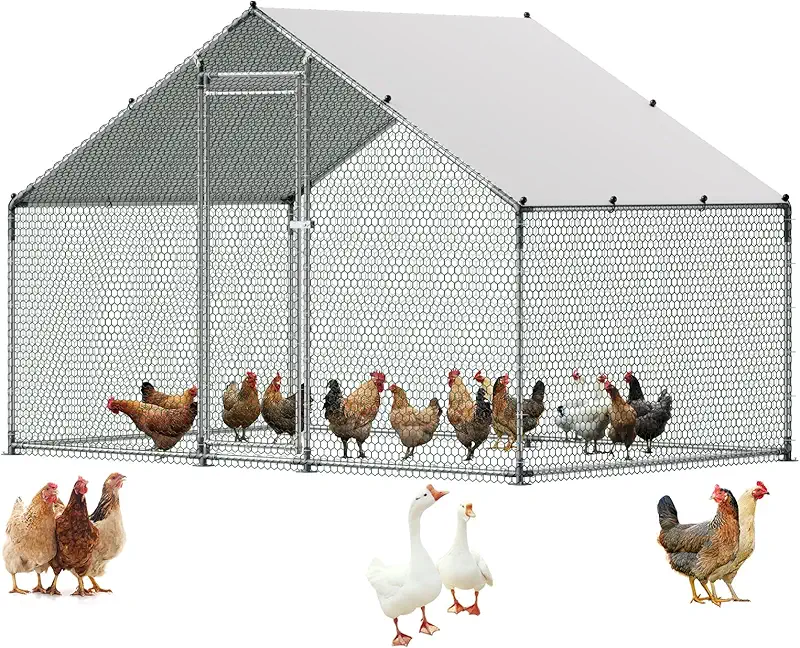
A snug roof cover turns a bare frame into a cozy, dry space.
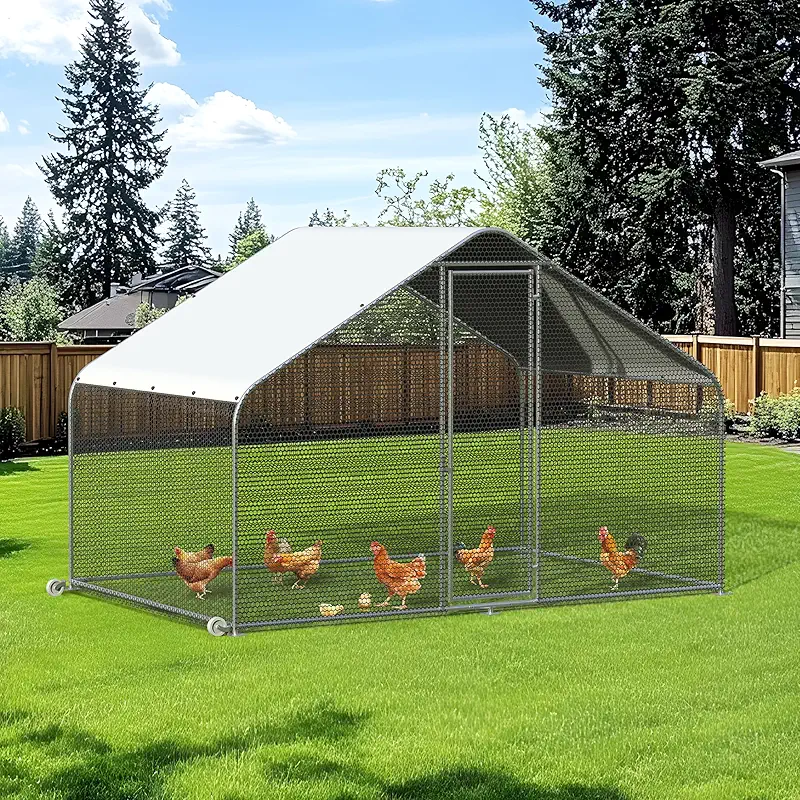
Wind panels along one side help shy hens feel sheltered.
Dry litter means less smell, fewer health issues, and quieter birds. Whenever I change or add a cover, I watch how the hens behave the next day. If they dust‑bathe and stretch out in the dry spots, I know I chose the right replacement parts for my metal chicken coop roof and walls.
Anchors, Stakes, and Ground Support
A metal coop that can move in the wind is not really safe, no matter how strong the frame is. Ground anchors are simple replacement parts for metal chicken coop stability, but they make a big difference, especially in open, windy yards.
I have tried many types over the years, from short U‑shaped garden staples to long screw‑in anchors. The ones that feel best for my peace of mind are:
- Screw‑in ground anchors at the corners and along long sides.
- Heavy staples to pin down any wire apron that runs along the ground.
- Rope or strong wire to connect the anchors to the frame firmly.
I remember one autumn storm when I checked the run at midnight with a flashlight. The trees were bending, but the coop did not move at all. The hens were sleeping, completely unaware. In that moment, every anchor I had driven into the soil felt worth the effort.
Replacement Parts for Comfort: Perches, Nesting Areas, and Shade
Not all replacement parts for metal chicken coop owners are about safety. Some simply make the birds more content, and that brings better eggs and calmer behavior. When parts of the interior wear out, I like to upgrade instead of just patching.
For perches and resting areas:
- I use smooth wooden or metal‑wrapped bars that are easy to clean.
- I replace any perch that wobbles when more than one hen sits on it.
- I add extra brackets or ties wherever a joint has loosened.
For nesting and shade:
- I refresh nest box curtains or flaps when they tear or fade.
- I add new shade cloth in the hottest corners of summer.
- I replace cracked plastic crates or boxes with solid ones that feel secure.
Whenever I bring in a new item, I sit quietly for a few minutes to see how the hens react. If they approach, peck, then settle on it, I know the change makes sense. That simple time watching the flock has guided many of my choices of replacement parts for metal chicken coop interiors.
How to Choose the Right Replacement Parts for Your Metal Coop
There are many shapes and sizes of runs, and sometimes it can feel confusing when you look at all the options. To keep things calm, I follow a small routine whenever I plan to order new replacement parts for my metal chicken coop.
- Measure twice. I write down tube diameters, panel sizes, and door openings on a piece of paper that stays in my shed.
- Check the weak spots. I decide which parts truly need replacing now, and which can wait.
- Match materials. If my frame is galvanized, I look for galvanized hardware and mesh so rust appears more slowly.
- Think of the hens first. I ask myself, “Will this change make them feel safer, drier, or calmer?”
It also helps to keep spare pieces simple and universal when possible: generic clamps, strong zip ties, standard carabiners, and covers that fit a range of sizes. That way, when something unexpected happens, you already have the right replacement parts for your metal chicken coop waiting on the shelf.
My Calm Repair Routine
When a part of the coop needs attention, I try to treat it as a quiet, gentle task, not an emergency job.
- I plan repairs for late afternoon, while the hens are still outside but thinking about roosting.
- I move slowly and speak softly around the birds, so they see repairs as normal life.
- I keep all my replacement parts for metal chicken coop fixes in one clean box, so I am not hunting for tools.
- I finish by walking the inside of the run, letting the birds inspect the new parts with me.
Over time, they learn that the sound of a screwdriver or the click of a clamp does not mean danger, only that their home is being cared for.
When It Is Time to Replace More Than a Single Part
I believe in repairing and re‑using as much as possible, but there are moments when a larger section needs to be renewed. For example, if several roof bars have bent under snow, or if rust has spread along a whole side of the frame.
When I reach that point, I still start by listing the replacement parts for metal chicken coop sections instead of jumping straight to a completely new run. Sometimes a new roof kit, stronger mesh for the bottom half, and fresh anchors give an old frame many more seasons of safe use.
I often remind myself: my hens do not care whether their run is brand‑new or gently aged. They care that it is steady, dry, and comfortable. Thoughtful use of replacement parts is a kind way to give them that, while keeping both costs and waste under control.